
Key takeaways:
These proven pest control marketing strategies will help your business stand out and generate more leads when customers need you most.
- Build a strong online presence. Claim your Google Business Profile, get listed on local directories, and create detailed social media pages to ensure your business is easy to find when pest problems strike.
- Invest in paid ads wisely. Use Google’s Local Services Ads and Search ads to target local, high-intent customers—these platforms let you pay only for meaningful leads and boost your visibility above competitors.
- Leverage reviews and referrals. Automate review requests after jobs, showcase testimonials, and simplify referrals to build trust and grow your reputation.
- Use content and email marketing to generate repeat business. Share helpful articles answering common pest questions and send timely emails with seasonal tips or offers to keep your company top of mind.
- Maximize brand visibility offline, too. Leave branded gifts with customers, decorate vehicles/uniforms, and form partnerships with local businesses for memorable, long-lasting impressions and easy referrals.
For more marketing ideas and expert tips, sign up for the Jobber Newsletter. Subscribe here.
Marketing a pest control business is all about timing. Customers don’t go looking until they have a problem—so your business needs to be easy to find when that moment comes.
This means building a strong brand presence in the right places so that you’re always top of mind when infestations or pest problems strike.
In this guide, we’ll cover 12 smart ways to promote your pest control business and stay top of mind when infestations hit.
The best pest control marketing ideas:
-
Claim your free Google Business Profile
-
Invest in Google’s Local Services Ads
-
Leverage online reviews
-
Get listed on other local directories
-
Market your business on social media
-
Pay for traditional Google ads
-
Demonstrate your expertise and attract customers through content marketing
-
Connect with customers on lead generation websites
-
Leave branded “gifts” at customer properties
-
Decorate your uniforms and vehicles
-
Partner with other businesses
-
Use email marketing for repeat business
-
How much does pest control marketing cost?
What is pest control marketing?
Pest control marketing is how you attract and keep customers for your pest control business using a mix of online and local tactics. It covers your website, local SEO, Google reviews, paid ads, email, and referrals.
The goal is simple: bring in steady leads, book more jobs, and turn one-time visits into repeat service plans.
How to start building your pest control marketing strategy
Before you dive into marketing your pest control company, it’s important to think about your overall business marketing strategy.
To get started, answer these important questions:
- Who is your target audience? Where do they spend their time? This will determine which methods to use (digital marketing vs. print ads) to reach them.
- What value do you bring to customers? Think about the value you bring beyond just ‘pest removal.’ For example, if you specialize in residential pests, you’re doing much more than getting rid of rats—you’re giving clients their home back so they can sleep easy at night.
- What are your marketing goals? Do you want more new customers? Or do you want your marketing to help you win larger pest control contracts from existing clients? The answer will help determine which marketing methods will work best.
- How will you know your marketing is working? Do you have a client relationship management tool (CRM) that tracks where new customers are coming from? Seeing the source of all your new leads can tell you which marketing efforts are working best.
Once you can answer these questions confidently, choose the pest control marketing strategies that make the most sense for your target customers and goals.
1. Claim your free Google Business Profile
A Google Business Profile is a free listing that appears in Google Search and Google Maps when potential customers search for pest control services in their area.
Getting found on Google is crucial—it’s one of the main ways customers discover and contact you, especially in urgent situations like rodent infestations or termite problems.
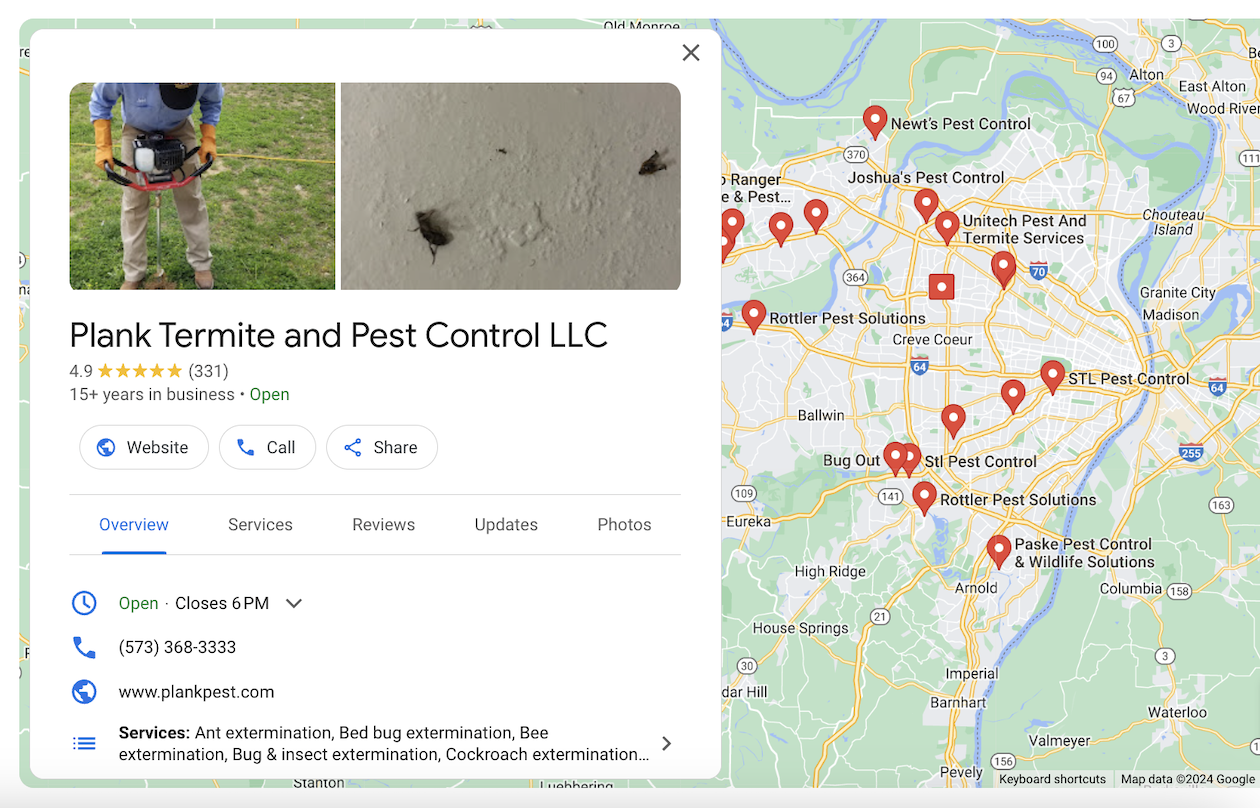
Customers can click different tabs to see more details on the services you offer, read customer reviews, and even call the company directly from the listing.
To market your business properly on your Business Profile, don’t forget to include your:
- Business hours
- Company description
- Photos of past jobs
- Team photos
- Frequently asked questions
- Customer reviews
2. Invest in Google’s Local Services Ads
Google’s Local Services Ads are paid listings that appear at the top of Google Search results when someone looks for pest control services nearby. These ads are one of the first things customers see, often before organic ads and search results.
These ads only appear for local customers actively searching for pest control services. They’re especially effective because potential customers can call you or book directly from the ad—and the Google Guaranteed badge adds an extra layer of trust.
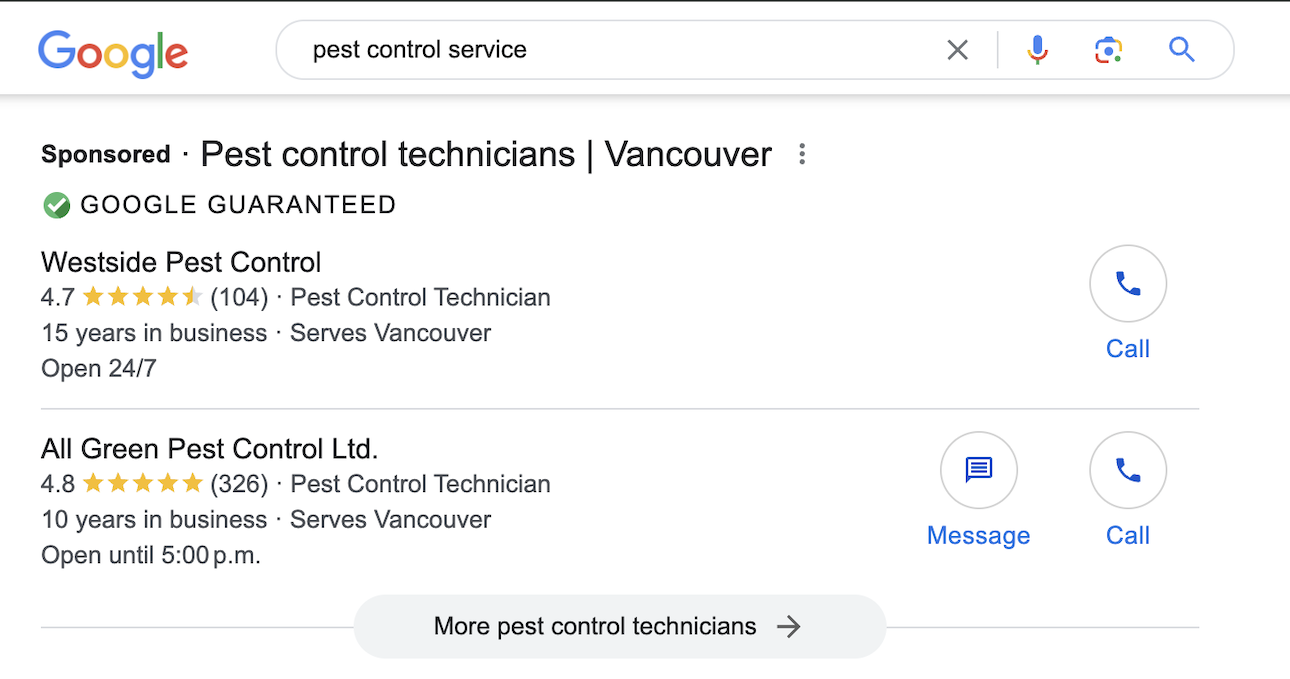
Google’s Local Services Ads are a cost-effective place to start your online marketing because:
- You only pay when someone contacts you from the ad
- You’re only advertising to the people who are already looking for you
Of course, you’re still competing with many other companies in your area. Learn how to set up your Local Services Ads, then use Google’s support resources to help your ad perform better.
READ MORE: 18 real ad examples and tips
3. Leverage online reviews
Just because a potential customer finds your business online doesn’t mean they’ll choose you. Most people look for reviews first—they want to see real proof that your team is reliable and delivers great pest control service.
A steady stream of positive reviews doesn’t just build trust and attract customers. It can also improve your visibility on many online platforms where customers search for services.
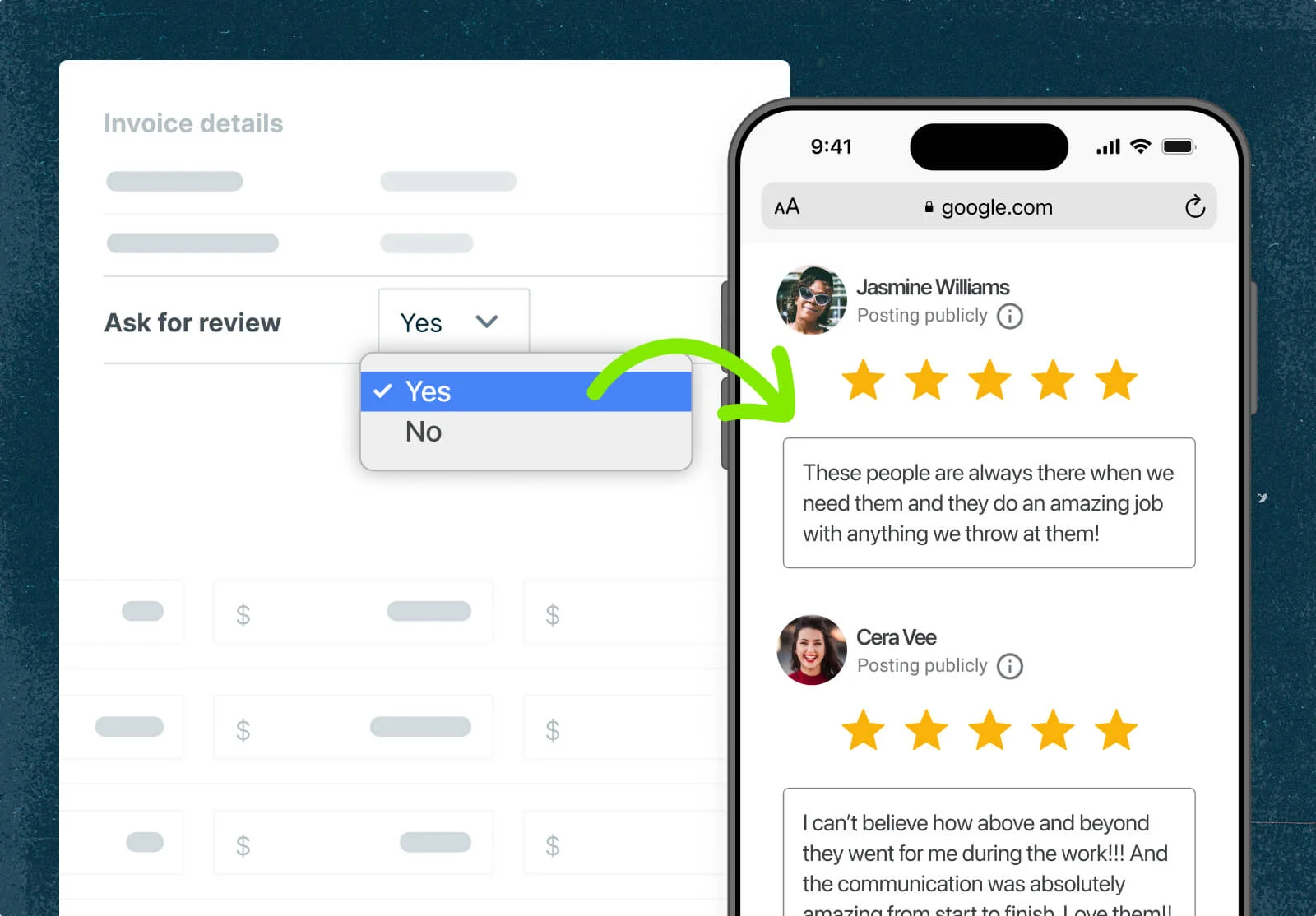
To make sure you’re collecting reviews consistently, try automating the process with a tool like Jobber. Jobber lets you choose which customers to follow up with and automatically sends them a text asking for a review after they’ve paid their invoice.
When you make an invoice in Jobber, you can choose if you want to send the customer a review request.
READ MORE: Best pest control apps for 2026
Customers get a direct link to leave a review, making the process quick and easy.
From your Jobber reviews dashboard, you can track your average rating, view recent feedback, and access tips to manage your business’s reputation.
4. Get listed on other local directories
There are many more places than Google to list your business. The more listings you have, the more opportunities there are for prospective customers to find you.
Create a profile on some of these directories that include your pest control company name, services, website, and contact information:
- Bing Places
- Yelp
- Nextdoor
- Yellow Pages
- Chamber of Commerce
- Foursquare
- Yahoo Small Business Registration
5. Market your business on social media
Many of your potential clients spend more time on social media than anywhere else online. They’ll even search for businesses on Facebook and Instagram before (or instead of) using traditional search engines like Google.
You don’t need to be a social media marketing expert to use Facebook and Instagram for your online marketing. You just need to set up profiles that help potential customers find you, trust you, and contact you.
Create a detailed social media page
Whichever platform you choose, fill out as much information about your business as possible so that people know what you can do for them.
Facebook lets you add lots of detail about your company to your Business Page. To look trustworthy and give potential customers the information they need, you should add:
- A profile picture with your company logo
- A cover image that represents your business well, like a photo of your entire team or a specialist working on the job
- Contact information and business hours (Facebook lets you fill this out in one section that appears on the side of your business page)
- An ‘About’ section that describes what services you offer, how long you’ve been in business, and the locations you serve.
- Contact method for customers who want to ask you questions or book your services
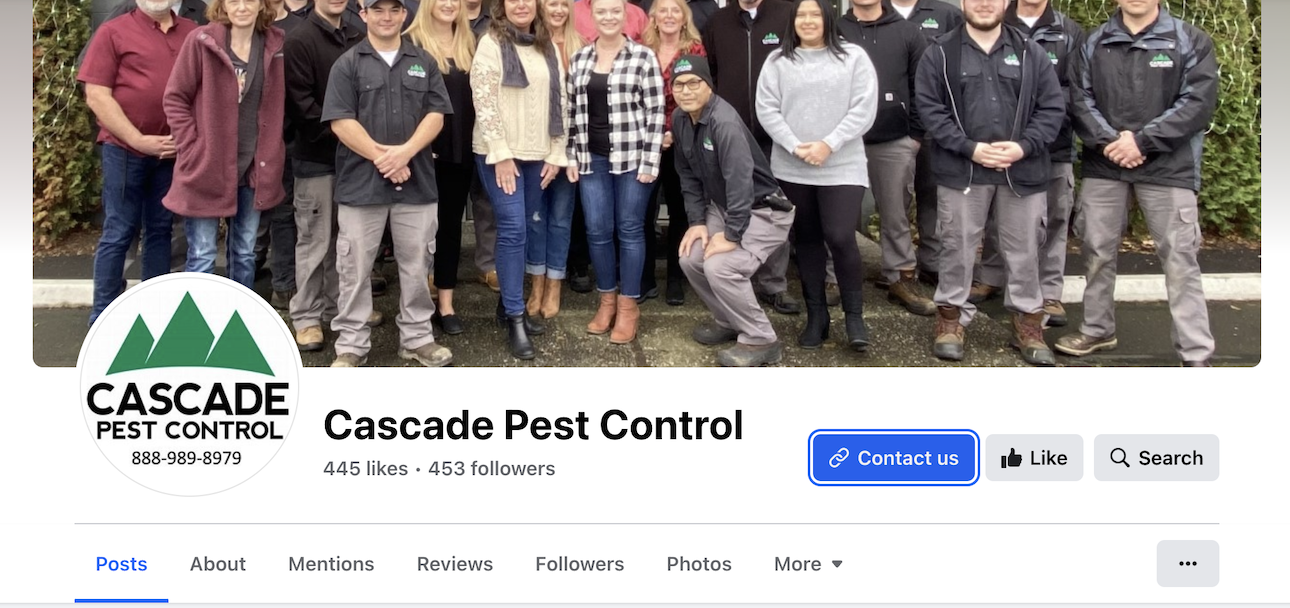
Facebook lets you choose what contact method to put at the top of your business page. You can let customers message you directly on Facebook. Or, you can add a link to your website or your online booking form from Jobber.
For example, Cascade Pest Control has a ‘Contact Us’ button on their Facebook page that takes visitors straight to their website:
An Instagram profile is a bit simpler to set up. Include all of the same information in your bio, and add any extra details about your services in your Story Highlights, like Allure Pest Management does:
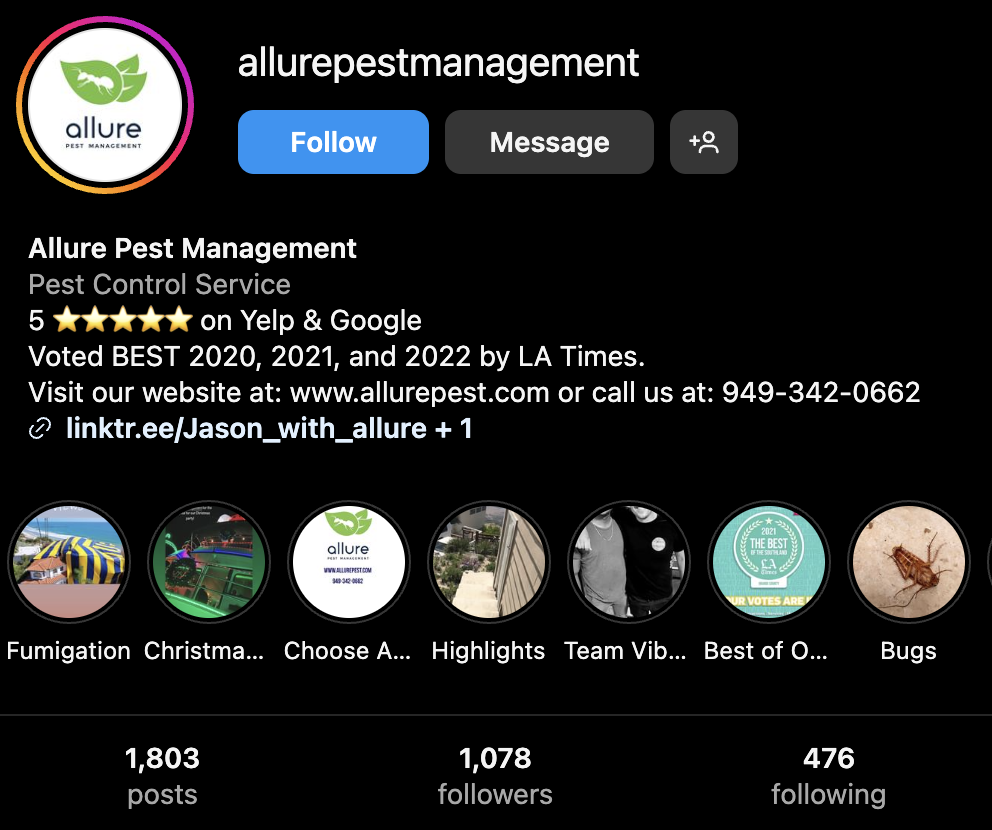
Be sure to add a link to your pest control website in your bio. Allure Pest Management uses Linktree, a free tool that lets them share multiple links on their Instagram bio (including their website and Yelp page).
Post about your team’s work
Start by posting any photos and videos you have of your team’s work. These posts will show potential clients you’ve done great work and that you’re an active business. If you need ideas for social media posts that customers might find interesting, try creating:
- How-to videos showing customers how to set traps
- Preventative home maintenance tips that keep pests away
- Before-and-after images of pest removal results
- Customer reviews and testimonials
6. Pay for traditional Google ads
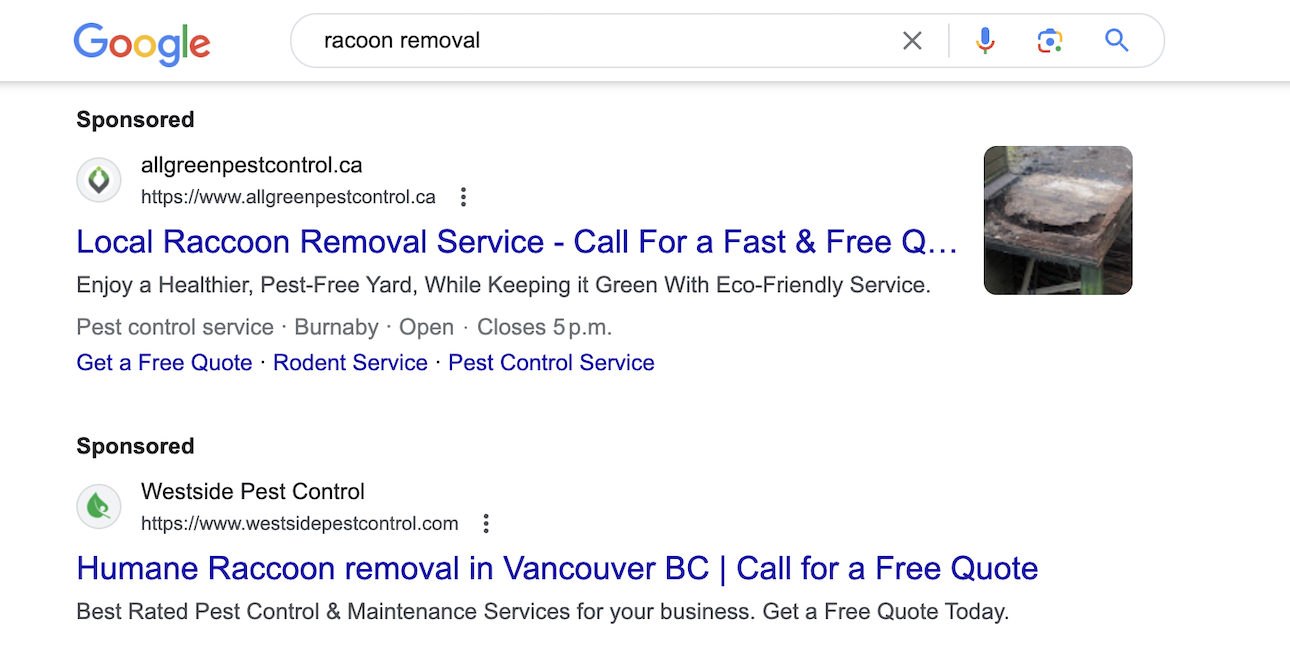
When your marketing budget increases and you’re ready to invest more into paid ads, try running Search ads on Google.
Search ads appear before regular search results (and after Local Services Ads) when customers search for pest control services. For this type of ad, you have to bid money on specific phrases and compete with other companies for advertising space.
For example, if you bid on “raccoon removal,” your ads have a better chance of appearing when someone searches for that keyword.
7. Demonstrate your expertise and attract customers through content marketing
Before hiring an exterminator, many homeowners try to solve pest problems on their own. Questions like “how to get rid of termites” and “do mice invade in winter” get thousands of searches on Google every month.
Your website can appear in those searches if you answer them helpfully and thoroughly with informational articles.
This is called content marketing—and it’s a way to use your expertise not just to help customers, but also to convince them you’re the right expert for the job.
Here are some examples of articles you could write:
- How to safely remove a beehive from your property
- Safe pest control methods for families with children
- 10 natural ways to keep ants out of your home
For example, Smith’s Pest Management has a detailed guide on how to get rid of ants as a homeowner.
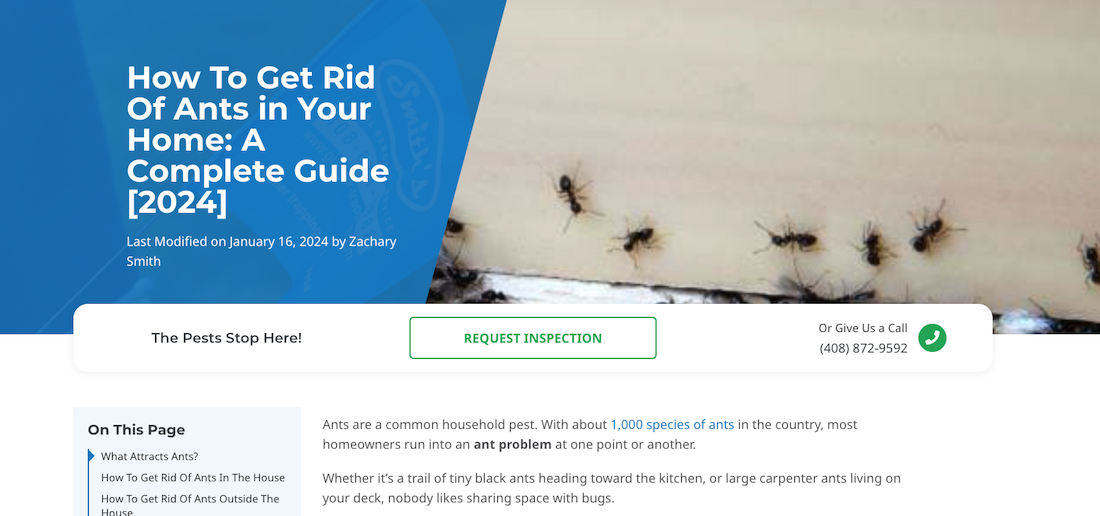
Because the guide is helpful and uses search engine optimization successfully, it shows up on the first page for customers searching for help with ant removal.
Throughout the article, Smith’s Pest Management also advises customers to get help from a professional.
By sharing advice like this, you’re setting yourself up as a trustworthy authority in your field. So when a website visitor runs into a pest problem, you’ll be their first call.
How to choose article topics
To choose article topics, start by brainstorming a list of questions you think your customers would search. Then, run them through a free keyword research tool like WordStream.
When you type in a keyword like “how to get rid of ants,” you’ll see how many customers are searching that exact keyword and how competitive it is:
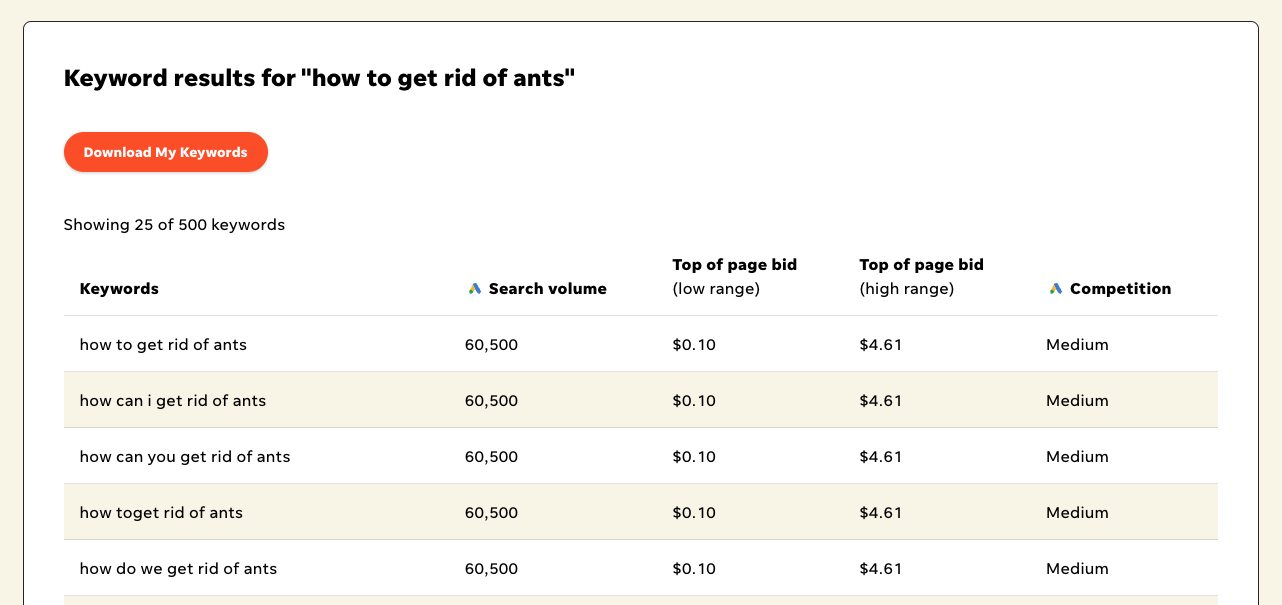
Be aware that competition can be tight. For popular questions like this one, you’re up against pest control companies that have been doing content marketing for years.
To write high-quality content that can compete, you can either hire a:
- Freelance content writer
- Search engine optimization (SEO) agency
- Digital marketing agency.
Agencies can charge high monthly rates, but a good one can help you improve your website and overall digital marketing strategy.
8. Connect with customers on lead generation websites
Lead generation websites are places where customers can get matched with pest control service providers like you. After creating a business listing on sites like these, you can pay to contact those customers.
Get set up on one or more of these top lead generation sites:
- Thumbtack: Thumbtack lets customers search for pest control specialists around their ZIP code and choose the ones they want. Build a stand-out profile with a strong introduction, lots of customer reviews, and photos of your work.
- HomeAdvisor: HomeAdvisor’s contractor product now operates as Angi Leads, and since January 2025 a “homeowner choice” model lets homeowners pick which pros contact them (leads are no longer auto-matched).
- Angi: When you list your business on Angi, you’ll be ranked based on the number of positive client reviews you have. You can also boost visibility by buying ads at an added cost.
READ MORE: Angi vs HomeAdvisor: Which lead generation service should you use?
Paying for leads can get pricey, so be sure you have room in your budget before signing up for lead generation services.
Be aware that these services don’t always guarantee you the best leads. We recommend using these services when you have room to experiment, or if you’re struggling to get leads from search engine marketing and other unpaid efforts.
READ MORE: Pest control web design: 8 tips to attract customers
9. Leave branded “gifts” at customer properties
Marketing your pest control company to existing customers is just as important as attracting new ones.
After every visit, leave a physical reminder of your company at the customer’s property so they’ll remember to contact you if another problem pops up.
A customer is less likely to throw out a special “gift” than a business card—and it can make your business more memorable.
Here are some ideas for gifts that you can decorate with your company branding and contact info:
- Branded insect-repellent wristbands or clips for outdoor activities
- Reusable tote bags with a fun pest control-themed design
- Bug-shaped refrigerator magnets with your company branding
- Personalized reusable water bottles
- Customized notebook with helpful pest control tips inside
- Branded pens and stationery
10. Decorate your uniforms and vehicles
Use vehicle wraps and your team uniforms to promote your business while you’re working. These are one-time investments that help you attract potential customers for years.
Your vehicle wraps, decals, and uniforms should include:
- Business name and logo
- Tagline or sentence with your best selling point (e.g., speedy 24/7 emergency services)
- Phone number
- Your website’s URL
- A simple and eye-catching design with your company colors

The team at ohDEER wears branded uniforms and drives a truck that has their company branding and contact information.
You can design the decals yourself, use a service like 99designs, or hire a freelancer to design them for you. Then, contact a local print shop that does vehicle decor to get them printed and installed.
11. Partner with other businesses
Partnering with other local businesses is a smart way to grow your pest control company. Connect with real estate agents, property managers, landscapers, or cleaning providers who may spot problems and offer you easy referrals.
Make it easy for partners to promote your business by sharing business cards, a flyer, or a discount code for their clients. You can also return the favor with referrals of your own.
Because great local relationships can go a long way, always look for businesses that share your values and already serve the kind of customers you want to reach.
12. Use email marketing for repeat business
Email marketing is another cost-effective way to stay top of mind with your customers and keep new contracts coming. Whether you’re sharing seasonal tips, special pest control offers, or service reminders, a quick email can turn one-time jobs into repeat business.
You don’t need to send messages every week. A few well-timed emails throughout the year can make a big impact.
By setting up email marketing campaigns in Jobber, you can automate messages, target the perfect customers, and see what’s working with new leads. This allows you to stay connected without extra hassle.
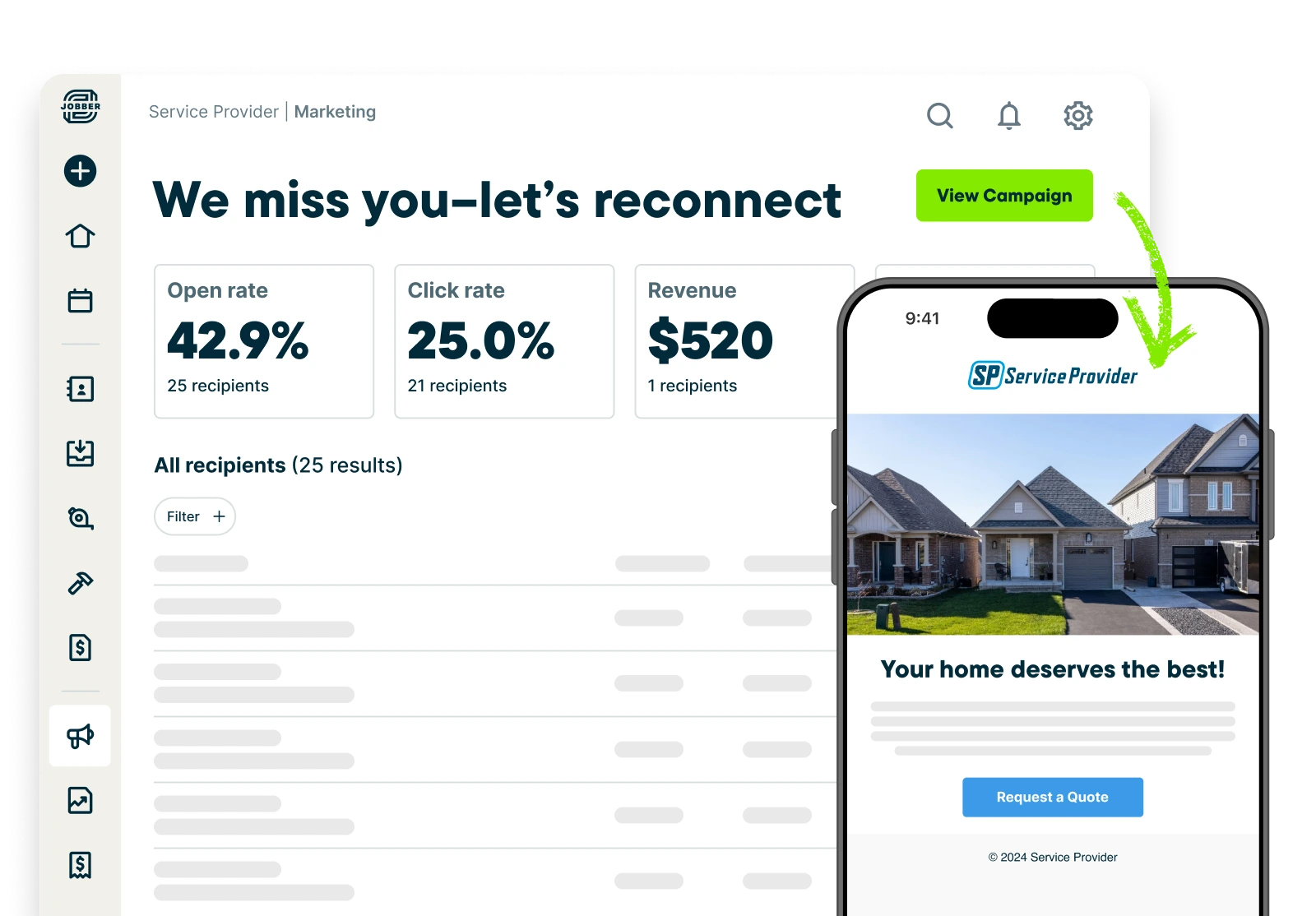
You can send emails to your clients, past clients, inactive clients, upcoming clients, all within the Jobber platform—it’s really slick.
And when a client pays their invoice, they immediately get prompted to leave a review. That’s really powerful. You can make your marketing better and stronger with Jobber.

Grow your pest control business with Jobber
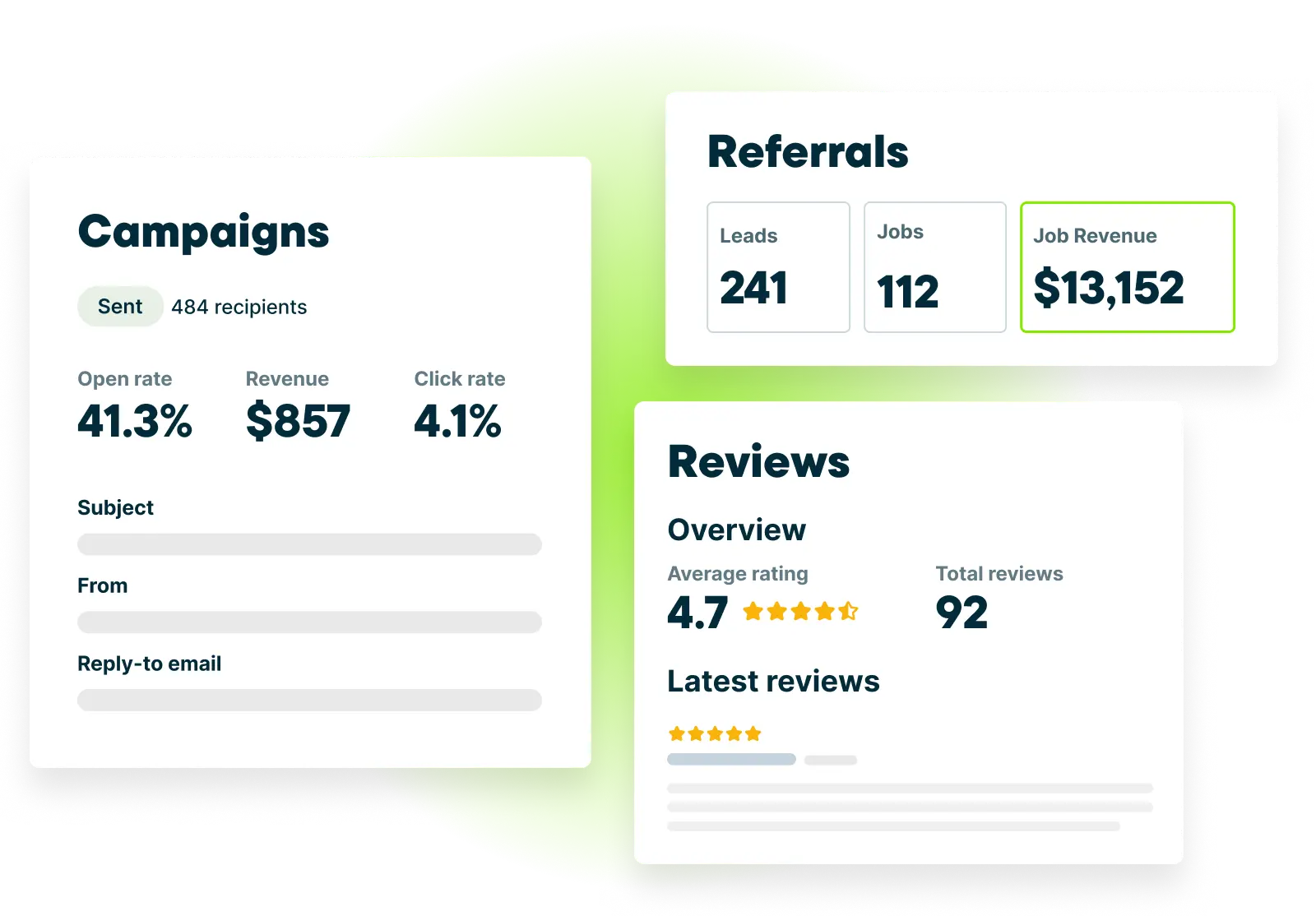
Attract more customers with tools that make you look like the pro you are. Jobber marketing tools help you build a strong reputation that attracts more customers and secures more work with less effort.
Here’s what’s included in Jobber’s Marketing Suite:
- Business website: Optimize your first impression with a user-friendly, professional-looking pest control website that you can launch in minutes.
- Reviews: Give your online reputation a boost by collecting more Google reviews through automated review requests.
- Referrals: Simplify the referral process with a fully automated referral program, making it easier for customers to send new business your way.
Attract customers and get more work with less effort
Growing your pest control business doesn’t have to mean running expensive ads or chasing every lead. When you set up the right strategies—like building your online presence, collecting reviews, and staying in touch with customers—you can attract more work without the hassle.
Ready to start? Pick 1-3 marketing ideas from this list. Test what works best for your business, then refine your approach so you’re focusing on the tactics that deliver the biggest return.
How much does pest control marketing cost?
There’s no single price tag for pest control marketing, but setting a budget helps keep your spending under control. A rough starting benchmark is about 8% of gross revenue. A U.S. Small Business Administration article cites research showing that businesses spent an average of 7.9% of revenue on marketing. However, the right amount varies by industry, business size, and growth stage, and newer businesses may need to spend more to build awareness.
Costs also vary by channel. Local Services Ads use a pay-per-lead model, so you pay when a potential customer contacts you—not each time someone clicks the ad. Standard Google Ads typically use a pay-per-click model, meaning you pay when someone clicks. Other lead-generation services may charge a flat fee or a fee for each lead or booked job.
The most important question isn’t how much you spend—it’s what you get back. Track where every lead comes from and compare your marketing costs with the revenue each channel generates.
A customer relationship management (CRM) tool like Jobber can tag each lead by source. This helps you identify your best-performing channels and direct more of your budget toward them. Review your results monthly and prioritize the channels that generate the most profitable work.
Originally published October 2020. Last updated September 18, 2026.
Pest control marketing FAQs
-
Start where buyers already look: Google. Claim your Google Business Profile, collect reviews, and run Local Services Ads so you show up when people search for help. Then follow up fast on every lead and ask happy customers for referrals. Speed and reputation win most local jobs.
-
Yes, pest control can be profitable, especially when recurring service plans provide a steady source of revenue. The U.S. structural pest control industry generated $13.4 billion in service revenue in 2025, up 6% from 2024. Recurring services accounted for 85.4% of residential revenue, according to the National Pest Management Association. Demand also remains strong: the U.S. Bureau of Labor Statistics projects employment of pest control workers to grow 6% from 2025 to 2035, compared with 3% for all occupations.
-
A common starting benchmark is about 8% of gross revenue. A U.S. Small Business Administration article cites research showing that businesses spent an average of 7.9% of revenue on marketing, although spending varies by industry and growth stage. Newer businesses may need to invest more to build awareness and attract customers. Track the revenue generated by each channel and adjust your budget based on its return on investment.
-
For most pest control companies, local search is the best channel — a strong Google Business Profile, steady five-star reviews, and Local Services Ads. Pair that with email reminders for seasonal treatments so customers rebook without being chased.