
Key takeaways:
Discover how plumbing businesses can use expert email marketing to win more repeat work, referrals, and revenue.
- Build and grow your email list strategically. Capture customer emails during service calls, add sign-up forms to your website and booking pages, and offer helpful resources (lead magnets) to encourage sign-ups—all while ensuring you have customer consent for marketing emails.
- Segment your email list for relevance and higher engagement. Group contacts by customer type, stage in the client lifecycle, service received, plumbing equipment, or recency of service to send more personalized, effective messages.
- Write emails that get opened and drive action. Use clear subject lines, concise language, personalization, mobile-friendly design, and include a single compelling call to action in each message.
- Send a variety of campaign types for consistent value. Set up automated welcome sequences, post-service follow-ups, seasonal maintenance reminders, promotional offers, educational tips, and re-engagement campaigns to maintain customer relationships over time.
- Automate your email marketing for efficiency and better results. Use tools like Jobber to trigger targeted, timely email campaigns based on service history, automate review requests, and schedule recurring maintenance reminders—leading to more booked jobs with less manual effort.
- Measure results and avoid common mistakes. Track open rates, click-throughs, conversions, and unsubscribes to optimize your approach. Avoid sending the same message to everyone, overwhelming with frequency, or ignoring mobile formats and list maintenance.
Get more plumbing marketing tips and expert advice delivered monthly—sign up for the Jobber Newsletter at Jobber Academy Newsletter.
You’re likely already collecting emails for each plumbing job, giving you a list of customers who will need service again. But are you using those emails to drive repeat business?
Email marketing turns your existing list into consistent revenue, generating an average of $36 for every $1 spent. It’s a cost-effective marketing channel that uses contact details to create repeat jobs and referrals.
This guide explains how to turn those contacts into a simple yet effective email marketing system that turns one-off service calls into repeat customers and referrals.
Everything you need to know about email marketing for plumbers:
-
How to build an email list for your plumbing business
-
How to segment your plumbing email list
-
How to write plumbing emails that get opened
-
Types of email campaigns to send (with templates)
-
12-month plumbing email calendar
-
How to automate your plumbing email marketing
-
How to choose email marketing software for your plumbing business
-
How to measure email marketing results
-
Common email marketing mistakes to avoid
How to build an email list for your plumbing business
Before you can send marketing emails, you need a list of customers who have already agreed to be contacted by email.
Most plumbing businesses already collect email addresses during normal operations. Your goal is to capture those emails consistently and give people a clear reason to stay connected with your business. Here’s how to build your email list:
1. Collect emails during service calls
One of the easiest ways to build an email list is to collect addresses during everyday customer interactions.
When technicians complete a job, they can confirm the customer’s email address before sending the invoice or receipt. Office staff can also ask for an email when booking appointments or creating customer records.
Over time, this creates a growing list of past customers who can receive plumbing service updates, maintenance reminders, and follow-up messages.
Just make sure you get the client’s permission to send them marketing emails. This can be as simple as your employee asking, “Would you like to sign up for service updates and other occasional emails?”
2. Add sign-up forms to your website and booking pages
Your plumbing website is another reliable place to collect email addresses. Add a simple email newsletter sign-up form to your homepage, contact page, and online booking page, where the customer can enter their name and email address.
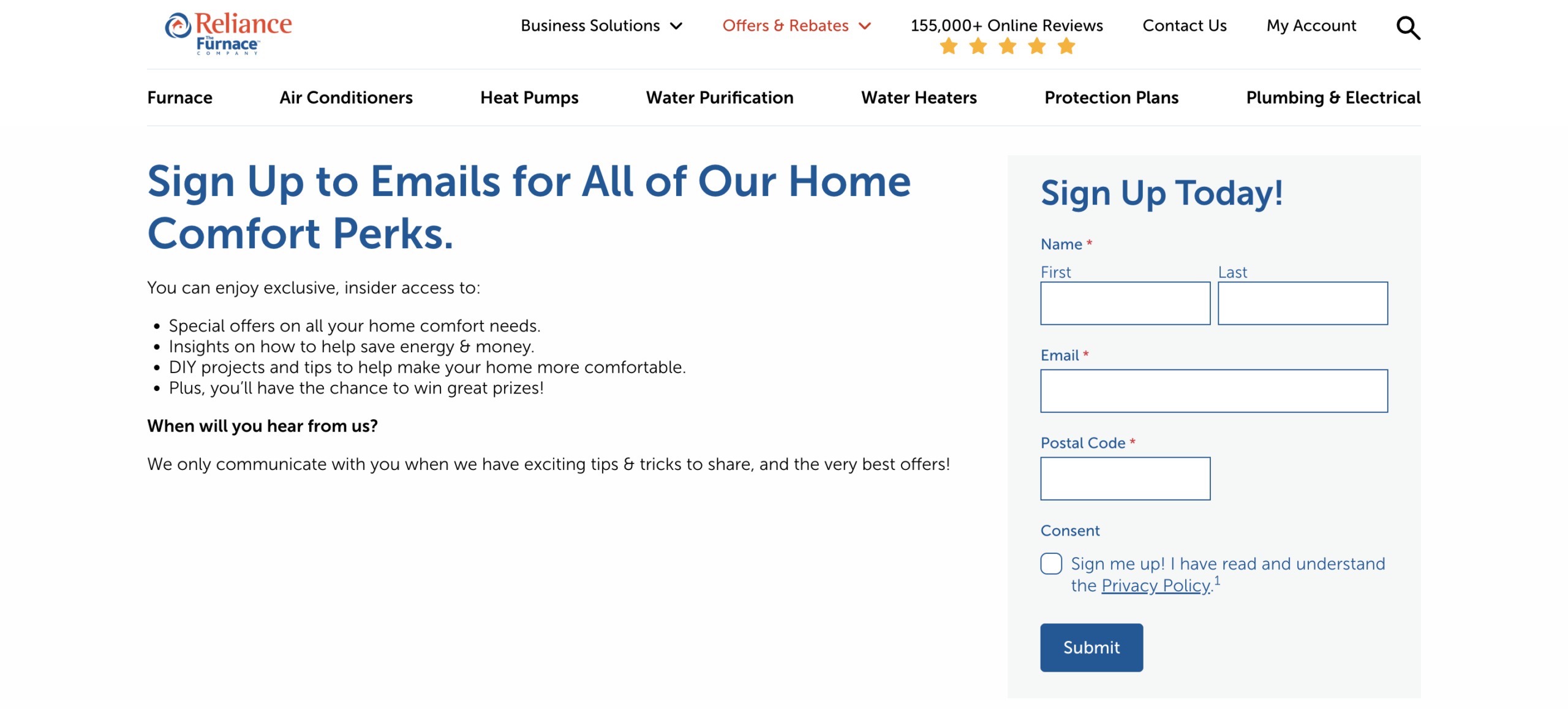
You can also include an option for visitors to subscribe to emails when they request a service online. Include a checkbox that says “Add me to your email list for plumbing tips and maintenance reminders” for easy opt-in.
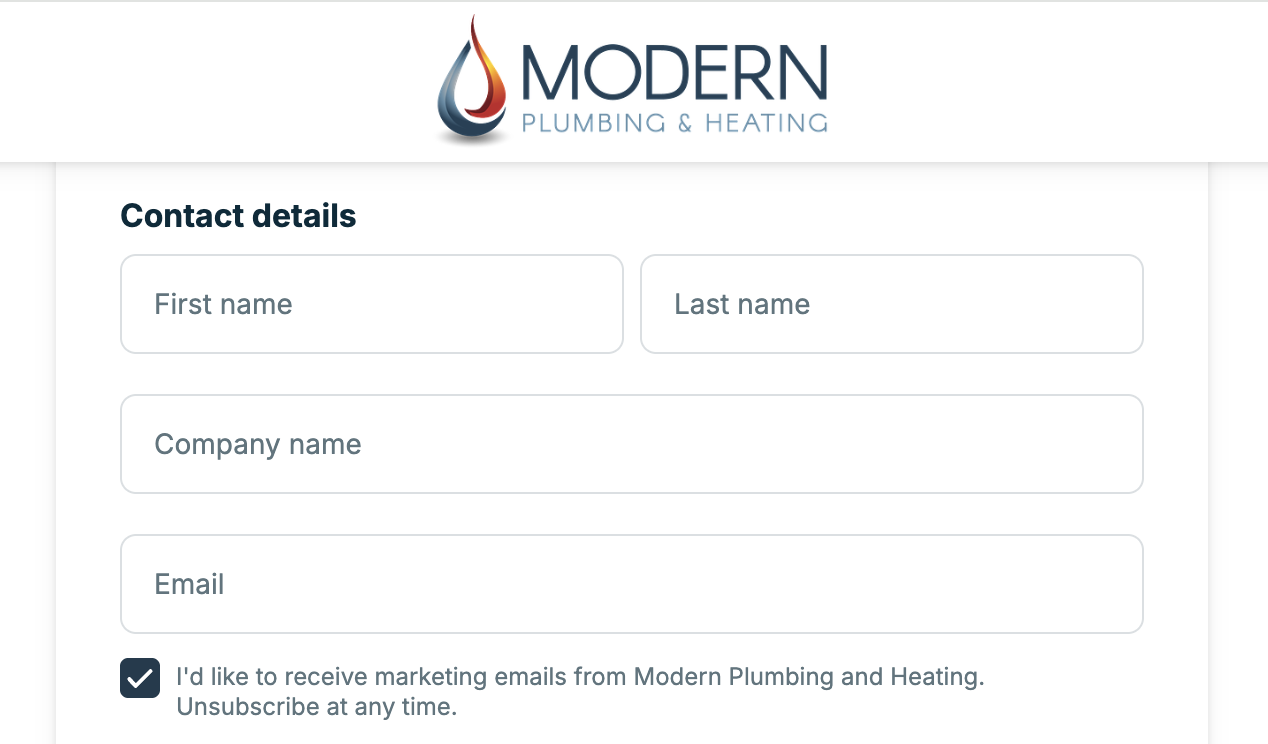
When you add Jobber’s online booking form to your website, it automatically comes with a newsletter consent checkbox.
3. Offer free resources in exchange for email addresses
You can offer a simple resource in exchange for someone’s email address. This is called a lead magnet. It provides immediate value to the homeowner while introducing your plumbing business as a helpful local expert.
For example, you could offer a short checklist titled “5 Signs Your Water Heater Needs Replacing” or a guide on preventing frozen pipes during winter. Visitors download the resource by entering their email address, which makes them a plumbing lead and adds them to your list.
Over time, subscribers get maintenance reminders, service offers, and educational emails. This gives them the information they need to maintain their home while encouraging them to book a job when they need help.
This type of resource page can be tricky to set up, since the resource has to be gated until a visitor provides their email. You may need a web developer’s help to build it.
How to segment your plumbing email list
Email segmentation means dividing your contact list into smaller groups based on shared characteristics, like their neighborhood, type of service they received, or service value.
Instead of sending the same message to everyone, you send emails that are relevant to each group. Segmenting your email list improves open rates, reduces unsubscribes, and increases the chance that customers will book services.
Common ways to segment an email list include:
- Audience: Segment your list by residential or commercial customers. These groups often have different needs and service schedules. Residential emails may focus on maintenance tips and seasonal reminders, while commercial customers may want messages about ongoing service agreements or scheduled maintenance.
- Customer stage: Segment contacts based on their relationship with your business. This may include new plumbing leads who haven’t booked yet, first-time customers, repeat customers, and dormant customers who haven’t scheduled service in a long time.
- Service type: Group customers based on the type of work they received, such as installation, maintenance, or repair. This makes it easier to send follow-up emails that match the type of service they received.
- Plumbing equipment: Segment customers based on the plumbing systems or fixtures involved in the job. Examples include water heaters, sump pumps, toilets, sinks and faucets, showers, or drain and sewer systems. These segments help you send targeted maintenance reminders and service recommendations.
- Service recency: Organize contacts by how recently they booked a job, like within the last six months, in the last year, or more than a year ago. This helps you identify customers who may be due for maintenance or ready for a reminder to schedule service.
You can find these details in your plumbing CRM. When combined, these segments let you send targeted campaigns that feel relevant to the customer and turn one-time service calls into long-term relationships.
A lot of business owners forget that there are all these people sitting in your database, prospects and customers that already know and trust you. You can cross-sell them different services.

How to write plumbing emails that get opened
Your customers are already being bombarded with marketing emails, so your emails need to stand out if you want a customer to open them. Use these email marketing tips for plumbers to create emails that get opened and win new work:
- Write clear, specific subject lines. 47% of recipients decide whether to open an email based on the subject line, so tell the reader what the email is about. Avoid vague or overly promotional language, like “Service announcement” or “SALE SALE SALE.” Focus on maintenance reminders, helpful information, or timely service needs.
- Keep emails short and easy to read. Customers will quickly scan your message. Use short paragraphs and simple language so they can understand the main point right away. Focus on one topic per email instead of trying to cover multiple services at once.
- Personalize your emails. Add a customer’s name or a past service to make the email feel more relevant. For example, you could mention the last time you serviced their water heater or remind them about equipment installed during a previous job.
- Make sure your emails are mobile-friendly. 85% of people read email on their phones at some point during the day. Use a simple layout, large text, and clear spacing so the message is easy to read on a small screen.
- Use one clear call to action. Each email should guide the reader to take one specific next step. For a plumbing business, this often means scheduling service or requesting an inspection. A clear button saying “Request service” or “Book inspection” helps customers take action quickly.
- Maintain consistent branding. Every email should clearly represent your business and include your service business branding. Include your plumbing company name, logo, and contact information each time you send a message. This helps customers recognize your emails and builds trust over time.
Types of email campaigns to send (with templates)
Once you have a customer email list in place, the next step is deciding what to send. It’s best to set up a small set of repeatable campaigns rather than sending occasional one-off emails.
Below are several common email campaigns for plumbing businesses. We’ve also included a series of email templates for plumbers that you can adapt for your own content marketing.
Welcome email sequence
A welcome email introduces your plumbing business to new contacts, like homeowners who downloaded a guide from your website or customers who recently booked their first service. The goal is to build trust and explain how you can help the customer maintain their plumbing system.
Welcome email template
Subject: Thanks for contacting [Company Name]!
Hello [First Name],
Thanks for reaching out to [Company Name]. We help homeowners in [Service Area] with plumbing maintenance and repairs. If you ever need help with issues like leaks, clogged drains, or a broken water heater, our team is ready to assist.
You can schedule service at any time here: [Schedule Service Link]
We also send occasional maintenance reminders and plumbing tips to help you avoid unexpected problems.
Thank you for choosing [Company Name]. We look forward to working with you!
Best,
[Your name], [Business name]
Post-service follow-up
After completing a job, a follow-up email shows customers that you care about their experience. This message also creates an opportunity to request an online review, which helps attract new customers. Send this email within a day or two after the service visit.
Post-service follow-up email template
Subject: How did your recent plumbing service go?
Hello [First Name],
Thank you for choosing [Company Name] for your recent plumbing service.
If everything is working well, we would appreciate a quick review of your experience. Your feedback helps other homeowners in [City] find a reliable plumber. You can leave your review here on our Google Business Profile: [Leave a Review Link]
If you have any questions or need additional help, feel free to contact our team. Thank you again for your business!
Warm regards,
[Your name], [Business name]
Seasonal maintenance reminders
Seasonal reminders help customers book preventive maintenance before problems appear, like frozen pipes or overflowing sump pumps. These emails work well when they’re tied to common plumbing issues that often happen during different times of the year.
Seasonal maintenance reminder email template
Subject: Reminder: Schedule your seasonal plumbing check
Hello [First Name],
Seasonal plumbing maintenance can help prevent unexpected problems and keep your plumbing system running smoothly throughout the year. This is a good time to schedule [specific maintenance task].
If you would like our team to take a look and keep your system in good condition, you can schedule service here: [Schedule Service Link]
Thank you,
[Your name], [Business name]
Promotional campaigns
Promotional emails can help generate work during slower periods. These campaigns may include seasonal discounts, service bundles, or referral programs.
The key is to keep the offer simple and clearly explain the value to the customer. Here’s what you should include in your promotional email:
Promotional email template
Subject: Get 10% off your inspection when you book before [date]
Hello [First Name],
For a limited time, [Company Name] is offering a special on [service or inspection]. This service helps identify potential plumbing problems before they become larger repairs.
[Description of service, e.g., detailed water heater inspection to ensure working condition and assess future maintenance needs]
[Explanation of discount or special offer, e.g., 10% off when you book before a certain date]
You can schedule service here: [Schedule Service Link]
Thanks,
[Your name], [Business name]
Educational emails
Educational emails position your business as a helpful resource and provide practical information that helps homeowners take care of their plumbing systems. Over time, this builds trust and encourages customers to call your business when they need professional help.
Educational email example
Subject: Prevent common household leaks with these 5 tips
Hello [First Name],
Many plumbing issues start with small problems that are easy to overlook. Here are a few signs that a leak may be developing in your home:
- Water stains under sinks or around fixtures
- A sudden increase in your water bill
- Dripping sounds inside walls or cabinets
If you notice any of these issues, it may be worth having a plumber inspect the system. Our team is ready and waiting, so schedule your inspection now: [Schedule Service Link]
Thank you,
[Your name], [Business name]
Re-engagement campaigns for dormant customers
Re-engagement emails target customers who haven’t scheduled service in a long time. These messages remind them about your business and encourage them to book maintenance. You could even include a limited-time offer to help bring these customers back.
Re-engagement email template
Subject: How’s your plumbing system doing? It’s time for a check-up
Hello [First Name],
It’s been awhile since your last plumbing service with [Company Name]—we hope you’re doing well!
Regular plumbing inspections can help identify small problems before they become costly repairs. If you would like to schedule a maintenance visit, our team would be happy to help.
You can book service here: [Schedule Service Link]
We look forward to helping you keep your plumbing system running smoothly!
Thanks,
[Your name], [Business name]
12-month plumbing email calendar
Many plumbing issues follow predictable patterns throughout the year, which makes it easier to schedule relevant reminders and service offers. Planning your emails in advance helps you send messages that match your customers’ seasonal plumbing needs.
Need plumber newsletter ideas? Use this example calendar as a starting point for planning your plumbing email campaigns:
| Month | Topic | Content |
|---|---|---|
| January | Frozen pipe prevention and winter plumbing inspections | Remind homeowners to watch for pipe freezing risks and offer winter system checks |
| February | Leak detection and indoor plumbing maintenance | Encourage customers to check for slow leaks in sinks, toilets, and pipes |
| March | Sump pump inspections and spring preparation | As snow begins to melt, remind customers to test their sump pumps and drainage systems |
| April | Outdoor plumbing checks | Recommend inspections for outdoor faucets and irrigation lines before regular outdoor use |
| May | Drain cleaning and sewer line inspections | Tell customers that spring is a good time to address slow drains and potential sewer line issues |
| June | Water heater maintenance reminders | Encourage customers to schedule a water heater flush or inspection before summer travel |
| July | Mid-year plumbing checkups | Promote general system inspections and preventive maintenance for common fixtures and appliances |
| August | Water conservation and efficiency tips | Share advice on reducing water use and upgrading older fixtures |
| September | Fall plumbing preparation | Remind customers to inspect pipes, insulation, and shut-off valves before colder weather arrives |
| October | Frozen pipe prevention | Provide guidance on disconnecting outdoor hoses and preparing plumbing systems for winter |
| November | Holiday plumbing preparation | Share usage tips for kitchens to prepare for increased holiday use, like not putting fat or food chunks down the drain |
| December | Emergency plumbing reminders | Share tips for preventing winter plumbing emergencies and remind customers how to contact your team if urgent service is needed |
How to automate your plumbing email marketing
Automation helps your plumbing business stay in contact with customers without having to manually send every message. Emails can be triggered automatically based on customer actions or service history, saving you time while ensuring customers get timely messages.
These automation tips are a good starting point for most plumbing businesses:
Set up a welcome sequence that runs on autopilot
A welcome sequence is a short series of emails sent automatically when someone joins your email list or becomes a new customer. This could happen after a customer books their first service or subscribes through the email sign-up form on your website.
The first email usually introduces your business and explains the services you provide. A second email can follow a few days later with helpful information, like common plumbing maintenance tips or instructions for scheduling future service.
Once the sequence is set up in your email platform, it runs automatically whenever a new contact is added to your list.
Automate post-service follow-ups and review requests
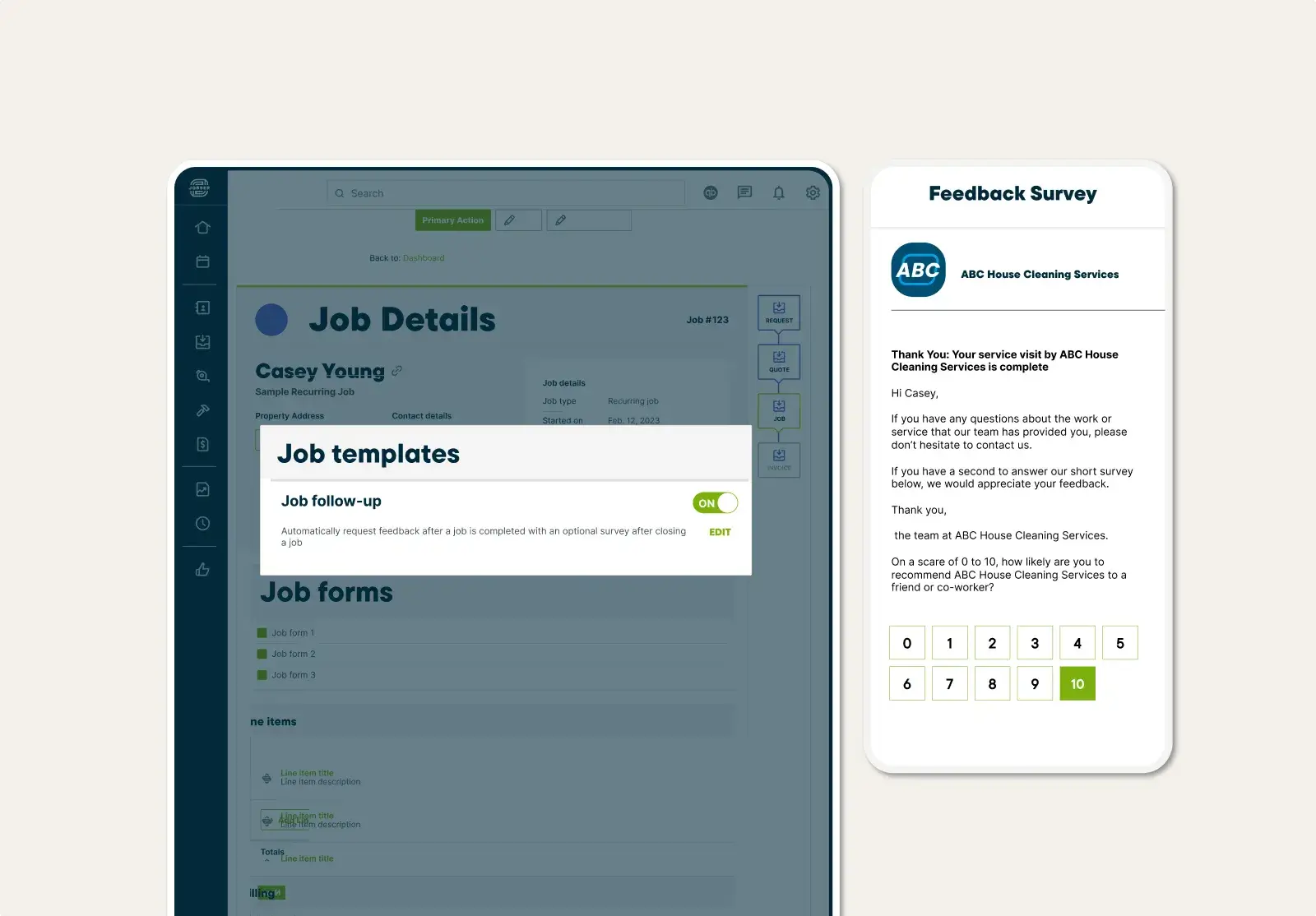
After a job is completed, the system can automatically send a follow-up message thanking the customer and asking for feedback.
These emails are typically sent 24–48 hours after the service appointment. They often include a short thank-you, a link to leave a review, and contact details in case the customer has questions.
Automating this process helps ensure current customers receive a follow-up. This can increase the number of online reviews your business collects.
In fact, when you use Jobber to send your automated job follow-ups and review requests, you can get twice as many Google reviews as a result.
Schedule recurring maintenance reminders
Many plumbing systems need regular maintenance, like sump pump inspections, drain cleaning, or water heater flushing. Automated reminders help customers remember when these services are due.
If your customer management system tracks service history, it can trigger these reminders automatically based on the date of the last job. This helps create repeat business while reducing the need for manual emails.
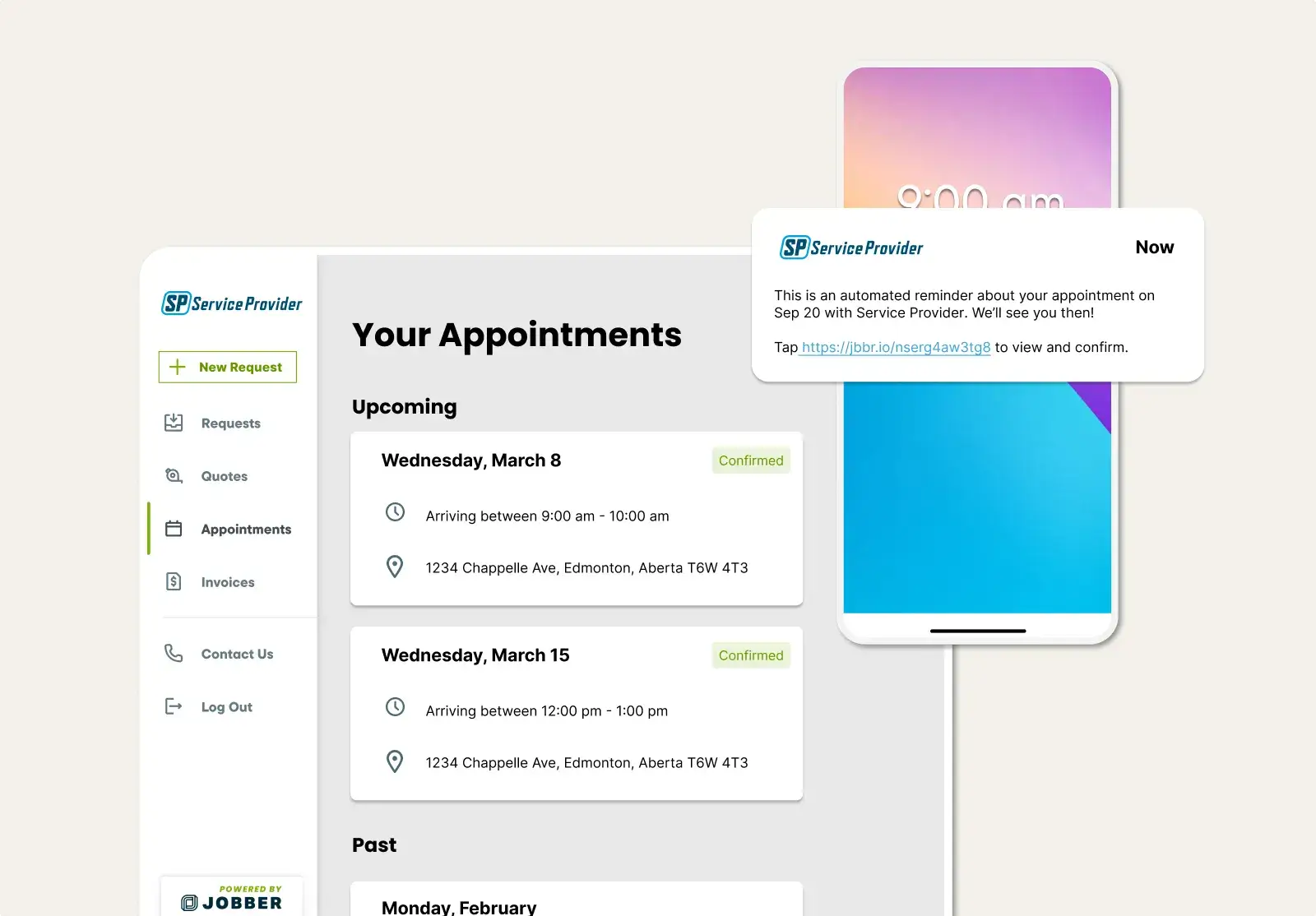
Jobber lets you schedule automated visit reminders via email or text to notify clients of upcoming appointments. Clients can then click a link to your self-serve client hub to see job details.
How to choose email marketing software for your plumbing business
The fastest way to set up plumbing email automation is through a platform that already contains all of your customer data. The best option is plumbing business software like Jobber.
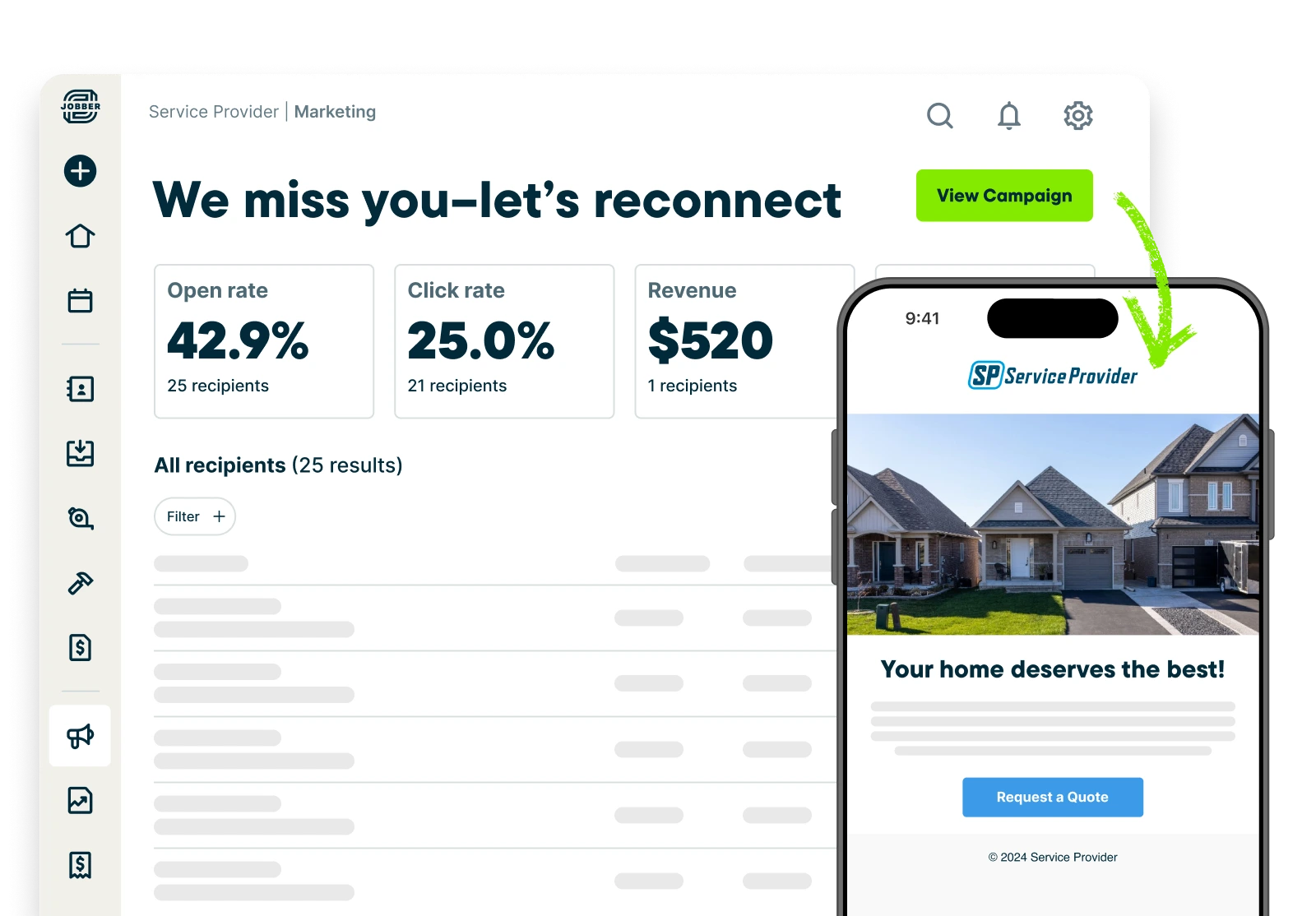
In addition to helping you manage your day-to-day, Jobber has marketing tools to get your business noticed. Jobber Campaigns connects directly to your customer database so you can send post-service follow-ups and maintenance reminders to past clients. It also includes:
- Campaign generator: Easily create an email campaign in no time. Just describe what you want to do, and Jobber will build a polished plumber email marketing campaign that’s ready to send.
- Client segmentation: Target the right customers with the right message using client and job details that are already stored in Jobber.
- Automated campaigns: Send the right message at the right time by automating campaigns based on whether a contact meets specific criteria.
- Campaign reporting: See which campaigns earn the most engagement and revenue for your business with clear, in-depth reporting.
Our first campaign turned into $25,000 worth of revenue in just 1 week.
We’ve now sent four or five campaigns, and each time we do, we see a big jump in revenue.
With Jobber, 80% of campaigns lead to new work being booked. You’ll also save time and win new work without ongoing effort, just by setting up a few automated campaigns.
How to measure email marketing results
Email marketing works best when you track results and make small improvements over time. Monitoring a few specific metrics tells you which emails prompt customers to open, engage with content, and book services.
You can measure the effectiveness of most email campaigns using four metrics. This data is visible in Jobber’s tracking dashboard, as well as most other email marketing platforms:
1. Open rate
This is the percentage of recipients who open your email. It mainly shows how effective your subject line was and whether customers recognize your business.
An open rate of 20–30% is healthy for a plumbing business. If your open rate is lower than that, experiment with clearer subject lines or sending emails at different times.
2. Click-through rate (CTR)
This is the percentage of recipients who click a link inside the email, like a “Schedule service” button or a link to your website.
A click-through rate of 2–4% usually means the message is relevant and the call to action is clear. If your CTR is lower than that, simplify the email. Focus on one desired action you want the customer to take.
3. Conversion rate
This is the percentage of recipients who complete the desired action after clicking, like booking a service appointment or requesting an estimate. It ties your plumbing company email marketing to revenue and jobs booked.
Aim for an email conversion rate of 2–5%. If your conversion rate is significantly lower, review the booking process and make sure your website encourages visitors to book services with prominent CTAs and a simple request form.
4. Unsubscribe rate
This is the percentage of recipients who choose to stop receiving emails. A small number of unsubscribes is normal—aim for an unsubscribe rate around 0.5%.
Consistently high rates could mean you’re sending emails too often, or the content isn’t relevant to subscribers. Try sending fewer emails or improving your audience segmentation.
Common email marketing mistakes to avoid
Email marketing can be a reliable source of repeat business, as long as you do it right. Avoid these common mistakes to keep your campaigns relevant and effective:
- Sending the same email to everyone: Not every customer has the same needs. You should send different emails to a homeowner who recently installed a water heater versus someone who called for a drain repair. Without segmentation, emails can feel irrelevant, and your customers are more likely to ignore them.
- Emailing too often (or not enough): Too many emails can overwhelm subscribers, while too few can make it easy for them to forget about your business. A consistent schedule, like one or two monthly emails, maintains visibility without becoming intrusive.
- Only sending promotional emails: If every email focuses on discounts or sales, customers may stop paying attention. Balance promos with information that’s useful to subscribers, like plumbing tips and maintenance reminders.
- Not maintaining your email list: Over time, some contacts will change email addresses or stop engaging with your messages. Keeping inactive contacts on your list can reduce overall performance metrics. Go through the list regularly and remove invalid or inactive addresses to help maintain a healthier email list.
- Ignoring mobile optimization: If your message is difficult to read on a small screen, recipients may delete it without reading. Use simple formatting, short paragraphs, and clear buttons so customers can easily read and respond from their mobile device.
Advertise your business effectively with email marketing
Email marketing can play a simple but powerful role in your digital marketing strategy for plumbers by helping you stay connected with past customers and encourage repeat service.
Combined with other forms of plumbing advertising, email marketing gives your business another reliable way to generate jobs throughout the year. Start putting the right systems in place now to build stronger customer relationships and grow your plumbing business.
Frequently Asked Questions
-
Most small businesses send marketing emails once or twice per month to stay visible without overwhelming customers. These can be maintenance reminders, educational tips, or seasonal advice. You can also send occasional additional emails with promotions and service announcements.
The most important part of your schedule is consistency. Sending helpful, relevant emails on a predictable schedule is more effective than sending many emails at once and then going silent. -
A plumbing marketing email should be short, relevant to the customer, and focused on one clear action. While the subject can vary, effective emails usually include:
• A subject line explaining the purpose of the message
• A personalized greeting containing the recipient’s name
• A short explanation of the issue or service tip (e.g., frozen pipe prevention or water heater maintenance)
• Helpful information or advice that provides value to the customer
• One clear call to action, like “Schedule service” or “Book inspection”
• Contact information with multiple ways to get in touch (e.g., phone, email, website, social media)
• Consistent company branding (name, logo, colors, fonts) -
Several email marketing platforms work well for plumbing businesses. The right choice usually depends on how integrated you want your marketing tools to be with scheduling, invoicing, and customer management.
Jobber includes email features that let you send customer communications, automate service follow-ups, and manage contacts—all in the same place you manage your work. This makes it easy to send automated customer emails based on job history.
You can also use an email-specific platform like Mailchimp or Hubspot to send emails to customers. These tools are great at sending emails, but they don’t connect to your field service software. -
Yes. Businesses earn $36 for every $1 spent on email marketing, making it a cost-effective way to stay connected with customers. You can send maintenance reminders, ask for reviews and referrals, promote seasonal services, and re-engage past customers.
Plumbing companies are well suited for email marketing because they already collect customer contact information when they provide services. Plumbing services are often recurring, too, so email helps turn one-time service calls into repeat business.
-
The easiest way for plumbing businesses to grow an email list is to collect addresses during normal customer interactions and provide simple incentives for subscribing. Here are a few methods to try:
• Collect emails during service calls.
• Add sign-up forms to your website and booking pages.
• Offer helpful resources, like a maintenance checklist or seasonal plumbing guide.
• Include an email opt-in checkbox as part of your online booking form.
• Run referral promotions or maintenance reminder programs.
These approaches work because customers already expect to provide contact information when booking home services. Over time, consistently collecting emails from new jobs can build a large list of past customers who can receive maintenance reminders and future service offers.