
Key takeaways:
If you’re ready to take your pool service business to the next level, this article outlines 12 practical growth strategies to help you boost profits, streamline operations, and build a solid customer base.
- Set clear growth targets and track key metrics. Define a measurable 90-day goal—such as adding recurring customers or increasing profit margin—and regularly review leads, booked jobs, retention rates, and other critical business metrics.
- Attract more local customers with smart marketing. Optimize your Google Business Profile, ask for customer reviews at the right time, and build partnerships with other local businesses to grow your presence in profitable neighborhoods.
- Leverage referrals and increase revenue from current clients. Create simple referral programs, offer competitive rewards, introduce maintenance plans, and add profitable repair or seasonal services to maximize the value of your existing customer base.
- Streamline routes and manage team capacity. Group jobs by neighborhood, set service area boundaries, and know when to hire or delegate tasks to keep your operations efficient and margins healthy.
- Build systems before scaling and avoid common pitfalls. Standardize customer records, automate admin tasks, and track marketing channel ROI to prevent disorganization and costly mistakes as you grow.
For more business tips like these, sign up for the Jobber Newsletter. Get the latest insights in your inbox.
Growing a pool service business takes more than adding customers to your schedule. You need recurring good-fit work, profitable routes, recurring customers, team capacity, and the right systems in place to keep everything running smoothly as your workload grows.
Whether you’re looking to fill gaps in your schedule or expand your team, these 12 pool business growth strategies can help you grow your business without stretching yourself too thin. We’ve also included a 90-day plan to help you start growing faster.
How to grow a pool maintenance business:
-
Start with a clear growth target
-
Get more pool service customers in your local area
-
Turn happy customers into a referral engine
-
Increase revenue from the customers you already have
-
Tighten your pool service routes and capacity
-
Build systems before you add more crews
-
Use marketing channels you can measure
-
Common pool service growth mistakes
-
How to grow a pool service business in 90 days
Start with a clear growth target
Before investing in marketing channels, expanding your services, or hiring more staff, decide what you want your pool business to accomplish over the next 90 days.
Choose one measurable goal—like adding 10 recurring customers or improving your profit margin. Having a specific target gives you something to work toward and makes it easier to decide where to focus your time and money.
Remember, growth isn’t just about taking on more jobs. The goal is to improve service business profitability and take on more work without overloading your technicians, adding unnecessary costs, or compromising the quality of service your customers expect.
Just getting started? If you’re still figuring out how to start a pool cleaning business, focus on getting the basics in place before setting more ambitious growth targets.
Choose the number that matters most
Start by identifying the one metric that will make the biggest difference for your small business over the next 90 days. Think about where you have the most room to improve.
Depending on your business, that might mean focusing on:
- New recurring maintenance customers: Build a predictable schedule and steady revenue.
- Monthly recurring revenue: Increase the income you can count on each month.
- Average job value: Earn more from each visit through pricing adjustments or additional services.
- Pool route density: Serve more customers in the same neighborhood to reduce drive time and fuel expenses.
- Profit margin: Keep more of what you earn by reducing unnecessary costs and pricing services to cover labor, chemicals, and overhead.
For example, a pool service company with 75 recurring customers might focus on improving route density, not adding customers across a wider service area. Over the next 90 days, the owner could aim to add five new customers in neighborhoods where technicians already work.
You can track other metrics along the way, but keeping one primary goal makes it easier to measure progress and decide what’s working.
Track leads, booked jobs, average job value, retention, and profit margin
Once you’ve set your growth target, you’ll need a way to measure your progress. Tracking a few easy numbers can help you see where new business is coming from. You’ll also learn how much work you’re booking and whether that work is actually increasing profits.
Start with these five metrics:
- Leads: The number of potential customers who inquire about your services
- Booked jobs: The number of jobs customers schedule with your business
- Average job value: The average revenue earned per completed job
- Customer retention: The percentage of customers who continue using your services over time
- Profit margin: The percentage of revenue remaining after expenses
Together, these metrics show whether your marketing is bringing in paying customers, how much revenue they generate, and how much profit your business keeps.
Remember—don’t judge growth by lead volume alone. Getting 50 inquiries doesn’t mean much if only a handful turn into profitable jobs.
Review these numbers each month to see what’s working, where you’re losing potential customers, and how you can improve profitability.
Get more pool service customers in your local area
To attract more pool service customers, focus on building local visibility and earning homeowners’ trust. Target customers within a manageable, profitable service area to support sustainable business growth.
Here are a few practical, low-cost pool service marketing tips to attract more customers in the neighborhoods you serve.
Improve your Google Business Profile
A Google Business Profile for pool service business owners is a must-have. It’s often one of the first places local homeowners look when searching for pool cleaning and maintenance services.
Keeping your profile accurate and up to date helps potential customers understand what you offer and how to get in touch. Start by making sure your profile includes:
- Accurate business information: Keep your phone number, website, business hours, and contact details current.
- Services and service areas: List the pool cleaning, maintenance, and repair services you provide, along with the neighborhoods and communities you serve.
- Recent photos: Share pictures of your team, pool cleaning equipment, and completed work to give homeowners a better idea of what to expect.
- Regular updates: Post seasonal maintenance tips, service announcements, or other relevant business updates.
- Customer reviews: Encourage satisfied customers to leave reviews and take time to respond to feedback.
- A clear booking option: Make it easy for interested homeowners to take the next step and request service.
You can also use Jobber’s Google Business Profile integration to connect your profile with online booking. This gives homeowners a convenient way to request an appointment when they find your business through Google.
Ask for reviews at the right moment
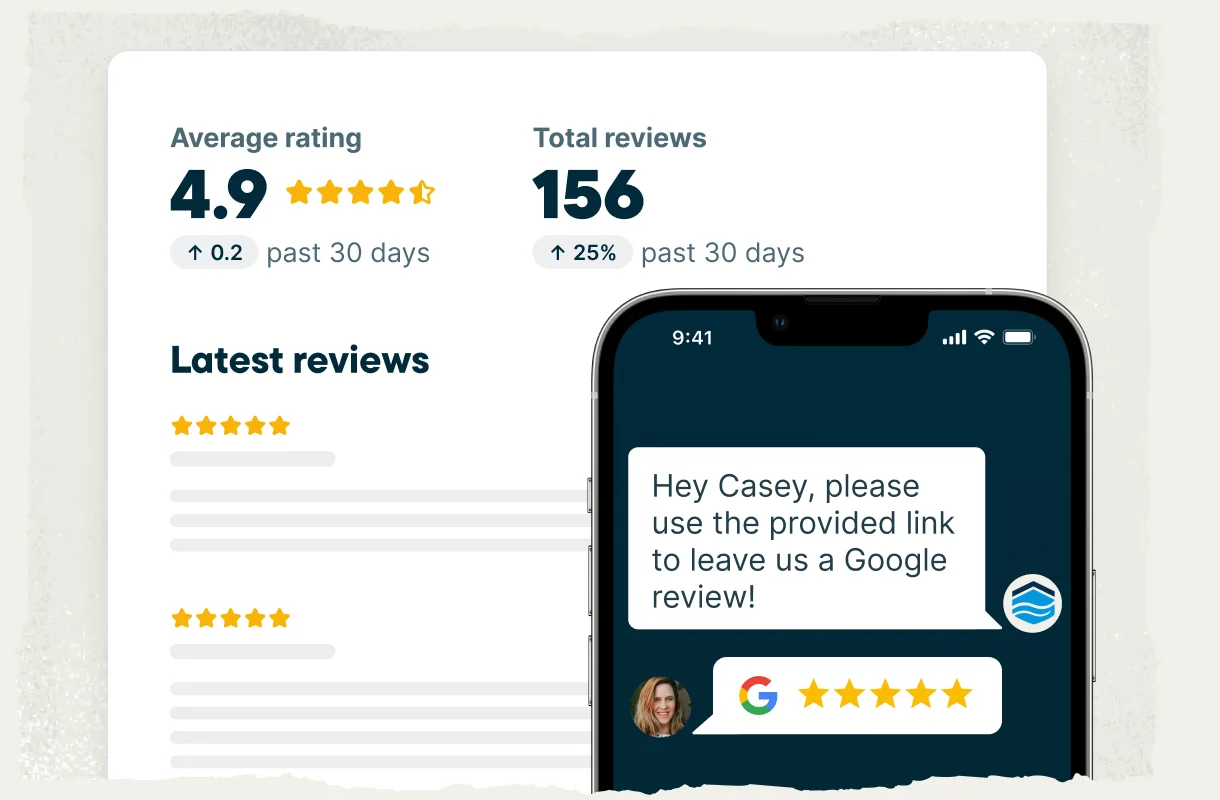
Positive customer reviews can help your business stand out when homeowners are comparing local pool cleaning companies.
Even happy customers may not think to leave a review unless you ask. The best time to request a review is shortly after a successful service visit, completed repair, or resolved customer issue. Good timing means that the experience is still fresh in your customer’s mind.
Make review requests part of your regular workflow to build trust with potential customers. Consistently collecting reviews and responding to feedback shows homeowners that your pool cleaning service business is reliable, responsive, and values customer satisfaction.
Always thank customers for positive reviews and address concerns professionally and promptly. Jobber Reviews can help you send review requests automatically and keep track of customer feedback, making it easier to build a consistent review process as your business grows.
Build local referral partnerships
If you want to grow, take time to connect with pool builders, property managers, real estate agents, landscapers, and other local businesses that serve homeowners. These relationships can help introduce your pool service business to customers who already need your services.
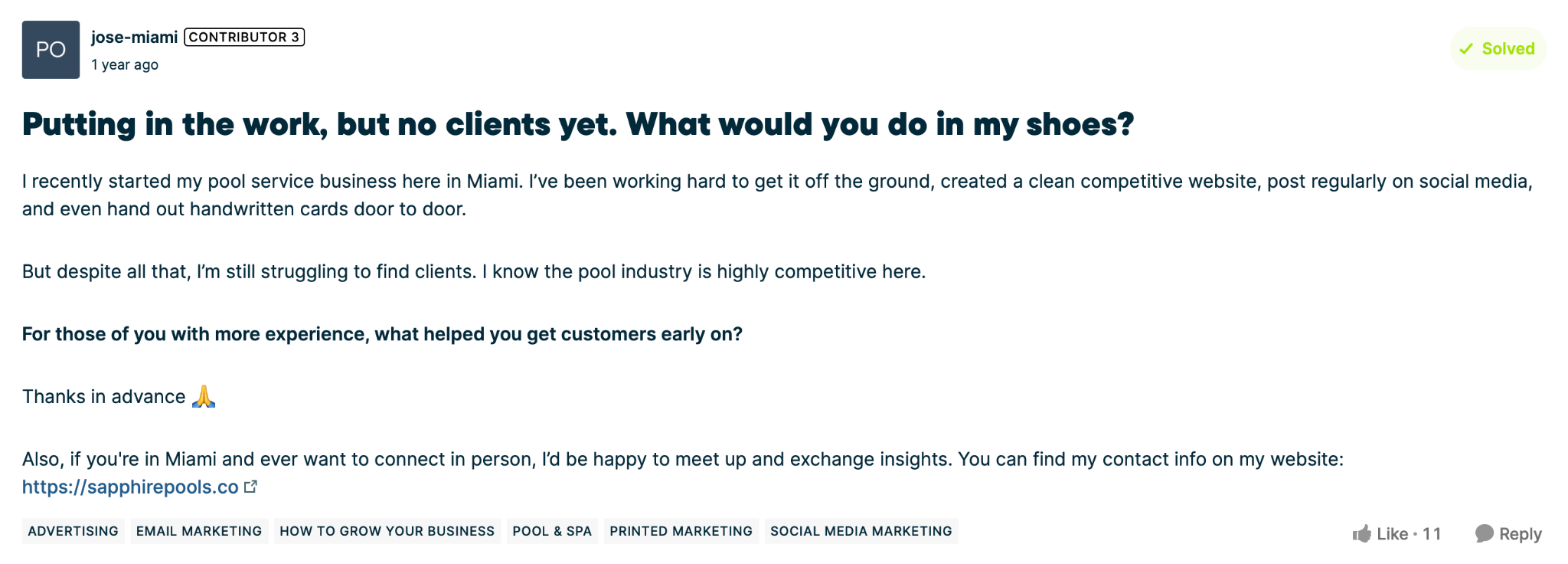
As one Jobber Community member reports, a professional website and regular social media posts aren’t always enough to bring in new business. A clear elevator pitch, personal follow-up, and local networking can help you make stronger connections that move the needle faster.
Focus on building relationships with businesses you trust, and deliver dependable service to customers they refer. Over time, these partnerships can become a steady source of new leads.
Turn happy customers into a referral engine
Your existing customers can be one of your best sources of new business. When homeowners are happy with your work, they’re more likely to recommend your pool service company to friends, family, and neighbors.
Word of mouth is especially valuable for local service businesses, where a recommendation from someone nearby carries more weight than an ad or flyer.
Along with other pool service marketing strategies, a simple referral process can help you turn great service into a steady source of new customers. Here’s how to build that process.
Make pool service referrals easy
Ask satisfied customers for pool service referrals after a successful service visit, completed repair, or positive feedback.
Keep the request conversational: “We’re taking on a few more pools in your neighborhood. If you know anyone looking for weekly service, we’d appreciate you passing along our name.”
Make it easy to share your business with a referral link, website, or digital business card. And always thank customers who send someone your way, even if the referral doesn’t lead to a booking.
Offer the right referral rewards
A small incentive can give happy customers another reason to spread the word. Consider offering a fixed service credit, such as $25 off their next cleaning, or a percentage-based reward when a referral becomes a paying customer.
Choose a reward that makes sense for your business. A new pool maintenance customer may bring in months or years of revenue, while a one-time repair has a different value. Look at your average job value and profit margin to make sure the reward doesn’t cut into earnings.
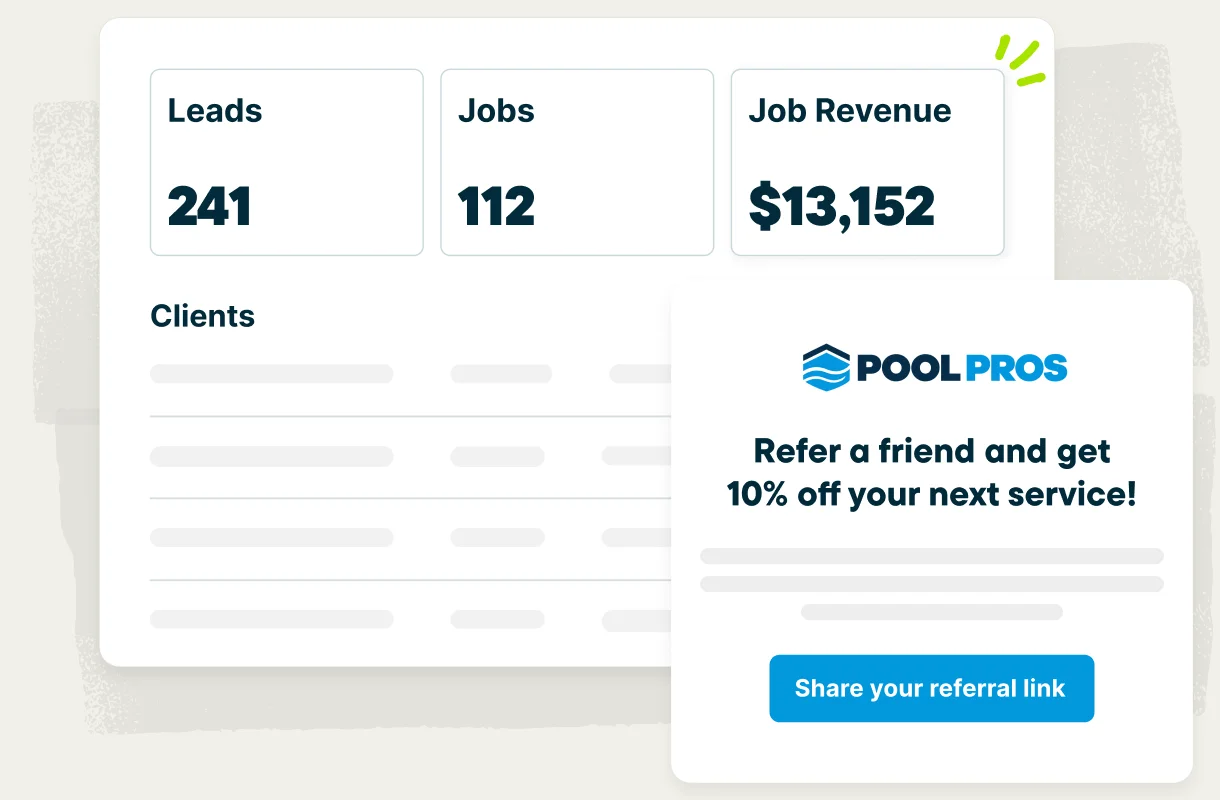
Once you’ve settled on an incentive, make it easy to manage and track. Jobber Referrals lets customers share referral links and apply credits while showing you which referrals turn into leads, booked jobs, and revenue.
Increase revenue from the customers you already have
Bringing in new customers is important, but it’s not the only way to grow your pool service business. The homeowners you already serve may need additional maintenance, repairs, or seasonal services throughout the year.
By offering the right services and staying in touch with past customers, you can increase revenue without relying entirely on new leads. Here are a few practical ways to generate more revenue from your existing customers while keeping profitability in mind.
Offer maintenance plans and service packages
Recurring pool service maintenance plans give customers a convenient way to keep their pools in good condition. At the same time, it gives your business more predictable revenue.
Consider offering weekly cleaning plans or seasonal maintenance packages with clear service tiers. For example, a basic plan might include skimming, brushing, and basket cleaning. A more comprehensive package could add chemical testing, water balancing, and equipment checks.
Be specific about what’s included, what costs extra, and how often customers will be billed. Price each package to cover labor, chemicals, travel, and your target profit margin.
Add profitable repair and seasonal services
Your regular maintenance customers may also need equipment inspections, minor repairs, leak detection, filter cleaning, or seasonal pool opening and closing services.
Adding these options can increase the value of each customer relationship, especially when you’re able to identify problems during routine visits and offer a quick solution.
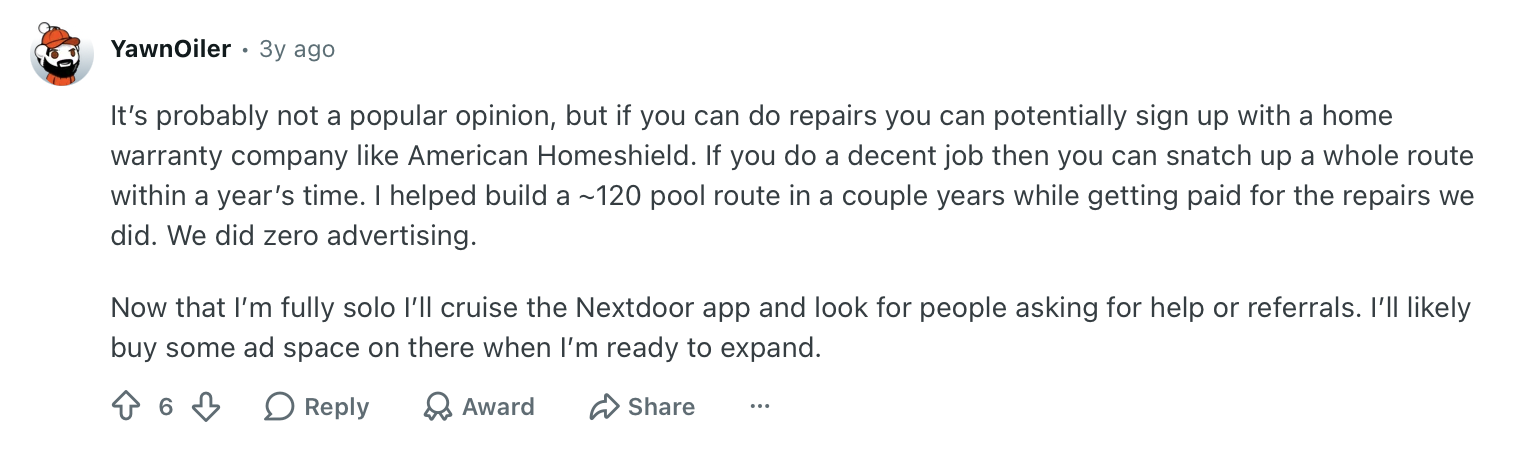
But expanding your service list doesn’t automatically mean higher profits. As one pool business owner shared on r/PoolPros, moving into repairs and renovations can create new revenue opportunities. But it also requires careful planning around pricing, staffing, and marketing.
Before adding a service, price it profitably and make sure you have the necessary training, business license, equipment, and capacity to deliver. Track leads, costs, and revenue for each new service to better measure your return on pool service advertising spend.
Use follow-ups to win back inactive customers
Another way to grow is to review your customer list and group inactive customers based on their service history. For example, you might reach out to:
- Homeowners who booked a pool opening last spring
- Customers who haven’t scheduled maintenance in several months
- People who received a repair quote but never booked
Then, reach out with a personalized message, such as a seasonal maintenance reminder, follow-up on an outstanding quote, or limited-time service offer. Give customers a clear reason to reconnect and book their next service.
With Jobber Campaigns, you can send targeted emails to past customers and see how many jobs come in from your outreach.

Tighten your pool service routes and capacity
Adding more customers is good for business, but not if your technicians spend most of their day driving. Longer routes, packed schedules, and overtime can quickly eat into your profits.
Improving pool route density (or serving more customers within a smaller geographic area) helps you make better use of your team’s time while keeping service quality high.
Here are three ways to manage your routes and workload as your pool service business grows.
Group work by neighborhood
Instead of scheduling jobs wherever there’s an opening, organize your weekly routes by neighborhood or service area. For example, you might schedule customers on the north side of town on Mondays and Tuesdays, then focus on southern neighborhoods later in the week.
Grouping nearby jobs reduces drive time and fuel costs, giving technicians more time to complete service visits. It can also create room for additional pool maintenance customers without extending the workday.
Before accepting a new weekly maintenance account, check where the customer is located in relation to any existing stops. A new pool that’s five minutes from another customer may be easier to fit into your schedule than one that requires a 30-minute drive across town.
Set service-area boundaries
You might realize that not every new customer will be a good fit for your existing routes. Setting clear service-area boundaries helps you avoid taking on jobs that add too much drive time or cut into your profits.
For customers outside your usual service area, consider setting a minimum job value or charging a travel fee to cover the extra time and fuel.
Think about the type of work, too. A high-value pool equipment repair might be worth the longer drive, while a weekly cleaning across town could end up costing more than it brings in.
Before accepting a job, consider what you’ll earn, how long it’ll take to get there, and whether you can fit it into your schedule without disrupting other customers.
Know when to hire pool technicians and what to delegate
As your pool service business expands, there may come a point when you can’t keep up with demand on your own. But hiring too early can add payroll costs before you have enough consistent work to support them.
Watch for signs that you’re approaching capacity, such as:
- Your technicians are regularly working overtime.
- Profitable jobs are getting pushed back.
- You have a full schedule that leaves little room for new customers.
- You’re spending more time managing appointments and answering customer questions than running the business.
Before hiring, document the tasks that need to get done and separate them into two categories:
- Field work: Pool cleaning, chemical testing, equipment inspections, repairs, and documenting completed service visits
- Office work: Scheduling, customer communication, estimates, invoicing, and following up on outstanding payments
This helps you decide whether another pool technician, office administrator, or part-time support person would make the biggest difference.
Build systems before you add more crews
As your pool service business grows, keeping track of customers, schedules, and completed work gets more complicated. A process that works when you’re managing a handful of pools yourself may not work as well when you have multiple technicians in the field every day.
Before adding more crews or expanding your routes, focus on building consistent processes for managing customer information, documenting jobs, and handling administrative work.
These pool cleaning business tips can help you stay organized as your workload increases.
Standardize the customer and job record
When customer information is scattered across notebooks, text messages, and spreadsheets, important details easily get lost in the mix. Keeping a consistent record for every customer and job makes it easier for anyone on your team to pick up where another technician left off.
Each customer record should include:
- Contact information: Customer name, address, phone number, and preferred communication method
- Pool and equipment details: Pool size, equipment type, filter information, and other details technicians need before arriving
- Chemical and service notes: Water testing results, chemicals added, maintenance performed, and any issues that need attention
- Access instructions: Gate codes, parking information, pets, and other property-specific considerations
- Service history: Previous visits, completed repairs, outstanding issues, and upcoming maintenance
- Quotes and invoices: Estimates, approved work, billing details, and payment history
- Customer preferences: Scheduling requests, special instructions, and preferred pool cleaning services
Make sure your technicians update these records as part of every service visit. That way, your team has reliable information to work from, even when a different technician takes over a route.
In one pool service growth story, Patriot Pool & Spa shares how moving away from paper-based processes helped the company keep customer and job information organized as its team grew.
“Jobber was part of the reason why we were able to grow from three to 35 in less than five years. It’s been a missing puzzle piece that allowed our growth to happen.” —Hal Denbar, Patriot Pool and Spa
Keep techs aligned with schedules, notes, and photos
As you add technicians to your roster, clear communication becomes just as important as the work happening at each pool.
Shared schedules help everyone know where they need to be, while job checklists, notes, and photos give pool cleaners a consistent way to document completed work.
For example, a technician might photograph a damaged pump, record unusual chemical readings, or note that a customer requested an equipment inspection during their next visit.
When a homeowner calls with a question about their last service, office staff can review the technician’s notes and job photos instead of tracking someone down for an update.
Pro Tip: Jobber keeps customer details, schedules, notes, and photos in one place, helping field and office teams stay on the same page.
Automate quotes, invoices, payment follow-up, and reminders
Administrative work adds up as your pool service business grows. Preparing quotes, sending invoices, chasing payments, and reminding customers about upcoming visits all take time away from serving customers in the field.
Look for opportunities to automate repetitive tasks. This might include:
- Quotes: Use templates to create consistent estimates without starting from scratch.
- Invoices: Send invoices promptly after completing jobs, either individually or in batches.
- Payment follow-up: Set up automatic reminders for customers with outstanding balances.
- Appointment reminders: Notify customers about upcoming service visits without sending individual messages.
These small changes can make a big difference as the demands of your workload change. For example, a Jobber pool service customer grew from four employees to 35 in less than five years while expanding into repairs.
By replacing paper processes with centralized customer and job information, the company reduced customer touchpoints and saved approximately one day of administrative work each week.
Fortunately, you don’t need a large team to benefit from these systems. Putting them in place early can help you manage more customers without adding unnecessary office work.
Use marketing channels you can measure
The right pool cleaning business marketing channels can help you attract more customers and build steady, profitable work.
As you explore different pool service advertising ideas, focus on which ones bring in qualified leads, turn inquiries into booked jobs, and generate enough revenue to cover your costs.
Compare referrals, local search, ads, and lead marketplaces
There are several ways to reach homeowners looking for pool servicing, cleaning, and maintenance. Each has its own costs, benefits, and limitations:
- Customer referrals bring in high-quality leads with little marketing spend, but can be unpredictable. Referrals are often free, though offering $25–$50 referral incentives can encourage more recommendations.
- Local search helps homeowners find your business through Google and your website, but takes time to build visibility. Creating a Google Business Profile is free, while basic website hosting typically costs $5–$30 per month. Hiring an SEO professional can cost several hundred to thousands of dollars monthly, depending on the services provided.
- Paid advertising reaches homeowners in targeted service areas, but costs can add up without consistent bookings. You can start testing Google or Facebook ads with a budget of $10–$20 per day.
- Lead marketplaces connect you with homeowners through platforms like Thumbtack or Angi, but fees and competition can affect profitability. Costs vary by platform, location, and lead type. Budget for per-lead charges that can range from a few dollars to $100+.
Whichever channels you choose, pay attention to how many leads actually turn into paying customers. This is especially important with paid ads and lead marketplaces, where you’re often paying for leads before knowing whether they’ll book.
Start with a manageable budget, track your results, and compare revenue against costs before increasing your spending.
Track cost per lead, booking rate, and revenue by source
You don’t need a complicated reporting system to understand whether your marketing is working. Start by tracking three numbers for each channel:
| Metric | How to calculate it |
|---|---|
| Cost per lead | Total marketing spend ÷ number of leads generated |
| Booking rate | Number of leads that become paying customers ÷ total leads × 100 |
| Revenue by source | Total revenue earned from customers acquired through each channel |
At the end of each month, review what you spent on each marketing channel, how many leads became customers, and whether the revenue covered your marketing and service costs.
For example, paid ads might bring in 30 leads but only two customers, while referrals bring in five leads and four customers. Referrals may be more effective, but you’ll also need to consider what each customer spends and how much their work costs to complete.
Use these insights to invest more in channels that bring in profit, and adjust spending on those that aren’t delivering results.
Common pool service growth mistakes
Growing your pool service business comes with new opportunities, but taking on more work isn’t always the right move. Expanding too quickly or without a clear plan can put pressure on your team, cash flow, and profit margins.
Here are three common mistakes to watch for as you grow, along with ways to avoid them. That way, you can protect service quality, cash flow, and margin.
Chasing every lead
It’s tempting to say yes to every new customer, especially when you’re trying to fill your schedule. Unfortunately, taking on jobs outside your regular service area or accepting work that doesn’t fit your business can quickly cause trouble.
Before booking a new customer, consider their location, the type of service they need, how soon they need it, and the potential job value. A weekly cleaning that’s 30 minutes outside your usual route may not be worth the extra travel time unless you can adjust your pricing.
Focus on attracting customers who fit your services and existing routes. A full schedule is only valuable if the work is truly profitable.
Adding services without pricing for labor and drive time
Upselling repairs, equipment maintenance, and seasonal services can help you earn more from existing customers. But each new service comes with its own costs. Underpricing can leave you working harder without making more money.
Before setting your rates, make sure your pool service pricing accounts for:
- Labor: Time you need to complete the work, including preparation and cleanup
- Materials and chemicals: Parts, supplies, and pool chemicals needed for the job
- Travel: Drive time, fuel, and vehicle expenses
- Overhead: Business insurance, equipment, software, and other operating costs
- Target profit margin: The amount you want to earn after covering your expenses
Review your actual costs after completing a few jobs to see whether your pricing is holding up. If a service consistently takes longer or costs more than expected, adjust your rates before taking on more of that work.
Hiring before demand and systems are ready
Hiring another technician can help you serve more customers, but it also adds payroll, training, and management responsibilities.
Make sure you have enough consistent work to support those costs before expanding your team. Otherwise, you may not be able to keep new employees long-term, which could affect your business’s health and reputation.
Before hiring, look for these signs that your business is ready for another employees:
- Are your current routes consistently full with profitable work?
- Are you regularly turning down good jobs or struggling to keep up with demand?
- Do you have enough cash reserves to cover another employee’s wages during slower seasons?
Your processes should be ready, too. Document how technicians complete and record jobs, make sure schedules are easy to access, and establish clear expectations for customer communication.
You don’t need everything to be perfect before bringing someone on. But having steady year-round or seasonal demand, organized workflows, and financial breathing room can make technician hiring a safer step.
How to grow a pool service business in 90 days
To grow, start with a few improvements that make the biggest difference for your business and build on what’s working.
Use this 90-day checklist to put the strategies above into action, track your progress, and make more informed decisions about where to focus next.
Days 1–30: Set your foundation
Your first month is about understanding where your business stands and identifying opportunities to improve.
- Set one measurable growth target. Choose a goal you can realistically work toward in 90 days, such as adding 10 recurring maintenance customers or improving your profit margin.
- Record your starting numbers. Track current leads, booked jobs, average job value, pool service customer retention, and profit margin so you have a baseline for comparison.
- Define your service area. Identify the neighborhoods you want to serve and establish boundaries for accepting new customers.
- Update your Google Business Profile. Check your services, contact information, photos, service areas, and booking options.
- Create a review request process. Decide when and how you’ll ask satisfied customers for online reviews after completed service visits.
Days 31–60: Put your growth strategies to work
With your foundation in place, focus on bringing in more profitable work and making better use of your existing customer relationships.
- Launch or improve your referral program. Give happy customers an easy way to recommend your business and consider offering a referral reward.
- Reconnect with inactive customers. Send personalized reminders or seasonal offers to homeowners who haven’t booked recently.
- Review your maintenance package pricing. Make sure recurring plans cover labor, chemicals, travel, overhead, and your target margin.
- Map your customer locations. Look for opportunities to group nearby service visits and identify neighborhoods where you could add recurring stops.
- Test one new marketing channel. Choose a measurable option, such as local ads or a lead marketplace, and track spending, leads, and booked jobs.
Days 61–90: Measure results and plan what’s next
Use your final month to see what’s working, make adjustments, and prepare for the next stage of growth.
- Review marketing performance. Compare leads, booking rates, revenue, and profitability by source to see which channels are worth continuing.
- Improve your routes. Adjust service days or customer groupings to reduce drive time and make room for additional pool service stops.
- Document field processes. Create or update checklists, job notes, and service procedures so technicians can work consistently.
- Evaluate hiring needs. Review your team’s workload, scheduling challenges, and cash flow to decide whether additional support makes sense.
- Set your next 90-day target. Compare your results against your original goal and choose one priority to focus on next.
Grow your pool service business with Jobber
As your pool service business grows, keeping customers, schedules, and paperwork organized becomes even more important.
Jobber’s pool service software brings customer details, quoting, scheduling, dispatching, jobs, invoicing, payments, and follow-up into one place. That means smoother day-to-day operations, a more professional customer experience, and more time to focus on future growth.
Frequently Asked Questions
-
Start by making your business easier to find through local search, customer reviews, referrals, and partnerships with nearby businesses. Define a clear local service area, follow up promptly with inquiries, and track which advertising efforts lead to booked jobs.
-
Recurring maintenance plans can provide steadier income and help fill gaps in your weekly routes. They’re most valuable when you can group nearby customers and charge enough to cover labor, chemicals, travel, and your target profit margin. Keep in mind that routine maintenance often changes with the seasons and your specific region.
-
Consider hiring when your schedule is consistently full, overtime hours are common, or you’re turning away profitable work. Before adding to your payroll, make sure you have steady demand, enough cash flow, and documented processes that clearly define a new technician’s responsibilities.
-
Set prices that cover your costs, including labor, chemicals, materials, travel, and overhead, while leaving room for profit. If you offer discounts to attract new customers, use them strategically, such as filling openings on an existing route. Make sure your pricing still supports your goal to improve service business profitability.
-
Start with an affordable opportunity that fits your local pool market. Depending on your business, that might be customer referrals, Google Business Profile improvements, or local business partnerships. Before you add another channel or increase your marketing budget, track how many leads become paying customers as a direct result of your channel efforts.
-
Pool service software keeps leads, customer records, quotes, schedules, jobs, invoices, payments, and follow-up connected in one system. With the right software, you’ll have less administrative work and clearer job information for your team. This can directly translate into having more time to manage booked work, especially as your customer base grows.
Related reading:
Internal linking: