Free Painting Invoice Template
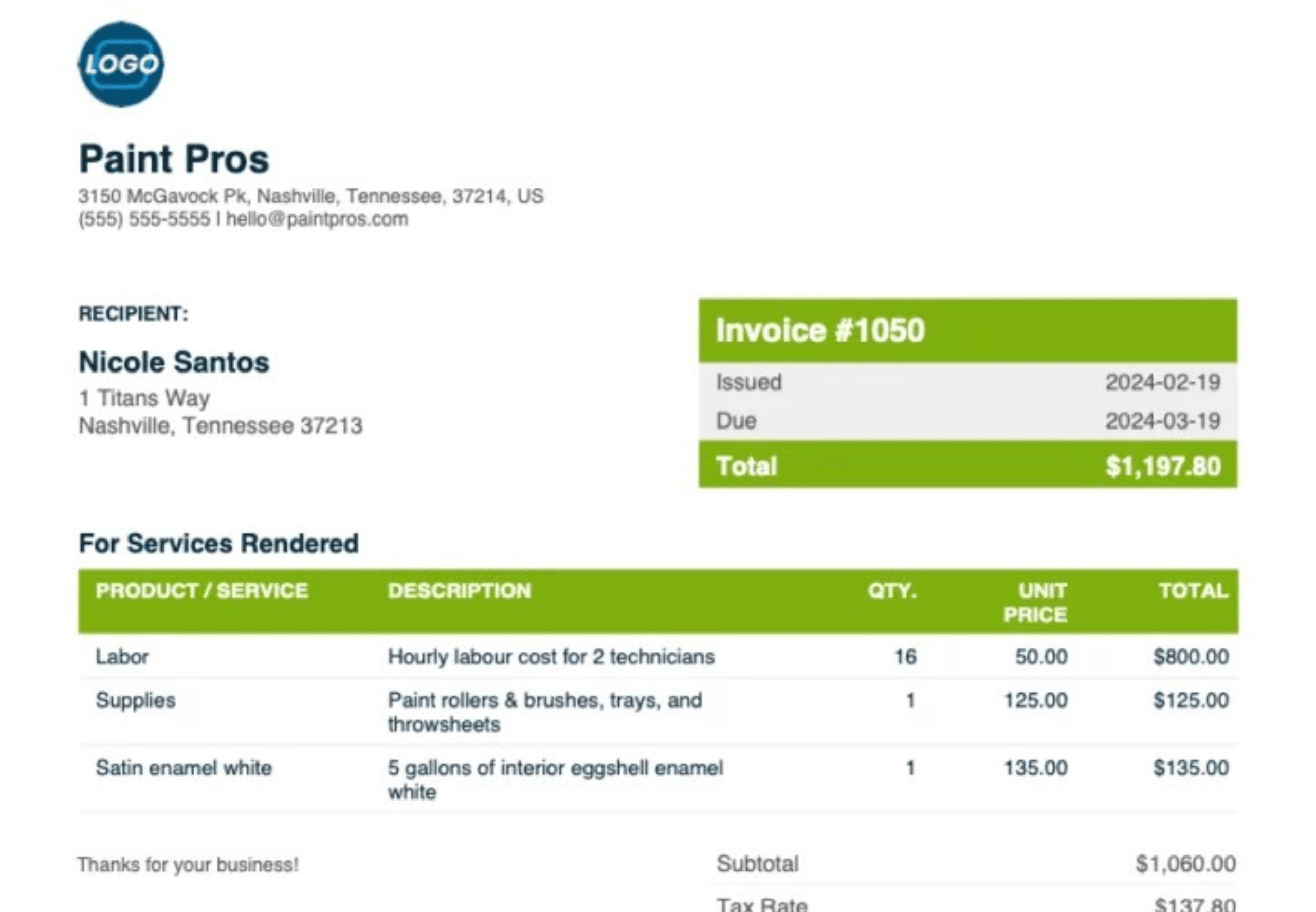
Jobber’s free painting invoice template generator helps you bill for prep, labor, paint, and materials on one professional invoice. Add your business and client details, list each room or surface, and credit any deposit. Then download a PDF and send it to your client.
Create a painting invoice fast with our free invoice template
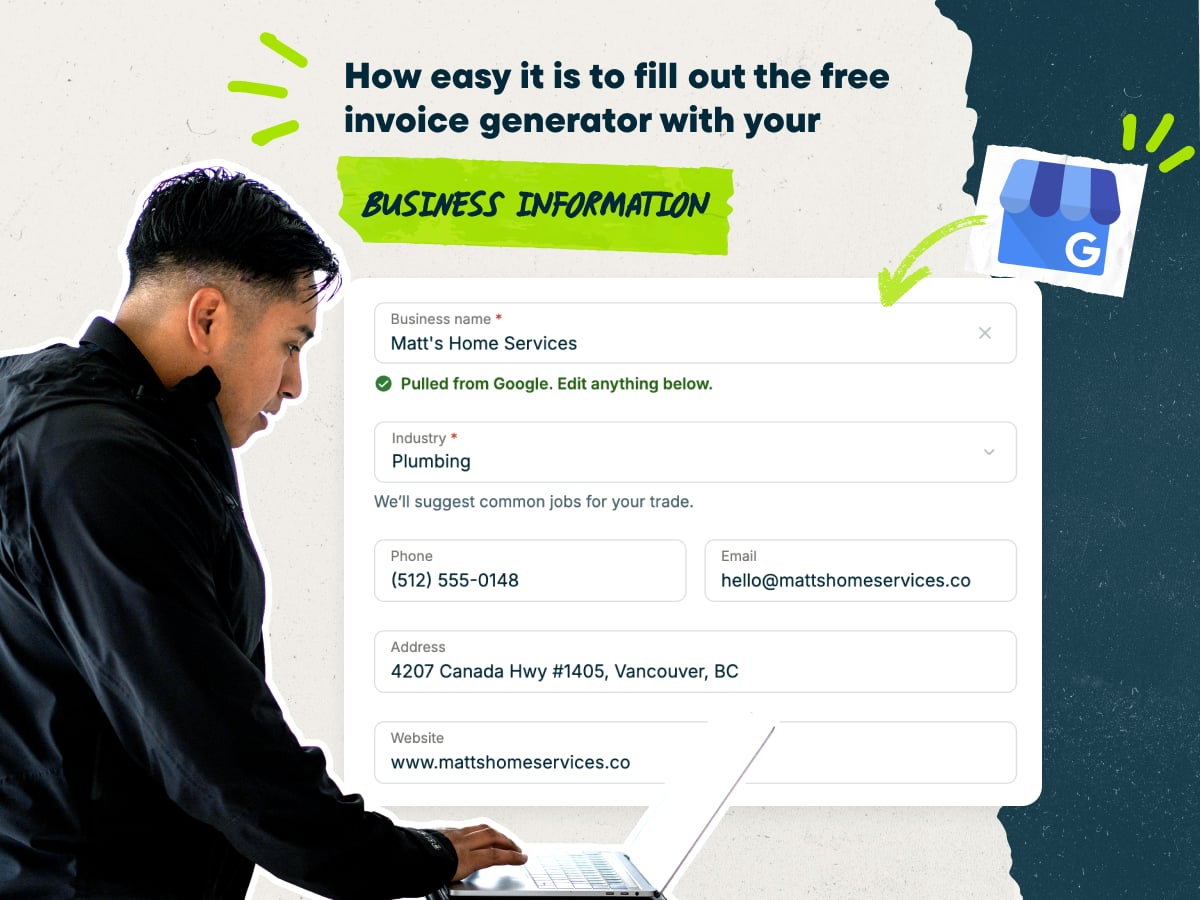
- Enter your business name, and the generator auto-fills your business details
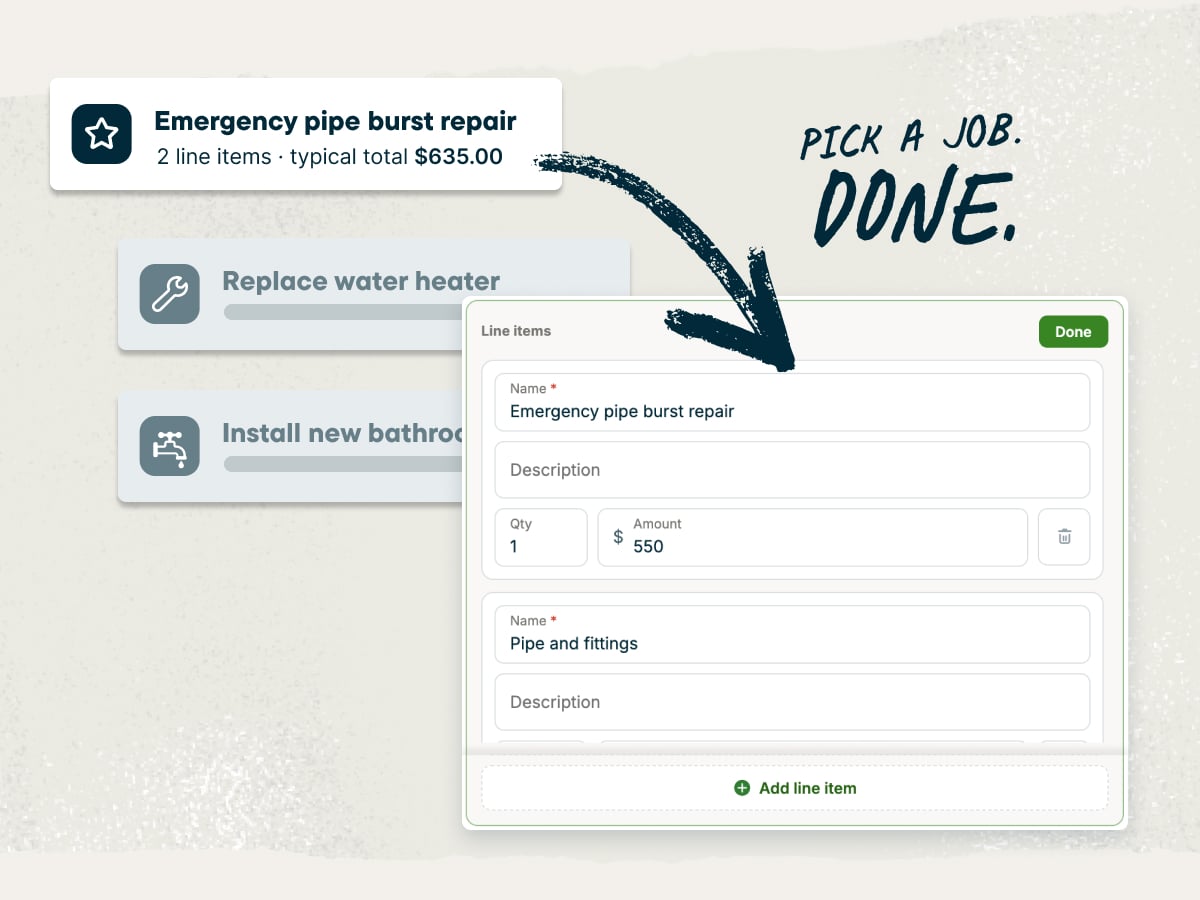
- Add custom line items or pick pre-loaded ones with typical pricing, including prep, walls, and trim
- Add your client’s name, contact info, and job site address
- Download your invoice as a PDF, or save it in Jobber to send later

Why use Jobber’s free painting invoice template?
- Ready to customize: Edit line items for rooms, surfaces, and coats so the invoice matches the work you completed
- Set up with the essentials: Start with the details clients expect, like surfaces, paint specs, totals, and payment terms
- Free to download: Save your finished painting invoice as a PDF at no cost. Send it to the client by text, email, or in person
An invoice template built for painting businesses
You’re the estimator, scheduler, and lead painter, so paperwork eats into time you’d rather spend on the job. This painting invoice template gives you a clean, itemized invoice so you can save time building one from scratch. Fill it in after the final walkthrough and send it before you leave the job site.
Explore more Jobber free tools for your painting business
Get the rest of your paperwork and pricing sorted with these free tools:
Over 400,000 home service pros in 50+ industries trust Jobber
“With Jobber Payments…we don’t have to chase our customers around for getting those invoices paid.”

How to create a painting invoice
You can create a painting invoice in Microsoft Word, Google Docs, Microsoft Excel, or Google Sheets. However, because these programs aren’t designed for invoicing, you’ll spend more time on formatting and math.
Use the painting invoice template generator instead. It handles the layout and math for you, so you only have to fill in the job details and line items. Then download the PDF and send it to the client.
Use these tips to write an invoice that’s easy to read and quick to pay:
- Break the job out by room or surface. Put the living room, kitchen cabinets, and exterior siding on separate lines. Clients can match each line to the work they see.
- Put prep work on its own lines. Pressure washing, scraping, patching, caulking, and priming take real time. Listing them shows what goes into a finish that lasts.
- Separate paint and materials from labor. List gallons of paint and primer apart from your labor for cut-in, rolling, and spraying. This shows clients where their money goes.
- Match your pricing model to the estimate. Bill the way you priced the job, whether that’s per square foot, per room, hourly, or a flat rate. Interior painting averages $1.50–$3.50 per square foot.
- Credit the deposit before the balance due. Subtract the deposit and any progress payments above the final line. Your client sees exactly what’s left to pay.
- Write a real due date. Put a calendar date on the invoice instead of a loose term like “soon.” A clear deadline helps clients pay on time.
Once you’re sending multiple invoices each week, look at the types of invoices your jobs need, like deposit, progress, and final invoices. Invoicing software turns finished jobs into invoices for you. You’ll spend less time on paperwork and more time on the next job.
What is the painting invoice template best for?
The painting invoice template is best for billing after interior repaints, exterior jobs, cabinet refinishing, deck staining, and commercial repaints. It works whether you price per square foot, per room, by the hour, or at a flat rate.
Here’s how painting businesses like yours can use it:
- Bill for every painting job. Use one template for interior rooms, exterior siding, cabinets, decks, and commercial work.
- Describe your work. List surfaces, coats, colors, and sheen so clients know exactly what they paid for.
- Send accurate invoices faster. The template adds up quantities, rates, and tax, so you skip the calculator.
- Set payment expectations. Show deposits, progress payments, the balance due, and your due date in one place.
- Build consistent invoices. Every client gets the same clean layout, which makes it easy for your business to look professional.
What should be included in a painting invoice?
A painting invoice should include your business and client details, a clear scope of work, itemized labor and materials, payments received, and your payment terms. Here’s the full list.
Here’s what to include on an invoice for painting services:
- Invoice number: Give each invoice a unique invoice number so you and your client can track it.
- Issue date and due date: Show the date you sent the invoice and the date payment is due.
- Company information: Add your painting business name, contact details, license number, and insurance details.
- Client and job site address: List the billing address and the job site address separately, if they’re different.
- Scope by room or surface: Break out walls, ceilings, trim, doors, cabinets, siding, soffits, or decks.
- Paint details: Note the brand, color, sheen, and number of coats so you can match it for touch-ups.
- Itemized labor and materials: Separate your labor costs from painting materials like paint, primer, caulk, and tape.
- Change orders: Add approved extras, like an added room, a color change, or an extra coat, as their own lines.
- Deposits and progress payments received: Subtract payments the client already made. Deposit limits vary by state, so check yours before asking for a deposit.
- Subtotal, tax, and total: Show the subtotal, sales tax, and final total. Note that sales tax rules for paint and labor vary by state.
- Payment terms: Spell out your payment terms, accepted payment methods, and any late fees.
- Warranty or touch-up terms: Note how long your workmanship warranty lasts and how clients can request touch-ups.
- Thank-you note: Close with a short thank-you note to tell clients you appreciate their business, which encourages repeat work and referrals.
Larger projects, like a full exterior or a commercial repaint, follow the same rules. Just add a line for each phase, change order, and progress payment so the final invoice adds up.
Free painting invoice template vs. Jobber invoicing software
The free painting invoice template is a quick way to bill a client with no subscription. Fill in the job details, download a PDF, and send it yourself.
Once you’re sending several invoices a week, Jobber’s invoicing software does more of the work. It helps you send invoices faster, whether you’re just starting a painting business or running several crews.
Jobber saves client and job details, turns completed jobs into invoices, sends them by text or email, and automatically follows up on unpaid invoices. Jobber customers get paid 4x faster collecting payment online vs. waiting on checks.

and payment history organized in one place for easier access.
and pricing already recorded on the completed job.
making it easy for them to review and pay.
it is time to invoice at job completion or on a recurring schedule.
and send them to customers in a few clicks.
remind customers when an invoice remains unpaid.
so they can pay directly from their digital invoice.
while working from the office, on the road, or at a job site.
Frequently asked questions about painting invoices
-
A painting invoice template is a ready-made layout that you can fill in to bill clients for finished work. Jobber’s version is a free invoice generator. Just enter your business and client details, then add line items for prep, coats, trim, and paint. Finally, download a finished PDF and send it to the client.
-
Yes, you can customize the painting invoice template to fit each job. You can add your business and client details, edit line items, set prices, and write descriptions for each painting service. It’s also easy to set your own quantities and rates for square feet, linear feet, rooms, or hours. You can even add custom tax details and payment terms for each invoice.
-
Yes, you can download your painting invoice as a PDF for free. Email it, print it to give the client at the final walkthrough, or save it in Jobber to keep your records in one place.
-
Yes, the painting invoice template is free to use, with no subscription needed. Fill it in, download your PDF, and send it to your client.
-
Every painting invoice needs your business details, client and job site info, and itemized labor and materials. It also needs payments received, totals, and payment terms. Make sure to add paint details, license and insurance info, warranty terms, and a thank-you note to round it out.
-
You can make a painting invoice template in Microsoft Word, Google Docs, Microsoft Excel, or Google Sheets. A painting invoice template in Word or Excel works, but you’ll need to build the table and total formulas yourself.
The free painting invoice template generator sets up the layout for you, so you only have to add the job details. Or, when you’re ready to bill every job from one place and skip manual invoicing altogether, try invoicing software in Jobber. -
A painting invoice is usually a one-page document. Your business details sit at the top, line items for each surface go in the middle, and totals and payment terms sit at the bottom. Many painters close with a short thank-you note, too.

-
You can bill for one-off painting services with this template by following these five steps:
1. Enter your business name to fill in your company details.
2. Add your client’s name, billing address, and job site address.
3. List each surface, prep task, and material as its own line item.
4. Subtract any deposit and add your payment terms and due date.
5. Download the invoice as a PDF and send it to your client. -
Yes, listing paint and materials separately from labor makes your painting invoice easier for clients to understand. They see the gallons, primer, and supplies they paid for.
If a client supplies their own paint, only bill for labor. If your square-foot rate already includes paint, say so on the invoice so it matches your estimate. -
To invoice for a deposit, send a deposit invoice before work starts, then credit that amount on the final invoice. For bigger jobs, bill progress payments at clear milestones, like after prep or after applying body coats on an exterior. Each payment comes off the total, so the last invoice shows only the balance due.
Deposit amounts and limits vary by state. Check your state’s rules before you ask for a deposit. -
The difference between a painting estimate or quote vs an invoice is timing. An estimate comes before the job, and an invoice comes after the work is complete and you’ve done the final walkthrough with the client. The invoice bills for the work you provided, plus any approved change orders.
-
The two words describe the same thing, but the document’s name varies depending on who’s holding it. You’ll send the client an invoice, and they’ll call it a bill when they pay it. For a painting business, you send the invoice once the last coat is dry, and the homeowner pays their bill.
-
There are several ways to send a painting invoice once a job is complete. Pick the option that fits your client:
• Email a PDF so the client has a copy on file.
• Hand over a printed copy at the final walkthrough.
• Text an invoice from Jobber so the client can pay online.
• Mail a paper copy to clients who prefer paying by check. -
The best time to send a painting invoice is right after the final walkthrough, once the client signs off on the work. It’s a good idea to invoice within 48 hours of finishing the job. On larger jobs, send deposit and progress invoices before the final one.
-
Your client should pay by the due date defined in your payment terms. Many painters ask for payment right when they send their invoice, while others offer terms like net 30. Shorter terms help you improve cash flow between jobs.
For big exterior or whole-house projects, offering financing helps clients say yes without paying the full amount up front. -
Painting invoicing software is a tool that creates, sends, and tracks invoices for painting jobs and collects payment. Jobber’s painting contractor software saves paint colors, specs, and walkthrough notes with each client. Here’s how it connects invoicing with the rest of your day:
• Customer communication sends automatic invoice follow-ups by email or text.
• Credit card processing lets clients pay online or in person.
• Consumer financing lets clients pay for big jobs over time.
• Scheduling keeps every job, crew, and invoice on the same calendar.
Over 400,000 home service pros in 50+ industries trust Jobber
“If you can make a quote on the spot, you’re 10 steps ahead of the competition.”
Jobber changed the game because it’s right at people’s fingertips.
