
Key takeaways:
Discover effective strategies to advertise your remodeling business and consistently book more jobs with a mix of free, low-cost, and paid tactics.
- Maximize free and low-cost channels. Build a strong foundation by claiming your Google Business Profile, collecting client reviews, setting up a referral program, using branded site signage, targeting neighbors around job sites, and partnering with local businesses.
- Optimize your digital presence. Create a clear, professional website with service-specific pages, showcase high-quality project photos, and improve local SEO to attract qualified homeowners searching online for remodelers in your area.
- Use project content and follow-ups. Use before-and-after images, customer testimonials, and regular follow-ups on unapproved estimates to build trust and turn more leads into booked jobs.
- Test and track paid advertising options. Reach new clients with Google Local Services Ads, Google Search Ads, Facebook/Instagram ads, targeted direct mail, home show participation, and lead generation websites. Note which channels deliver quality leads and real revenue.
- Choose the right strategies for your business stage. Focus on quick-win channels if you need immediate work, invest in content and SEO for long-term growth, and highlight quality and credibility to attract larger projects as you scale up.
Stay ahead with expert remodeling business tips and marketing strategies. Sign up for the Jobber Newsletter.
Advertising a remodeling business can take many forms. Between Google Ads, social media, lead generation sites, local advertising, and other options, it’s not always clear which channels will bring in new projects.
Luckily, effective home remodeling marketing doesn’t require choosing just one approach. By combining free and low-cost promotion with the right paid advertising, you can reach more local homeowners and build a steadier pipeline of work.
Here are 16 ways to advertise your remodeling business, plus tips for choosing the right channels and tracking what works.
Free and low-cost ways to advertise a remodeling business
Before paying for ads, take advantage of the customers, projects, and local visibility you already have. These six strategies can help you promote your business even if you don’t have a large advertising budget right away.
1. Claim your Google Business Profile
A Google Business Profile is a free listing in Google Search and Maps results. It helps your remodeling company appear when homeowners look for contractors in their area.
To get started, claim your profile and fill it out as completely as possible:
- Add your business details. Include your service area, phone number, website, business hours, and the remodeling services you offer.
- Choose the right categories. Select the most accurate primary business category, like “home remodeling.” You can also add relevant secondary categories where appropriate.
- Treat your profile like a mini portfolio. Regularly upload photos of finished kitchens, bathrooms, basements, additions, and whole-home renovations. Before-and-after photos are useful because homeowners can immediately see the quality of work you provide.
- Stay active on your profile. Publish posts about recent projects and answer common questions through your profile’s Q&A section.
- Keep information current. Your business name, contact information, and service area should be consistent across your Google Business Profile, website, and other online directories.
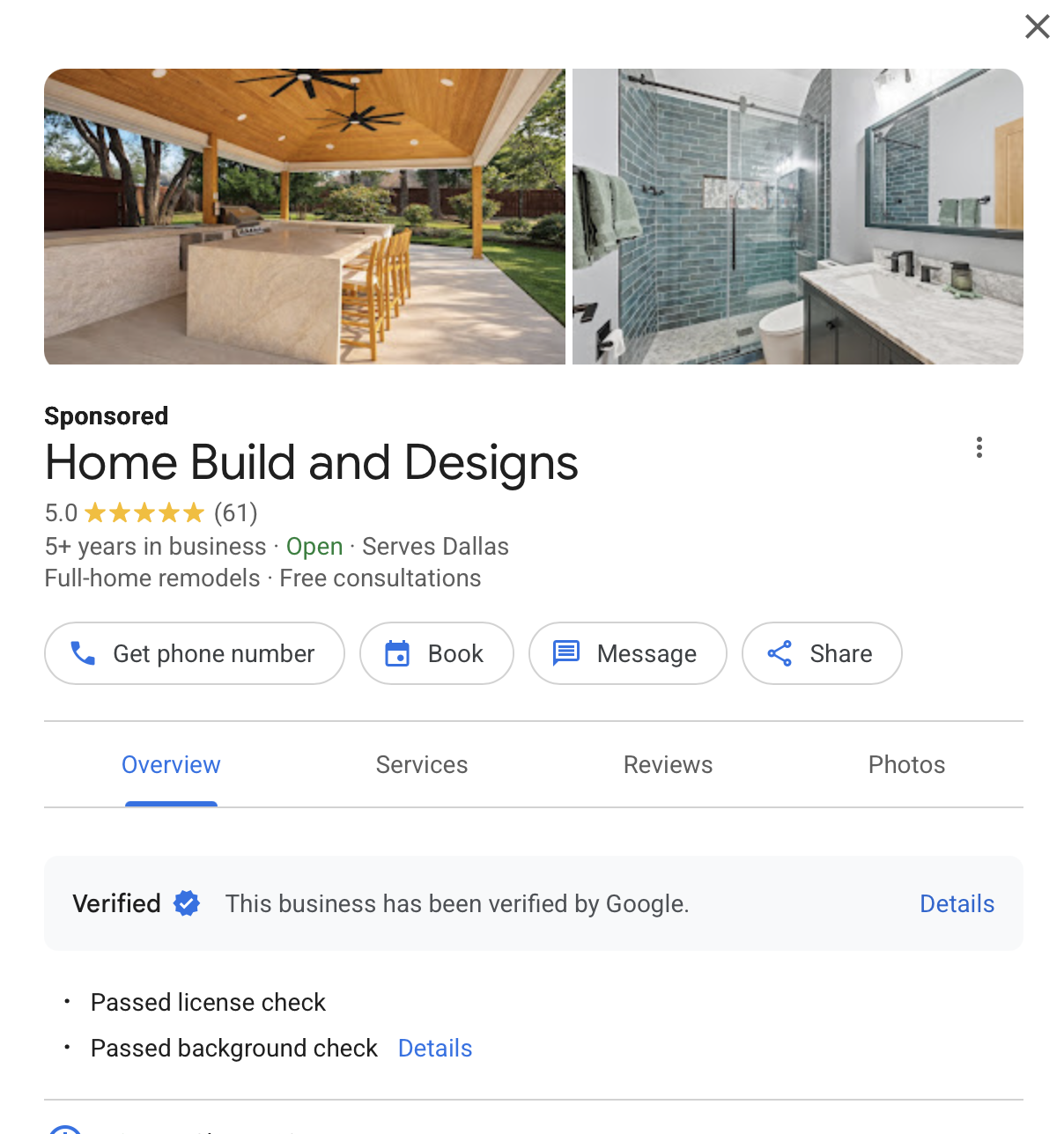
Here’s an example of a full Google Business profile for a home design service:
2. Ask happy clients to leave a review
When homeowners are considering a major renovation, they want evidence that they can trust you with their home and money. Reviews from previous customers provide that proof.
To ensure you get more reviews, always ask for them as part of your project closeout process. Here are a few tips for collecting and using reviews:
- Choose the right moment. Ask for a review after the final walkthrough, when a homeowner compliments the finished project, or shortly after the project is completed.
- Make it easy to respond. Send customers a direct link so they don’t have to do too much searching to find your business.
- Put positive reviews to work. Feature testimonials on your website and portfolio pages. You can also share them on social media or incorporate them into your marketing materials.
A consistent process can help you collect more reviews and build trust with prospective clients.
Jobber Reviews can automatically send customers a text asking for a Google review after you complete a job. That means you can keep building your online reputation without having to manually follow up with every customer.
READ MORE: Best software for remodeling contractors
3. Build a referral program and re-engage past clients
Word-of-mouth may already bring you remodeling leads. A referral program formalizes that process by offering past customers an incentive, such as a discount or reward, for sending new clients your way. It gives happy customers a reason to actively recommend your business.
To build a simple referral program:
- Choose an incentive. Depending on your business, you could offer gift cards, cash rewards, credits toward future work, or gifts from local businesses.
- Make it easy to participate. Customers should know exactly how to refer to someone and when they’ll receive their reward.
- Stay in touch with past clients. Periodically share recent projects, remind them about your services, or ask whether they know anyone planning a home renovation.
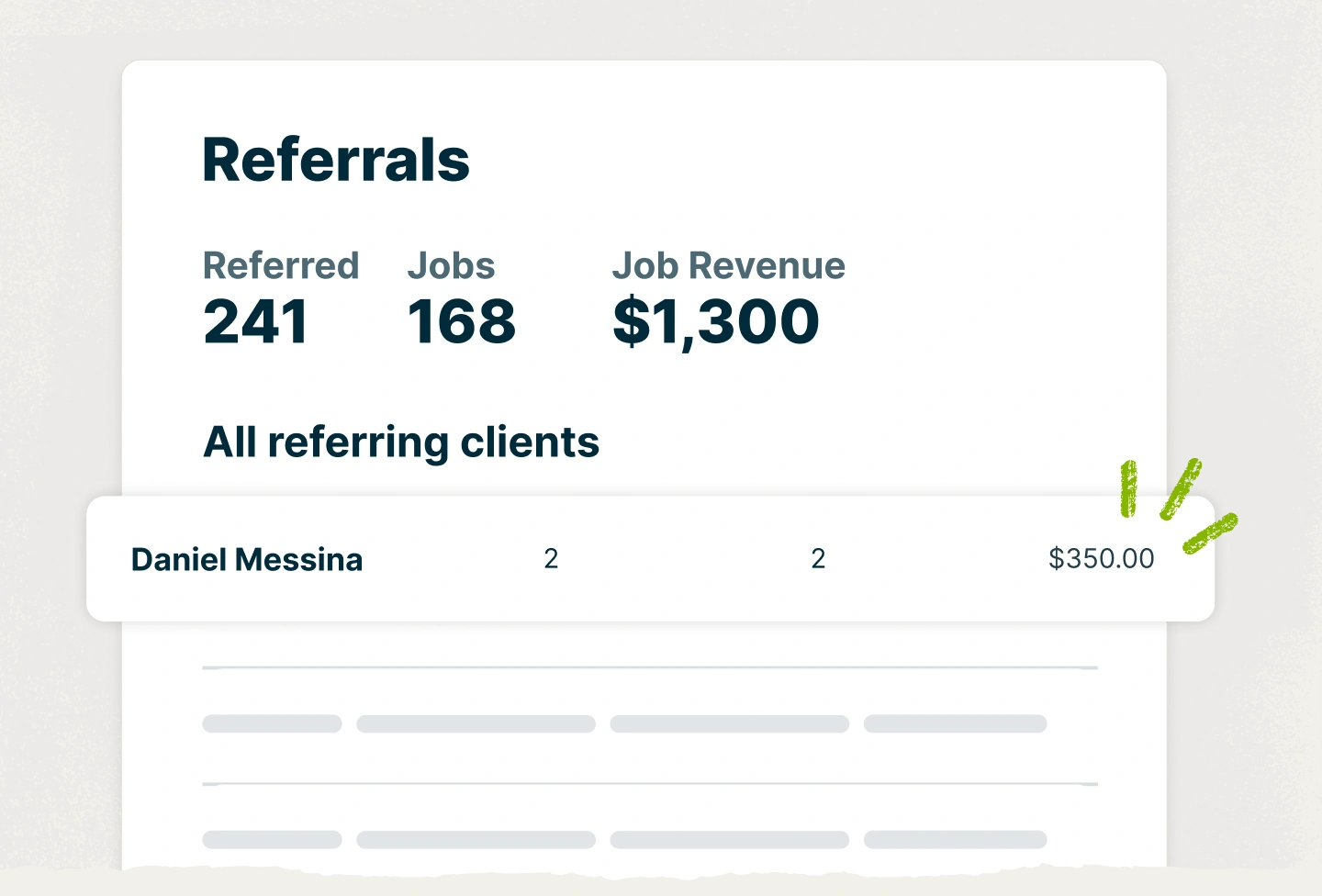
Jobber’s referral features help you create and promote a referral program to clients. You can choose your rewards, send referral links, and track new leads that come through the program.
4. Turn every job site into an advertisement
Every active remodeling project puts your company in front of potential customers—especially the people living nearby.
Use branded trucks and trailers, yard signs (with the homeowner’s permission), and crew shirts to make it clear who’s doing the work. Include your company name and an easy way for interested homeowners to find you.
The job site itself is also an advertisement for your business. A clean, organized site and professional crew often make a strong impression on neighbors who see your work every day. This gives them a firsthand look at your company before they ever need a remodeler.
5. Market to neighbors around active jobs
Take job-site advertising a step further by marketing directly to homeowners near your active projects. Distribute door hangers or send postcards during a job or shortly after it’s completed.
Keep your message specific to the neighborhood. You can include:
- What you’re working on so homeowners know you’re completing a remodeling project nearby
- Proof of your work quality, such as photos of similar projects and a positive customer review
- A clear next step, like a QR code that leads to your portfolio or consultation page
- An incentive to take action, like a special neighborhood discount for booking quickly
You can even consider sending one mailer when construction starts and another featuring the finished project to show nearby homeowners the result.
Get your boots on the ground, get flyer campaigns, get door hanger campaigns. Get out in front of people telling them what you specialize in.
You’re going to be able to pick out specific types of jobs that you want that are high margin that your crews can absolutely demolish.
6. Partner with other local businesses
Some of your best remodeling prospects may already be working with local professionals like:
- Interior designers
- Architects
- Realtors
- Showrooms
- Home organizers
- Electricians
- Plumbers
- HVAC technicians
Build relationships with businesses that serve similar customers without directly competing, and look for opportunities to refer customers to one another. For example, an interior designer may recommend you when a client needs structural work.
You can also collaborate on social media, host educational events, or create materials that partners can share with prospective customers. The goal is to become the one remodeler that local professionals trust enough to recommend.
Home remodeling marketing strategies that improve ad performance
Before you spend more on paid advertising, make sure your business is ready to turn that attention into actionable leads.
Homeowners who click your ads will likely research your business before reaching out. They may visit your website, browse past projects, read reviews, and compare you with other remodelers.
Strengthen these areas of your home remodeling marketing to give prospective customers more reasons to take the next step.
7. Create a website that turns visitors into leads
Your business website doesn’t need elaborate features, but it should quickly show prospective customers what you do, where you work, and why they should trust you.
Make sure your website design includes:
- Examples of your work: Use high-quality project photos and before-and-after examples. You’ll also want to showcase your customer testimonials, licenses, credentials, awards, or professional affiliations.
- Easy opportunities to get in touch: Keep your phone number and contact options easy to find, especially on mobile devices.
- Dedicated service pages: Build individual pages for major offerings like kitchen remodeling, bathroom remodeling, basements, home additions, and whole-home renovations.
- Landing pages for ad campaigns: People who click a bathroom remodeling ad should go to a page featuring bathroom projects and information about that service. This yields better results than directing them to a generic homepage.
Before you start advertising, test your website from a homeowner’s perspective. They should be able to quickly understand what you offer, see examples of your work, and request an estimate or consultation.
8. Improve your local SEO to generate more qualified traffic
Local search engine optimization (SEO) helps your remodeling business appear when homeowners search online for contractors and services in your area. Start with your Google Business Profile, then optimize your website to clearly show what you do and where you work.
To improve your local SEO:
- Create pages for your primary services. Build dedicated pages for services like kitchen remodeling, bathroom remodeling, and home additions.
- Target the communities you serve. Create useful location-specific content for the areas where you want to generate more business.
- Publish local project pages. Highlight completed projects with original photos, the homeowner’s goals, the work involved, and the finished result.
- Focus on useful, specific content. Instead of a generic article about kitchen trends, for example, showcase a recent kitchen renovation that demonstrates your experience.
Over time, these pages can help search engines better understand your services. They also prove to prospective customers that you’ve successfully completed projects like theirs.
9. Follow up on every unapproved estimate
Getting more remodeling work isn’t always about generating more leads. Since homeowners often compare multiple contractors, it may take days or weeks to decide who they want to hire.
Following up on outstanding estimates can help you get more value from the opportunities already in your pipeline. Check in to make sure homeowners received your estimate, offer to answer questions, and reconnect after they’ve had time to consider it.
Jobber’s automated quote follow-ups can handle these reminders for you. This ensures the most promising estimates don’t get overlooked—especially when you’ve already paid to generate that lead.
10. Share project content that builds trust and fuels your ads
Every finished project gives you fresh material to market your remodeling business. With the homeowner’s permission, capture:
- Before-and-after photos
- Progress shots
- Timelapses
- Finished walkthroughs
- Testimonials
Then, reuse that content across your website, Google Business Profile, social media, and paid ads. For example, one kitchen remodel can become a portfolio update, an Instagram post, a Facebook video, and ad creative.
Each of these gives prospective customers more opportunities to see the quality of your work.
Paid remodeling advertising ideas
Paid advertising can help you reach homeowners beyond your free referral network and generate more remodeling leads when you want to grow.
Some remodeling advertising ideas target homeowners actively searching for a contractor. Others build awareness earlier in the decision-making process.
Here are six paid channels to consider, no matter where in your potential clients are in the buying process:
11. Google Local Services Ads
Google Local Services Ads (LSAs) appear in Google results for eligible local service searches. Instead of paying every time someone clicks your ad, you typically pay only when a prospective customer contacts you through the ad.
To get started with Local Services Ads:
- Build out your business profile. Include your business name, reviews, service area, hours, and other information homeowners can use to compare local contractors.
- Complete Google’s requirements. Check whether your business category and location are eligible, then complete Google’s screening and verification requirements.
- Choose your targeting and budget. Select the services and areas you want to target and decide how much you want to spend.
- Track lead quality. Pay attention to the types of projects your leads are requesting, not just the number of inquiries. Getting 10 leads for small repair jobs won’t help much if you’re trying to book full kitchen remodels.
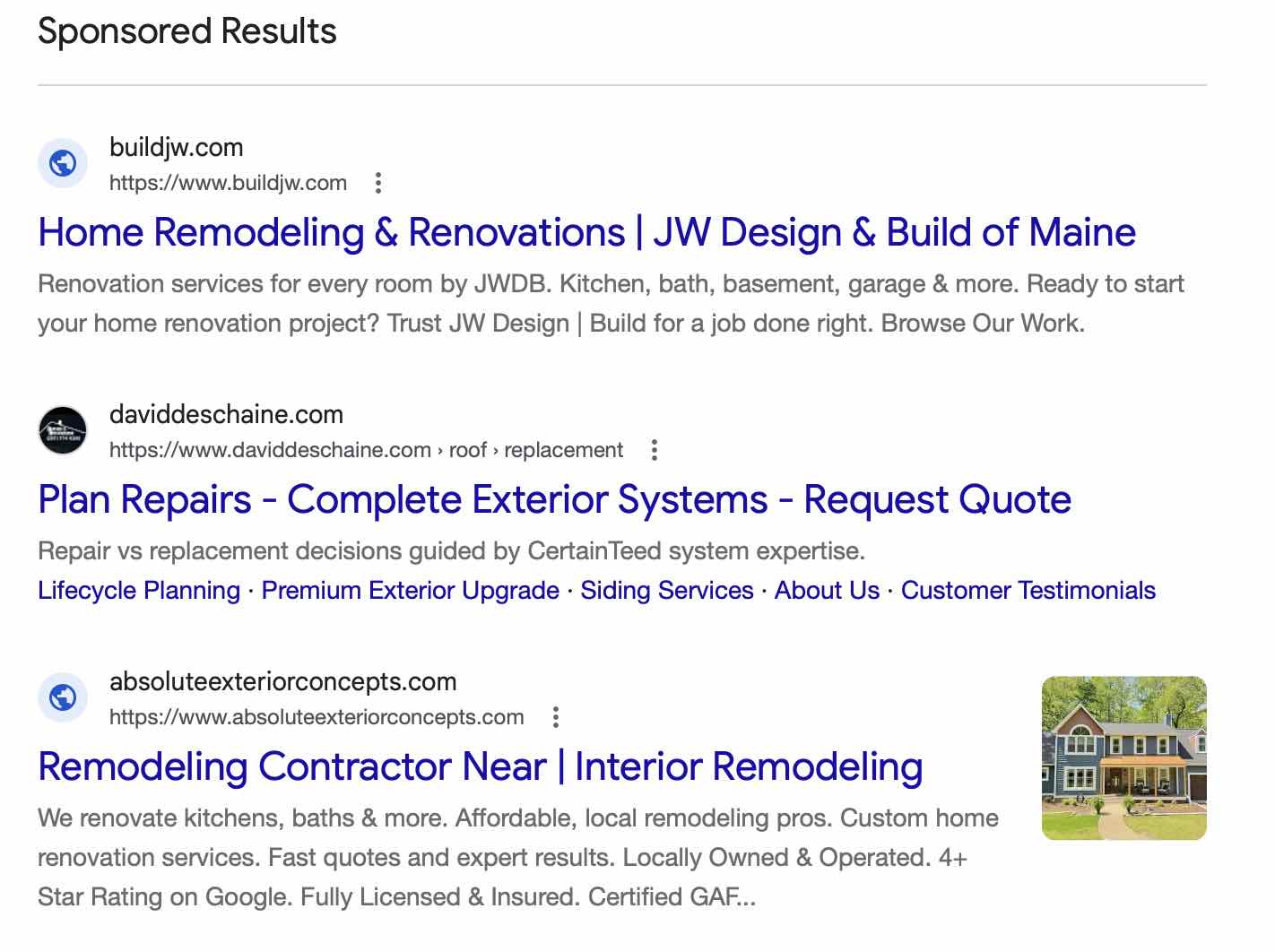
Local services ads appear as sponsored listings at the top of search results, like this:
Review your results regularly so you can adjust your targeting and budget toward the remodeling projects you want most.
12. Google Search Ads
Google Search Ads are PPC (pay per click) ads that put your company in front of homeowners actively searching terms like “kitchen remodeler near me” or “bathroom remodel contractor.”
To get started with Google Search Ads:
- Choose your targeting. Define the geographic area and remodeling services you want to promote through digital marketing.
- Create specific campaigns. Organize ads around project types and send visitors to a relevant service page. For example, a basement remodeling ad should link to a page featuring that service and completed basement projects—not your site’s homepage.
- Include the essentials. Clearly state the home improvement services you provide, the area you serve, and a next step (like requesting a consultation).
- Use negative keywords. Exclude irrelevant searches, such as homeowners looking for DIY instructions, jobs, or services you don’t offer.
With PPC ads, you only have to pay when someone clicks an ad. This makes them an effective way to test out Google advertising. Start with a budget you’re comfortable testing, then track which keywords and campaigns generate qualified leads.
13. Facebook and Instagram ads
Instagram and Facebook ads can introduce your remodeling business to local homeowners while they’re scrolling through their feeds, even before they start actively searching for a contractor.
To get started:
- Show your work. Use before-and-after photos, short project walkthroughs, customer testimonials, or carousels that show a renovation from start to finish.
- Target your service area. Focus your ads on homeowners in the geographic areas where you actually take on projects.
- Reconnect with website visitors. Use retargeting (where appropriate) to stay visible to homeowners who have already visited your website.
- Focus on value, not discounts. Highlight your craftsmanship, customer experience, and finished results instead of competing to be the cheapest option.
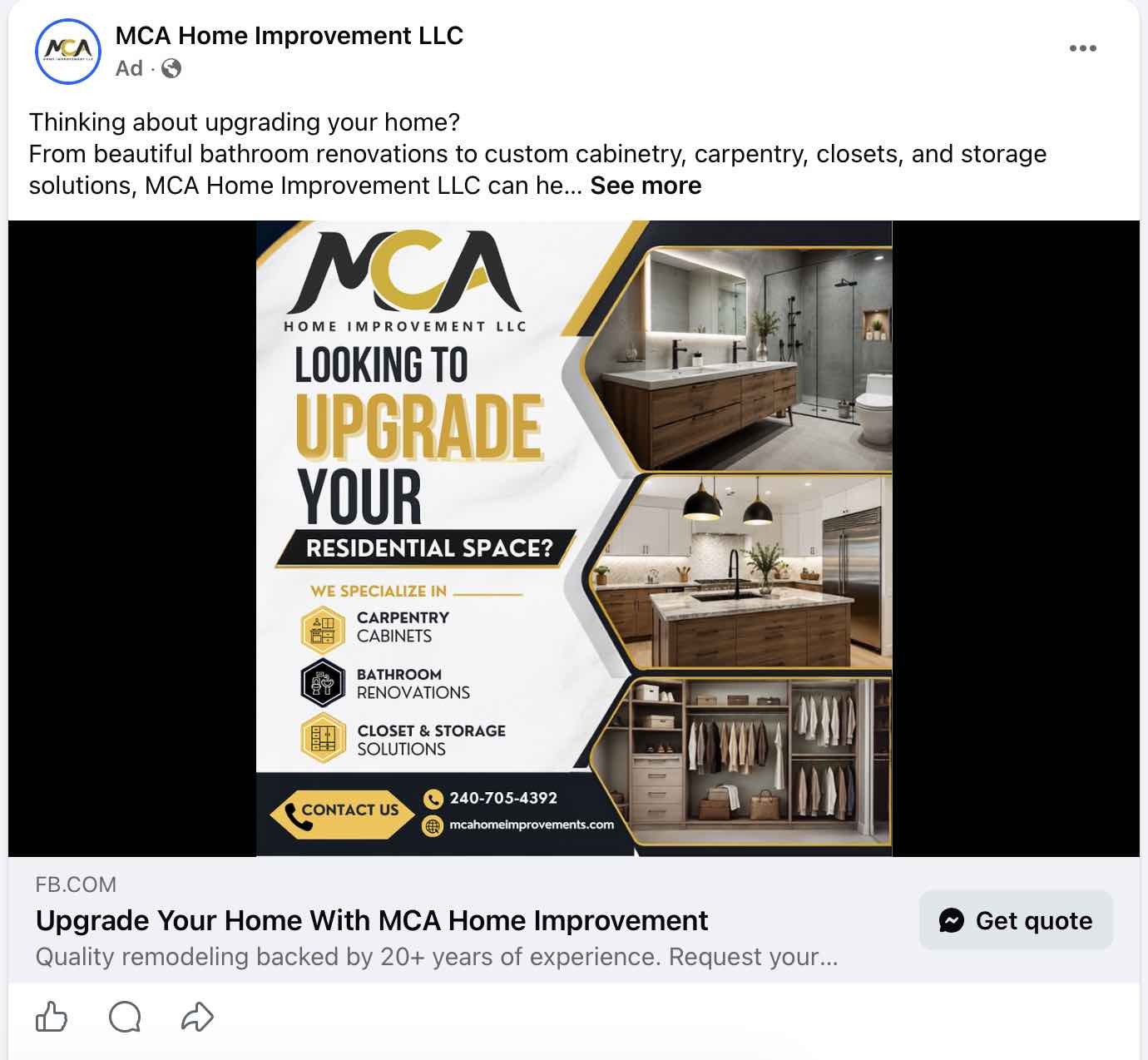
Remodeling is a major investment, so use your ads to give homeowners a clear picture of the quality and type of work they can expect from your business. Here’s an example of an effective ad, including images, business details, and a clear call to action:
14. Direct mail
Direct mail lets you target homeowners in specific neighborhoods, zip codes, or areas close by to your current projects.
For remodelers, a postcard can work particularly well when you have something local to show. Instead of sending a generic “we remodel homes” message, feature a real project you’ve completed nearby.
For direct mail advertising, it’s always good to include:
- An eye-catching project photo
- Your remodeling specialty (bathroom, kitchen, or general contracting)
- A customer testimonial or review
- Your remodeling company name and contact information
- A clear call to action that tells the client what to do next
- A QR code or URL leading to your portfolio or contact page
Coordinate direct mail with active projects by sending a “We’re working in your neighborhood” postcard. Then, follow up with photos of the finished work. Include a unique QR code, landing page, or tracking number to see which leads come from your mail campaign.
15. Home shows, showrooms, and sponsorships
Paid advertising doesn’t have to happen online. Local home shows, showroom partnerships, and community sponsorships can help you reach homeowners in the areas you serve.
Consider these in-person options:
- Attend home shows. Showcase before-and-after photos, customer reviews, and project examples to homeowners who are already thinking about home improvements.
- Partner with local showrooms. Build relationships with businesses selling cabinets, countertops, flooring, and other products homeowners may need for a larger renovation.
- Sponsor local organizations or events. Support community events or youth sports teams to build name recognition with local homeowners.
- Track your results. Use a QR code or landing page to identify leads that come from each event, partnership, or sponsorship.
Focus your budget on opportunities that put your business in front of the types of local homeowners and projects you want to reach.
16. Lead generation sites
Lead generation sites connect homeowners looking for remodeling services with contractors who pay for access to those opportunities. Popular options for remodelers include Angi, Houzz, Thumbtack, and HomeAdvisor.
To choose the right platform and get set up, you’ll need to:
- Create a contractor profile. Set your service area, remodeling services, contact details, and availability. Include photos of past work and reviews from past customers. You may also need to provide licensing or insurance information.
- Understand how you’ll pay. Depending on the site, you may pay per lead, pay a membership or advertising fee, or compete with other home remodelers for the same opportunity.
- Ask how leads work. Find out whether leads are shared or exclusive, what qualifies as a lead, and whether credits or refunds are available for bad matches.
- Check your targeting options. Look for platforms that let you control the project types and service areas you want to target.
- Respond quickly. If a homeowner matches with several remodelers on a site that offers shared leads, a fast response can help you connect before competitors do.
Lead generation sites can help fill gaps in your pipeline. At the same time, balance them with channels you control directly—referrals, local SEO, and your own website.
READ MORE: Thumbtack for contractors: generate leads and grow your business
How to choose what channels to advertise with first
You don’t need to try every advertising channel at once. Spreading a small budget across too many platforms can make it difficult to tell what’s actually generating results. Instead, focus your budget on the channels that best match your remodeling business’s current goals, such as:
If you need work in the next 60 days
If you have openings on the schedule soon, focus on reaching homeowners who are already considering a project.
Start with your Google Business Profile, reviews, past-client outreach, and your referral program. If you have money available for advertising, consider Google Local Services Ads or Search Ads to reach people who may be actively searching.
You can also test lead generation sites to capture existing demand, but closely track the cost and quality of the opportunities they generate.
If you have a steady pipeline but want more growth
If you’re booking consistently and ready to grow, expand beyond short-term lead generation with channels that can build demand over time.
Build a marketing strategy that combines tactics like Google Ads and local SEO with referrals, social media, neighborhood advertising, and local partnerships.
Invest in project photography and video, too. You can reuse that content across your website, Google profile, social media, direct mail, and paid campaigns.
Track each channel separately to find the mix that consistently brings in the types of remodeling projects you want to take on.
If you’re ready to move upmarket into larger projects
To move from smaller renovations into larger kitchen projects, additions, or whole-home remodels, focus your advertising on credibility rather than lead volume.
Invest in professional project photography, detailed portfolio pages, and strong customer testimonials. You’ll also want to spend time building relationships with designers, architects, and showrooms.
Make sure your paid ads reflect the work you want to win, too. If you’re targeting $100,000 renovations, you should highlight your process, craftsmanship, and experience with similar projects.
Avoid generic messaging about affordable home improvements and focus on the level of quality you provide. That way, you can attract better prospects and give them a reason to consider your company.
How to tell if your remodeling advertising is working
Clicks, impressions, and social media likes can tell you whether people are seeing your advertising. But they don’t tell you whether your efforts are helping you book profitable remodeling jobs.
To understand whether your advertising is actually helping your business profit, track each lead from the first inquiry through the signed contract. As you begin to monitor your results, start to focus on these five metrics:
- Leads: How many inquiries did each advertising source generate?
- Cost per lead (CPL): How much did you spend on a channel for each remodeling lead it generated?
- Close rate: What percentage of qualified leads or estimates became signed jobs?
- Average job value: How much revenue does the average signed project generate?
- Revenue by source: How much signed revenue can you trace back to each advertising channel?
Don’t judge a channel by cost per lead alone. A more expensive lead can still deliver a better return if it turns into a larger remodeling project.
DIY advertising vs hiring help
You don’t necessarily need an agency to start advertising your home remodeling business. The right approach depends on your budget, available time, and how complex your marketing has become. Think about these factors when deciding whether to DIY or hire help:
- Start DIY if you’re testing the waters. Managing your Google Business Profile, requesting reviews, sharing project content, or testing one or two paid channels can help you learn what works without a large investment.
- Hire help when marketing becomes difficult to manage. A freelancer or agency may make sense when campaigns take too much time or your advertising spend is large enough to benefit from professional optimization.
- Watch for red flags. Be cautious of guaranteed rankings or lead volume, since reputable companies will never make big promises. Be cautious when it comes to unclear long-term contracts or reports that focus on clicks and impressions instead of qualified leads.
- Keep control of your accounts. Make sure you retain access to your advertising accounts and data, even when someone else manages your campaigns.
Whether you DIY or outsource, you should always know where your advertising budget is going and what it’s producing.
Turn remodeling advertising into more booked jobs
You don’t need to advertise everywhere to grow your remodeling business. Focus on the channels that bring in qualified leads, track what’s working in your local area, and invest more in the strategies that lead to booked jobs.
Remodeling business software like Jobber helps you manage those leads, send professional quotes, follow up on estimates, and generate reviews and referrals—all in one place.
Frequently Asked Questions
-
Learning how to market a remodeling business starts with free and low-cost channels. This includes your Google Business Profile, customer reviews, referrals, job-site advertising, and local partnerships. Once those foundations are in place, test paid options such as Google Ads, Facebook and Instagram ads, direct mail, or lead generation sites.
Track each source from first contact through signed contracts. This helps you identify which advertising channels generate profitable projects and where to invest more of your budget. -
Use a mix of referrals, local SEO, paid search, social media marketing, partnerships, and targeted advertising to give more homeowners opportunities to find your remodeling business. Focus on the channels that reach the types of customers and projects you want most.
Respond quickly and follow up consistently with qualified prospects. A strong follow-up process helps you make the most of every opportunity and turn more remodeling leads into estimates, signed contracts, and booked projects. -
The best way to market a remodeling business is to combine strategies that build trust with channels that generate qualified leads. Start with a professional website, strong project photos, customer reviews, and referrals so homeowners can easily find and evaluate your business.
Then test paid options like Google Ads, social media ads, or lead generation sites, based on your goals and budget. Focus on a few channels at a time so you can track results and improve them. -
A common starting point for small businesses is to budget around 5–10% of annual revenue for marketing. That said, the right budget depends on your growth goals, competition, and how much business you already generate through referrals and organic search.
That budget can cover paid advertising, SEO, website content, and other marketing efforts. Start with a manageable amount, track which channels produce qualified leads and booked jobs, and increase spending on the strategies that deliver the best return. -
The 30% rule is a general budgeting guideline that suggests keeping renovation costs below roughly 30% of a home’s current value. For example, a homeowner with a $500,000 home might use $150,000 as a rough upper limit for renovation spending.
It isn’t a hard rule, and the right budget depends on the project, local market, homeowner’s goals, and expected return on investment. Remodelers can use it as a conversation starter when helping customers set realistic project budgets.