
Key takeaways:
If you want to successfully grow your construction business, it’s all about building strong systems, focusing on profits, and finding the right team and clients.
- Prioritize healthy profit margins and clear job costing. Accurate estimates and job costing ensure you know your costs, set the right pricing, and avoid letting scope creep eat into your profits.
- Build a quality pipeline of leads. Aim for high-quality leads by seeking referrals, collecting customer reviews, and strengthening your online presence with local SEO and a solid Google Business Profile.
- Invest in targeted marketing and show off your work. Simple marketing strategies—like a website with real project photos and before-and-after content—help turn leads into loyal clients and boost your credibility.
- Focus on your most profitable jobs and streamline your bidding process. Use job costing data to take on the right jobs and implement quoting software to create fast, professional estimates that stand out.
- Hire, train, and systemize for quality and scalability. Bring on team members when needed, document clear standard operating procedures, and use construction management software to make day-to-day operations efficient and repeatable.
- Track your progress with key business metrics. Watch revenue, profit margins, close rates, and jobs per crew to measure your growth and guide your next moves.
Get more construction business growth tips, tools, and strategies sent straight to your inbox. Sign up for the Jobber Newsletter.
The secret to growing a construction business comes down to a steady stream of leads, the right jobs, a reliable crew, tighter numbers, and repeatable systems. It doesn’t have to be complicated, just consistent.
These tips for how to grow a construction business can help you scale without adding to your workload. Get proven advice from other construction business owners to take your business to the next level.
Tips for growing a profitable construction business:
What does it take to grow a construction business?
Growing a construction business takes healthy margins, repeatable systems, and the right customers—not just more jobs.
If you want to know how to grow a small construction business in a sustainable way, focus on improving your construction profit margins and developing processes instead.
The construction business tips that matter most help you step back instead of adding to your workload. That could be by winning better jobs, building a reliable team, or putting systems in place that run without you.
As your business grows, it’s also important to adjust to new client types, services, and contracts. Learn how to effectively manage big-budget construction projects, so you can handle them just as easily as smaller ones:
Get clear on your numbers before you grow
Growth multiplies both positive and negative numbers. If your margins are thin now, more jobs just means a busier schedule, not more profit. Start by figuring out your costs, then maintain healthy profit margins and cash flow management to keep them in check.
Nail your job costing and estimates
Accurate estimates are the foundation for improving profitability. They ensure you cover costs, make money in construction, and have room to grow—but only if you approach them the right way.
Break down labor, materials, and overhead on every bid
The first step is to get an accurate, detailed look at your job expenses, such as:
- Labor costs, including rates for subcontractors
- Material costs, at current pricing
- A percentage of your total overhead costs, including insurance and company vehicle maintenance
Job costing breaks down how much you spend and make on every job. You can do it by calculating your profit and expenses manually or using job costing software.
Either way, the goal is to understand how much profit you’re actually making and whether your markup is high enough. Then you can use that information to set, adjust, and inform pricing, as well as add new services or explore packages and bundles.
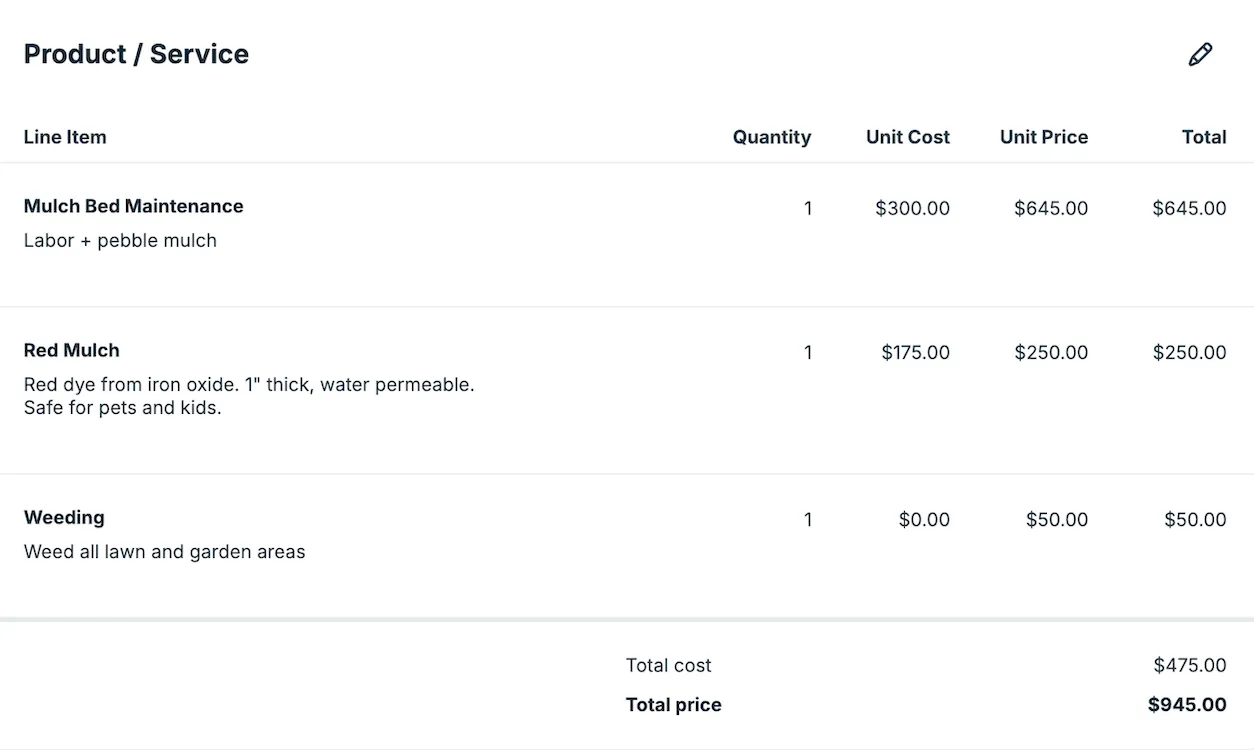
If you’re not job costing your jobs, you don’t know how much you’re actually charging, your pricing’s all off.

Stop scope creep with clear estimates and change orders
The next step is to use job costing to inform your estimates and prevent scope creep from eating into profit. Here’s how to do it:
- Set clear estimates from the get-go, spelling out exactly what is and isn’t included.
- Use a standard change order process to document scope changes and price adjustments.
- Have clients sign off on any additional work in writing so you always get paid for the whole job.
For example, let’s say you take on a $15,000 kitchen remodel. Your markup is 20% of that, or $3,000. Partway through, the client requests $2,000 in changes, but you don’t adjust the price.
Without a change order, that additional cost in materials and labor will come directly out of your profit, cutting your markup down to 7%, or $1,000.
Protect your profit margins and cash flow
Good margins only matter if you actually get paid. Using software like Jobber to send accurate quotes, timely invoices, and process payments can ensure you get paid faster so your growth isn’t starved for cash.
That way, you maintain consistent profit margins while supporting steady cash flow you can use to invest in your business.
Build a steady pipeline of construction leads
Lead generation is essential for growth, but not all leads are created equal. Some close fast, some need convincing, and some never book a job at all. While volume is always nice to have, a better pipeline targets high-quality leads who are the most likely to hire you.
Ask for referrals and reviews
Referrals come with built-in trust, making them one of the best ways to get leads. A homeowner who hears “I used them and loved the work” doesn’t have to run through the same vetting process a stranger would before booking.
Building a dedicated referral program will keep referrals coming in consistently instead of hoping clients think to refer you on their own.
Reviews work the same way. They come from real clients and show people who haven’t hired you before that you’re a trustworthy service provider. Ask for reviews from happy customers at the end of jobs to grow your reputation and develop trust with leads.
The number one time to get a review is when you show them their perfect shining siding that you just pressure-washed, or their magical lawn care that you just did, whatever that is.

Get found online with local SEO
Local SEO helps you get found by homeowners looking for construction services in your city or town. When they use their phone or computer to search online, a Google Business Profile can help your business appear in the results.
80% of local searches happen on Google Search and Google Maps.
Claim and optimize your Google Business Profile
Your Google Business Profile is a free online business listing you can claim to show up in Google search results when people look for the services you offer in your area. For example, “construction company near me” or “[city] kitchen renovations.”
Once you claim your profile, make sure to fill it out completely, including your phone number, business hours, service area, and photos of completed jobs.
It also works well as a place to collect online reviews. Direct happy customers there to leave reviews—this will help optimize your profile and keep testimonials in one place.
Invest in construction company marketing
Marketing for contractors doesn’t have to be complicated or time-consuming. A couple of straightforward strategies can be enough to grow your construction business, as long as you apply consistent effort.
Build a simple website with real project photos
A basic website should include construction industry- and location-specific keywords, pictures of real projects, and a way for customers to book a job.
Make sure to use your city, industry, and services throughout your website to help with local SEO. Include a portfolio or gallery of your best work to showcase the quality of your work to new leads.
Use before/after content and social proof
One of the most effective construction company marketing tactics for small businesses is to use before-and-after images on your website, Google Business Profile, and social media pages. It’s an easy way to showcase your services and highlight your most impressive work.
Win more of the right jobs
Winning jobs is great, but winning the right jobs is even better. The best ones aren’t necessarily large projects with a high price tag—they have healthy profit margins, play to employee strengths, and stick to a defined timeline and scope.
Focus on your most profitable services
Use your job costing data to learn which of your services are making the most money. Then use contractor marketing strategies to promote them to potential customers.
The most profitable construction business owners aren’t necessarily taking on the most jobs. They’re doing more of the jobs that pay well and fewer of the ones that don’t.
Bid smarter and faster
Slow bidding and estimating response times leave room for competitors to close a lead before you do. And unprofessional quotes don’t make potential customers want to hire you.
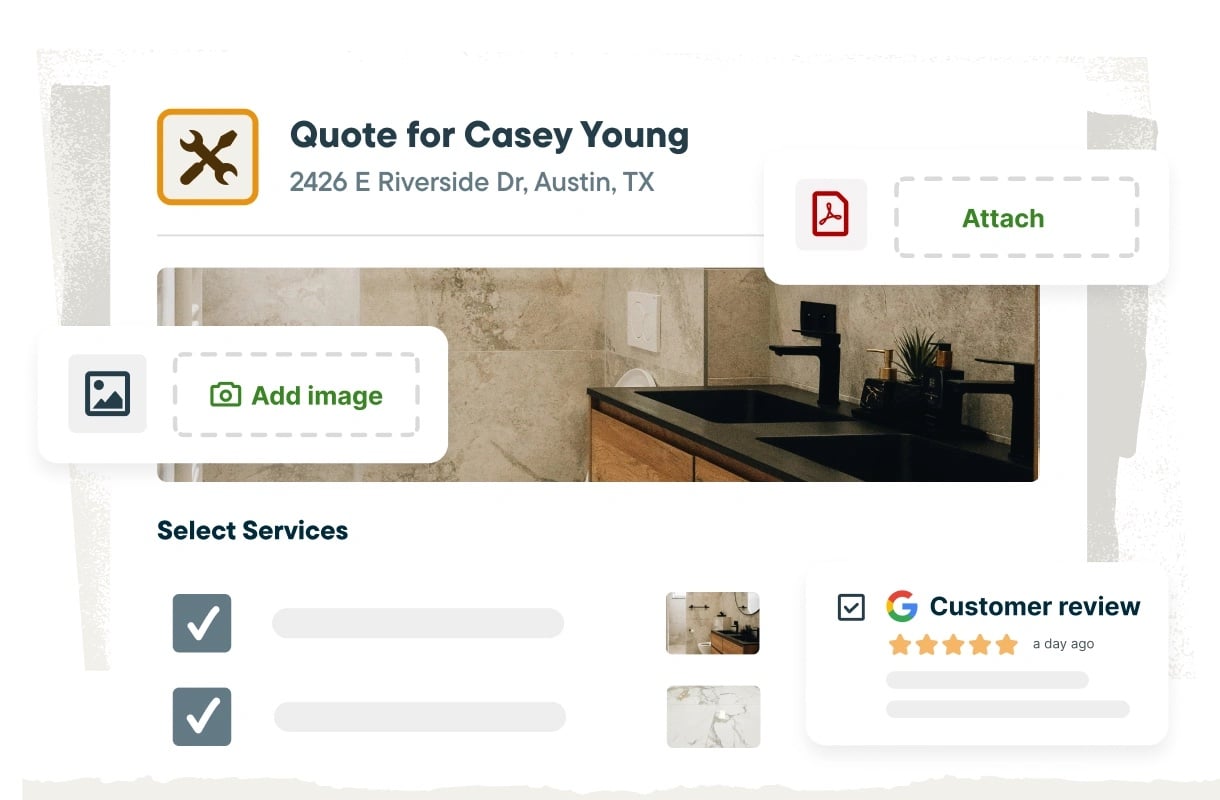
Use quoting software like Jobber to quickly create high-quality estimates that impress potential clients. It’s one of the easiest ways to get more construction jobs. And it keeps your bottom line in check by including markups and optional add-ons.
Hire and build a reliable crew
A trustworthy, experienced, and reliable crew lets you take on more jobs without having to work more hours. Getting to that point means knowing when to add to your team and how to train new hires.
Know when to hire
Just because you start a construction business solo doesn’t mean it should stay that way forever. Business growth includes bringing on new employees so you can take on more work, add to your services, and free up your time so you can focus on running your business.
If you find yourself leaving money on the table by turning down work, missing follow-ups, or spending your evenings catching up on quotes, it may be time to bring someone on. That’s a common growth signal for many construction businesses.
Train for quality and consistency
More hands means more room for the work to vary. One person’s idea of proper project management might not match how you’d do it yourself. That makes training for quality standards and consistency a must.
Before sending a new hire out into the field:
- Document how the work should be done, step-by-step.
- Create standard operating procedures for your most common jobs.
- Walk new crew members through a job while you supervise before they handle it solo.
- Do spot checks on finished work, especially in the first few months.
- Give feedback right away, with actionable tips for what to do next time.
These hiring and crew management practices will help to ensure quality holds across jobs, crews, and individual employees, whether you’re there or not.
Systemize your operations so you can scale
Manually documenting each step in every job takes time. From quotes and follow-ups to invoices and payment receipts, scaling means finding ways to make repeatable tasks easier to manage.
Document your processes with simple SOPs
Standard operating procedures (SOPs) document how your team should complete repeatable jobs from start to finish. They help keep work quality consistent across crews, clients, and sites.
Create SOPs for common tasks and use them to train construction workers. That way, every client receives the same level of service, and each task is completed to your standards.
Run the day-to-day with construction management software
How to scale a construction business depends on having systems in place to handle everyday to-dos like scheduling, dispatching crews, tracking jobs, and basic customer communications.
Construction management software like Jobber can prevent you from becoming the bottleneck to your own growth by automating these tasks. Instead of coordinating everything from memory, it can help construction companies like yours:
- Schedule jobs and dispatch crews.
- Track job statuses in real time, from quote to completion.
- Automate customer communications like appointment reminders and review requests.
- Keep client and job history in one place for easy reference.
The less time you spend managing the day-to-day, the more time you have to focus on sustainable growth.
Track your growth and plan your next move
You need real numbers to know if your scaling efforts are paying off. To see whether your construction business is actually growing, pay attention to these KPIs:
- Revenue: The total amount you earn before costs are deducted
- Profit margin: The percentage you keep after expenses
- Close rate: How many quotes turn into booked jobs
- Jobs per crew: The number of jobs a crew completed over a given period
Ideally, growth will mean each of these numbers is increasing as you track them carefully. If they aren’t rising, you may need to revisit pricing, aim for better lead sources, or try a new strategy.
Either way, having systems in place to handle repeatable tasks will give you the time you need to focus on improving your numbers and growing your business.