
Key takeaways:
Explore over a dozen real-world home services website examples along with practical steps to design your own site that attracts customers, highlights your skills, and grows your business.
- Showcase trust and expertise across industries. Effective websites use testimonials, high-quality before-and-after images, and clear service descriptions to demonstrate trustworthiness and professionalism in fields like cleaning, pressure washing, and plumbing.
- Highlight your competitive edge. Stand out by emphasizing unique services, eco-friendly options, guarantees, or specific qualifications your business offers. Make it clear who you serve (residential, commercial, or both) and what sets you apart from competitors.
- Prioritize clear communication and user-friendly design. Top websites help customers easily understand what you offer, find pricing packages or bundles, and quickly access contact forms or online booking options—even for emergencies.
- Incorporate must-have website elements. Ensure your site includes a home page with your branding, service listings, testimonials, mobile-friendly design, and essential SEO for discoverability. Offering online booking and payment processing further boosts customer convenience.
- Choose the right website-building method for your needs. Whether hiring a web designer, building on your own, or using website builders like Jobber, select the option that fits your technical comfort, customization needs, and business goals. Jobber in particular enables service companies to get online fast with features built for home service businesses.
Stay ahead with more tips and examples—sign up for the Jobber Newsletter for the latest insights on running a successful service business. Join the newsletter here.
Having a home services website helps attract potential customers, book more jobs, and increase profits. After all, 55% of consumers in the US research service businesses online before scheduling an appointment.
It’s also an effective way to collect payments, facilitate bookings, and provide service details, so you can spend less time behind a computer and more time at the job site.
Learn what an effective home services website looks like in different industries and how to make one using these tips and examples.
The best home service website examples for:
1. Cleaning
The best cleaning business websites build trust by using before-and-after images to show potential customers what they can do. They help to demonstrate your skills while helping customers to feel comfortable with inviting you into their homes.
Build trust with testimonials
97% of consumers read reviews from past clients before making a decision to book or buy, making customer feedback essential for your website.
Domestic Divas leverages testimonials from real customers to build trust with potential customers.
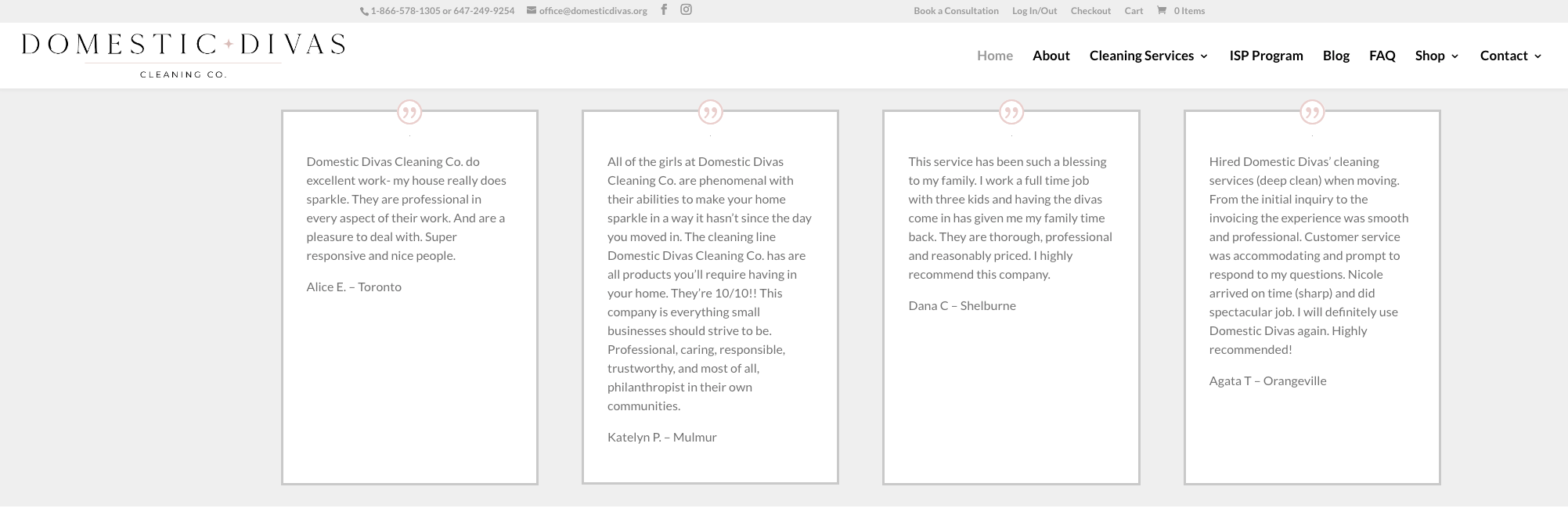
These reviews help potential customers to:
- See what existing clients love most about your business
- Read positive feedback about your services and team
- Understand what to expect when they book a service with you
Describe individual services
Before a customer hires a cleaning business, they want to know how thorough you’ll be. Clearly listing what’s included in each service tells clients what to expect and helps you highlight the value you bring to the table.
Clean Agent uses clear service descriptions to show potential clients what each service entails.
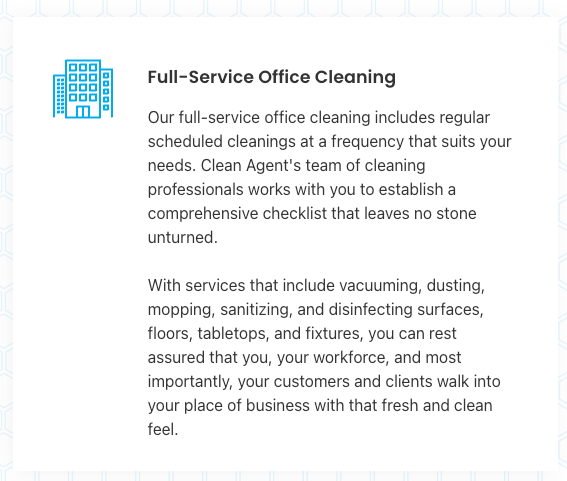
This isn’t just clear, upfront communication, it also offers customers peace of mind by telling them exactly what a cleaning covers.
Use high-quality images as examples
Written descriptions of your services are important, but nothing showcases your cleaning abilities like a high-quality picture of a finished job. It instantly demonstrates your skills and helps potential customers envision what you could do for them.
Davis Janitorial used Jobber to create a website that includes photos of their work right on the homepage.
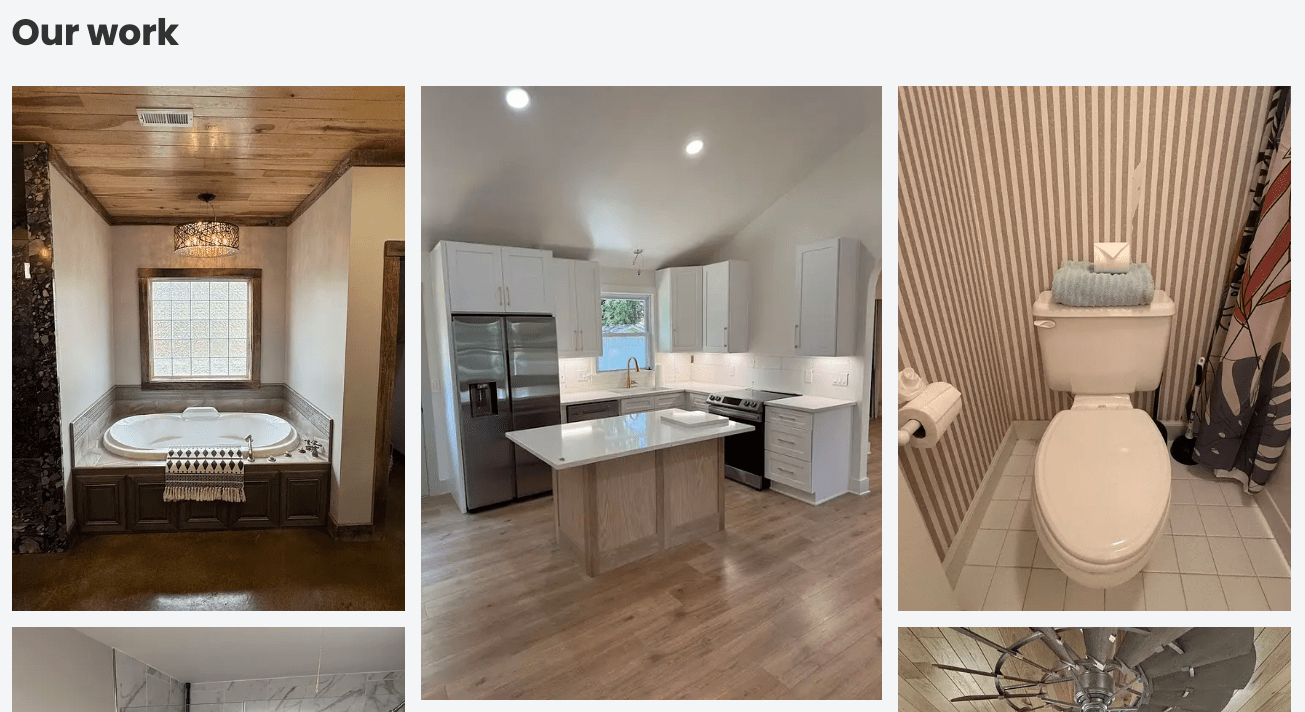
Bright, well-lit photos of finished jobs help grab the attention of site visitors and encourage them to book a service. Just make sure they’re high quality and clearly relevant to what you do.
2. Pressure washing
The most effective pressure washing websites focus on clear service lists and improving the curb appeal for potential customer.
Use these examples to see how to get started.
Offer clear service lists
Communicate what you do (and don’t) offer upfront. This helps customers to determine whether you’re the right service provider for the job as soon as they land on your website.
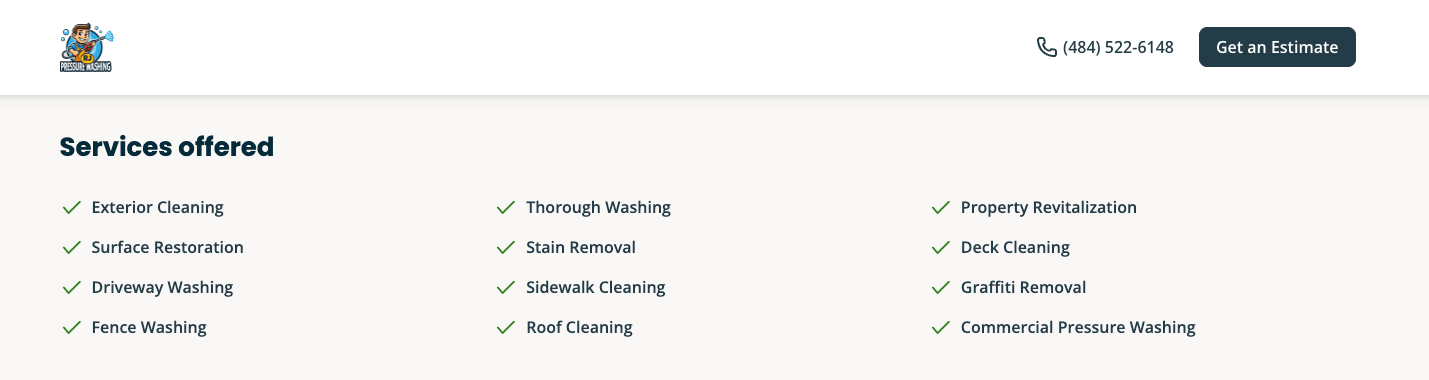
RJ Pressure Washing lists exactly what they offer on their homepage, making it easy for potential clients to review their services.
Highlight curb appeal
Using your website to remind clients how much their curb appeal can improve with your services gives them a convincing reason to make a booking.
On Pressure Wash Carolina’s home page, they drive the point home with an effective tag line over a picture of a beautiful home with great curb appeal. When potential customers visit their site, it’s the first thing they see.
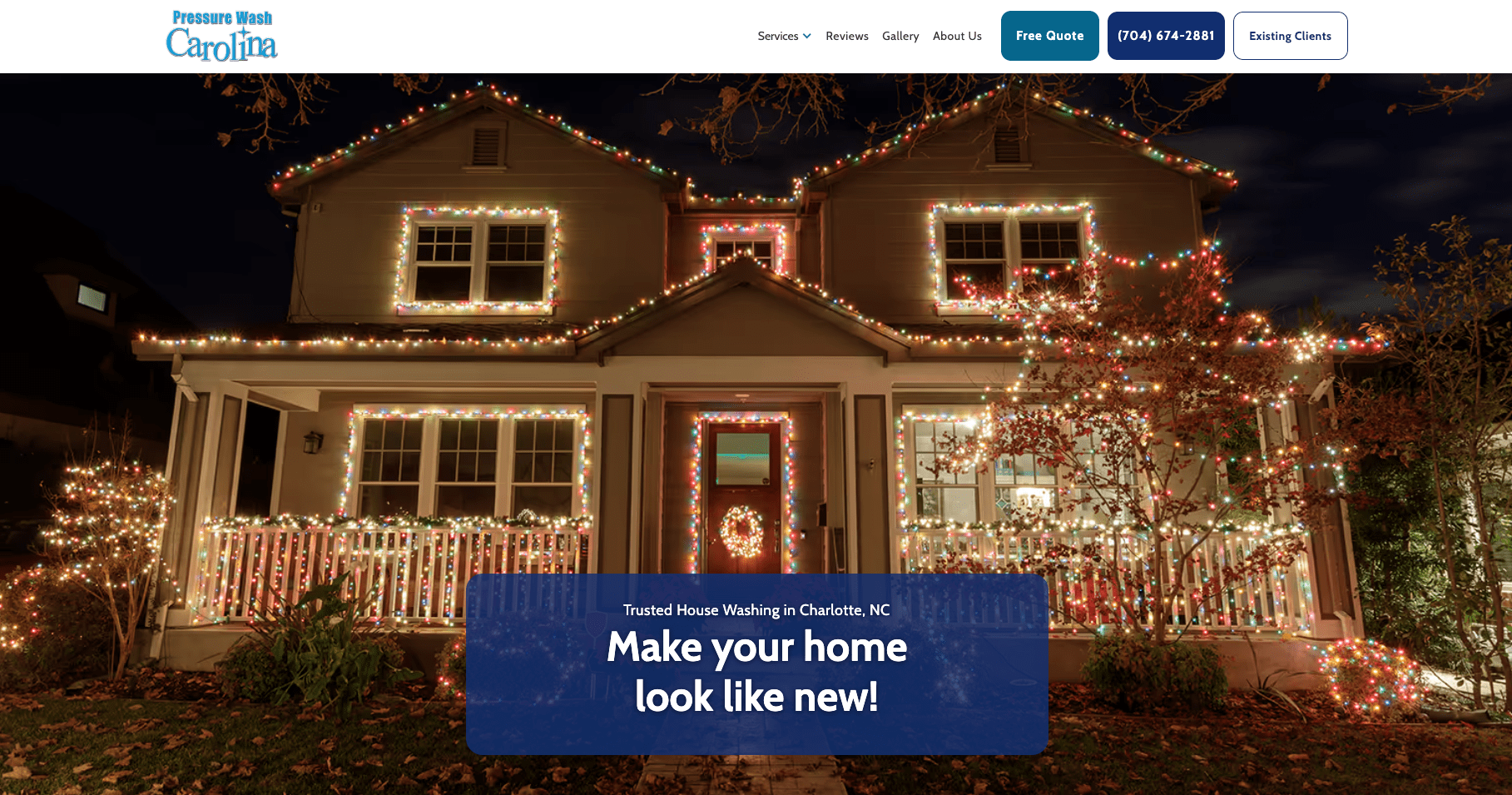
You can also showcase curb appeal by including before-and-after images on your site in a gallery or on your home page. That way, prospective clients can see the results you bring to the table for different projects, so they know what to expect.
3. Roofing
When it comes to a roofing website, customers need an easy way to reach out in case of an emergency, like a leaky roof on a rainy day. And because roofing is a dangerous trade, it’s also helpful to outline your safety policies so clients know you take their well-being and your team’s seriously while on the job.
Here’s what that looks like in practice.
Have a clear contact form
Superior Roofing created a home services website using Jobber, which features a detailed contact form at the bottom of their homepage.
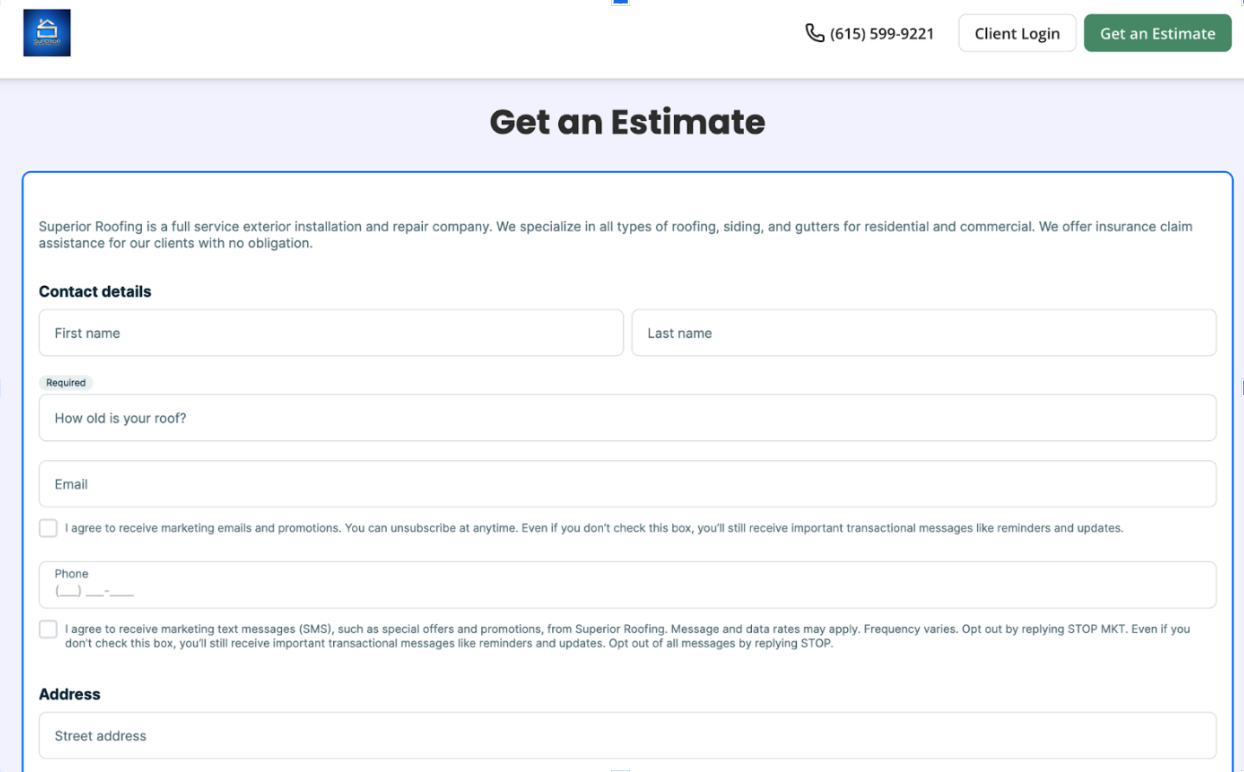
This helps customers:
- Easily get in touch
- Clearly explain their problem or concern
- Provide details that help make more accurate quotes
It’s also helpful to mention insurance claim assistance in your estimate, as Superior Roofing does, because potential clients will know it’s something you can handle right off the bat.
FREE TOOL: Roofing estimate template
Feature health and safety policies
Clients care about how much you prioritize safety on the job. Clearly outlining your health and safety policies, as Buckstone Roofing does, demonstrates your professionalism and helps put customers at ease.
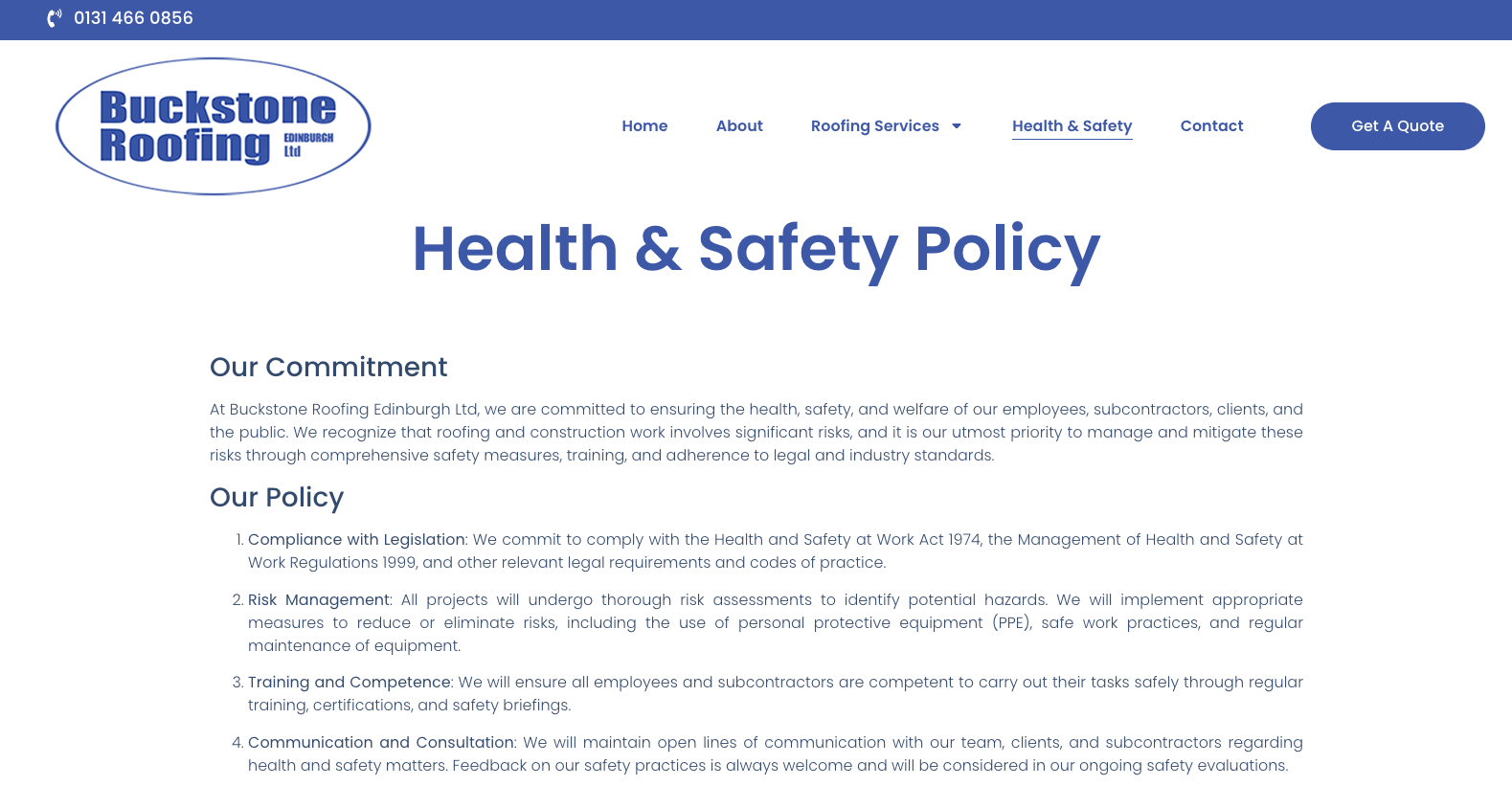
It also positions you as a well-informed business that they can trust to follow best practices for safety compliance and legislation.
4. Plumbing
On a plumbing business website, customers often look for two things:
- Emergency services
- Proof that you’re reliable
Take a look at these examples to see how to do it on your own website.
Frontload emergency services
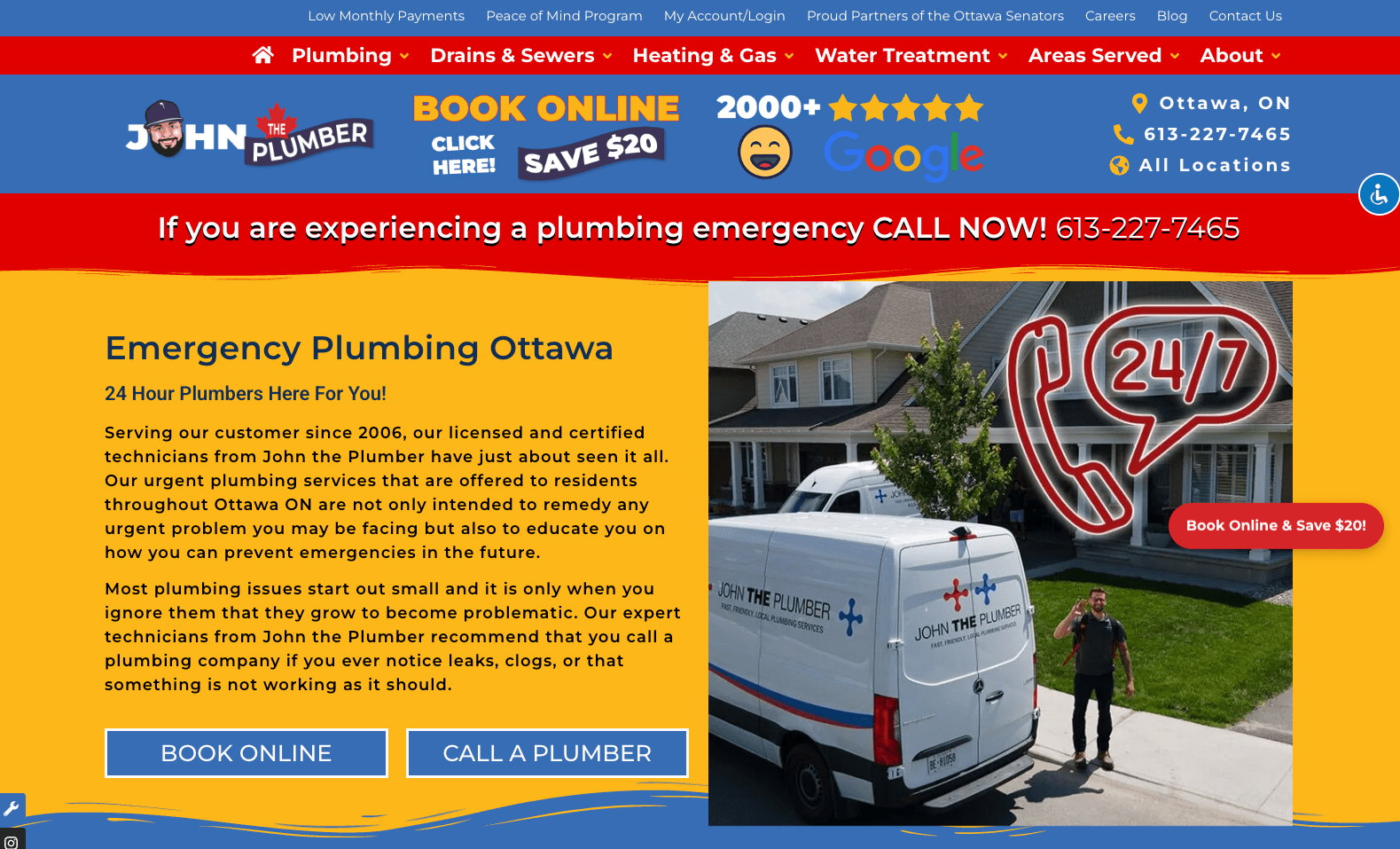
John the Plumber makes it clear that same-day services are available right away.

They also feature an emergency services page on their website that lets customers know they’re available 24/7 and gives them a number to call. This makes it easy for customers in crisis mode to reach out without having to search for contact info or wonder whether the business is open.
Reinforce your reliability
Plumbing customers don’t want to deal with the same problem over and over again. They want a plumber they can rely on to get the job done right the first time.
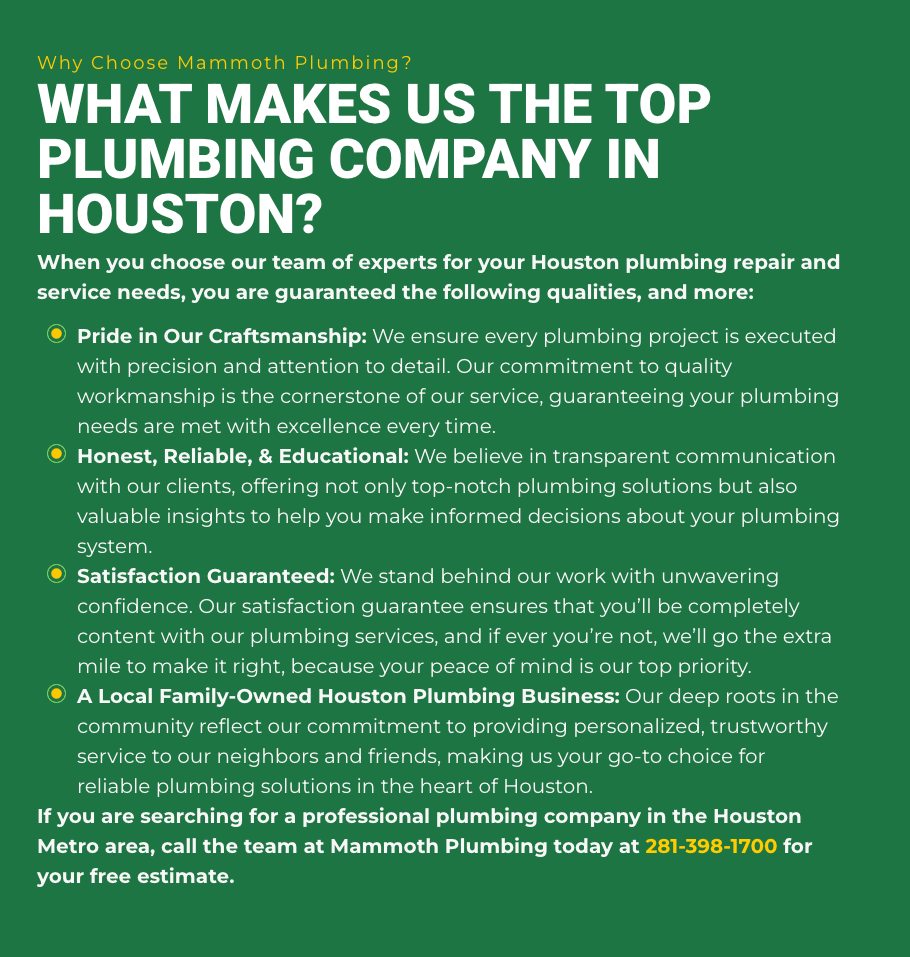
Mammoth Plumbing communicates its reliability using a “Why Choose Mammoth Plumbing” section on its homepage. It offers several trust indicators, including a satisfaction guarantee, reassuring customers that their team will do what it takes to make them happy.
5. Auto detailing
To make an auto detailing website shine, it helps to point out your attention to detail and ability to produce showroom-level results. But not every customer will want the same level of detailing, which is where service bundles and pricing tiers come in handy.
Here’s what that could look like on your auto detailing website.
Use price bundles and tiers
Gorilla Auto Detailing offers customers a variety of pricing packages to choose from. This helps them to choose the service that matches their needs and budget.
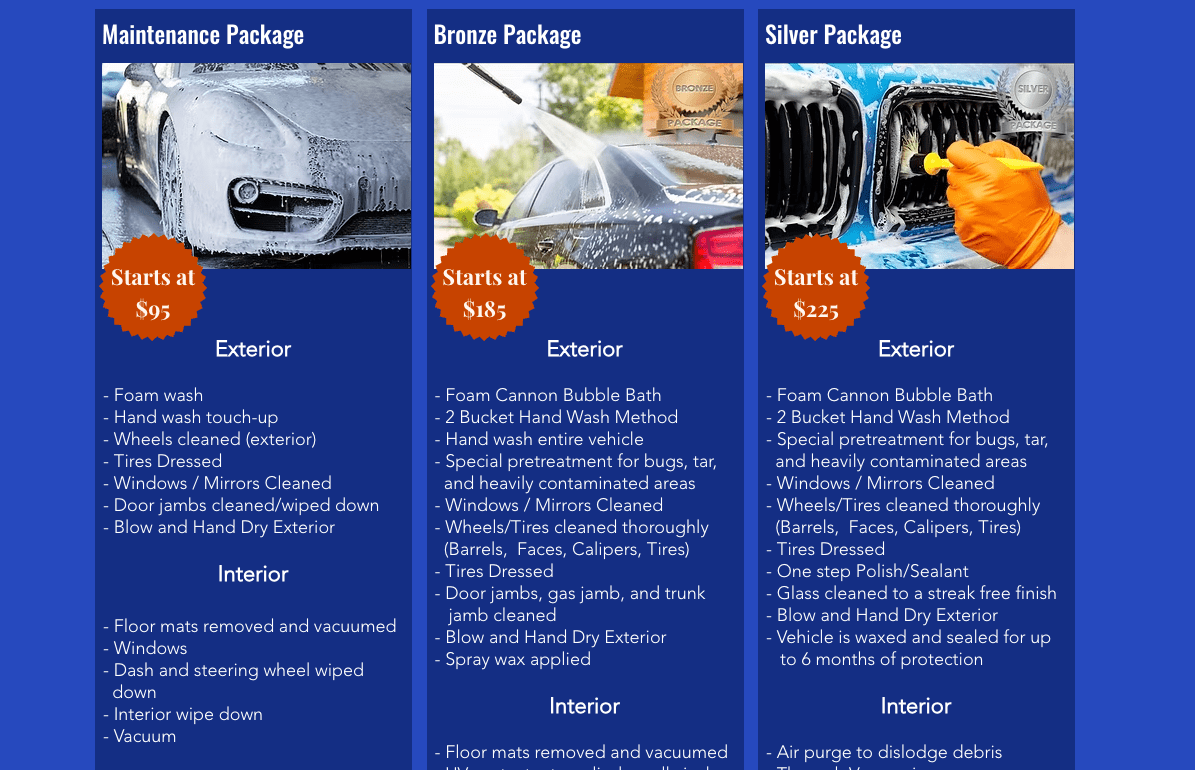
Including packages on your website is also an effective way to increase profit because it can encourage customers to purchase higher-value services. For example, when they see what’s included in a bronze package compared to maintenance, they may be more likely to upgrade.
6. Lawn care
When making a lawn care website, consider what sets you apart. For example:
- Does your business offer something competitors don’t?
- Are your customers residential, commercial, or both?
- Do you offer recurring or seasonal services?
Then, highlight what makes you different in a way that appeals to potential clients like these websites do.
Showcase your competitive differentiator
Green Goat Lawn Care caters to customers who want emission-free services, positioning that message front and center.
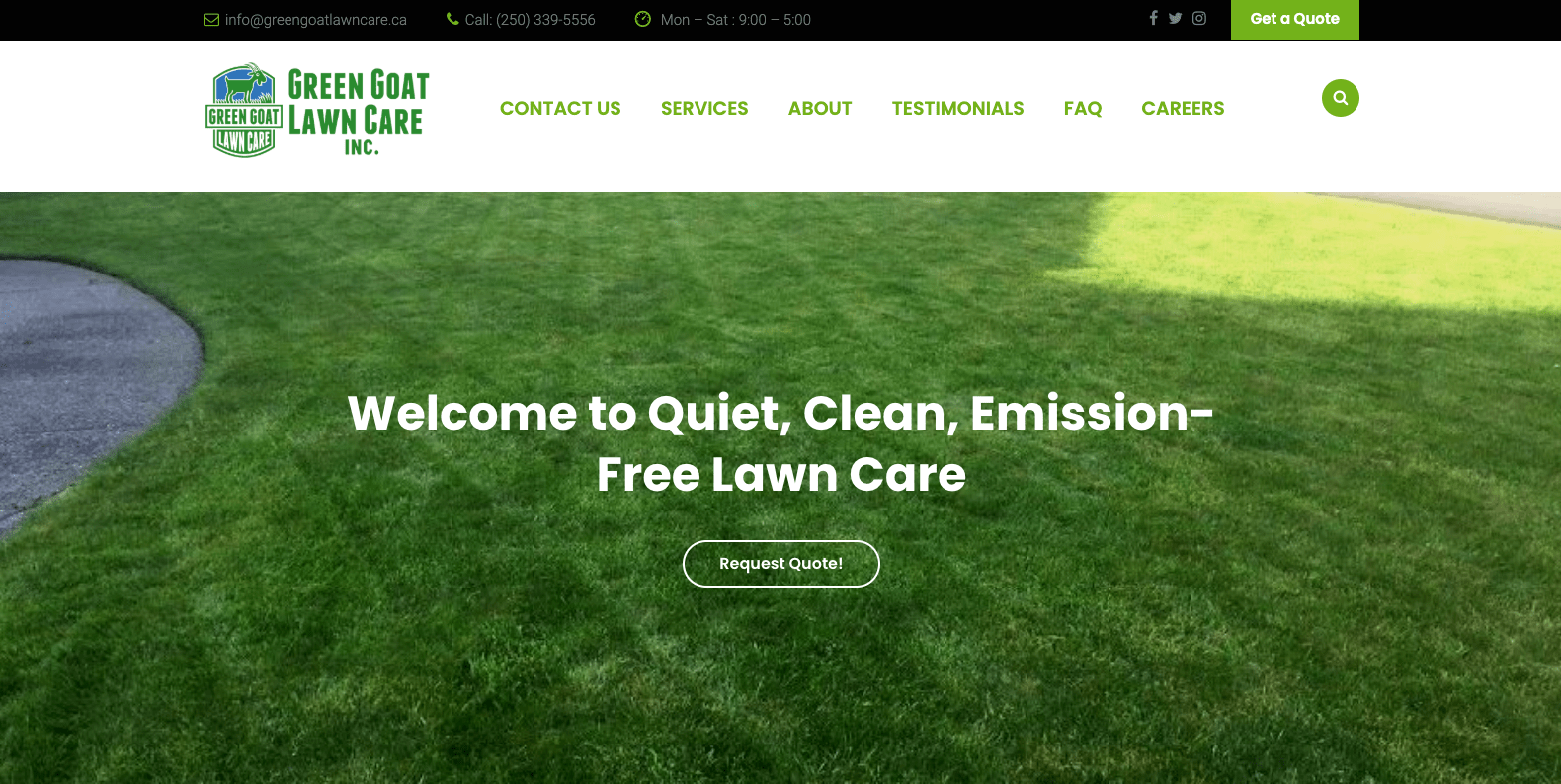
This immediately lets customers know Green Goat is an environmentally friendly business, making them stand out from other service providers.
Clearly state the types of clients you serve
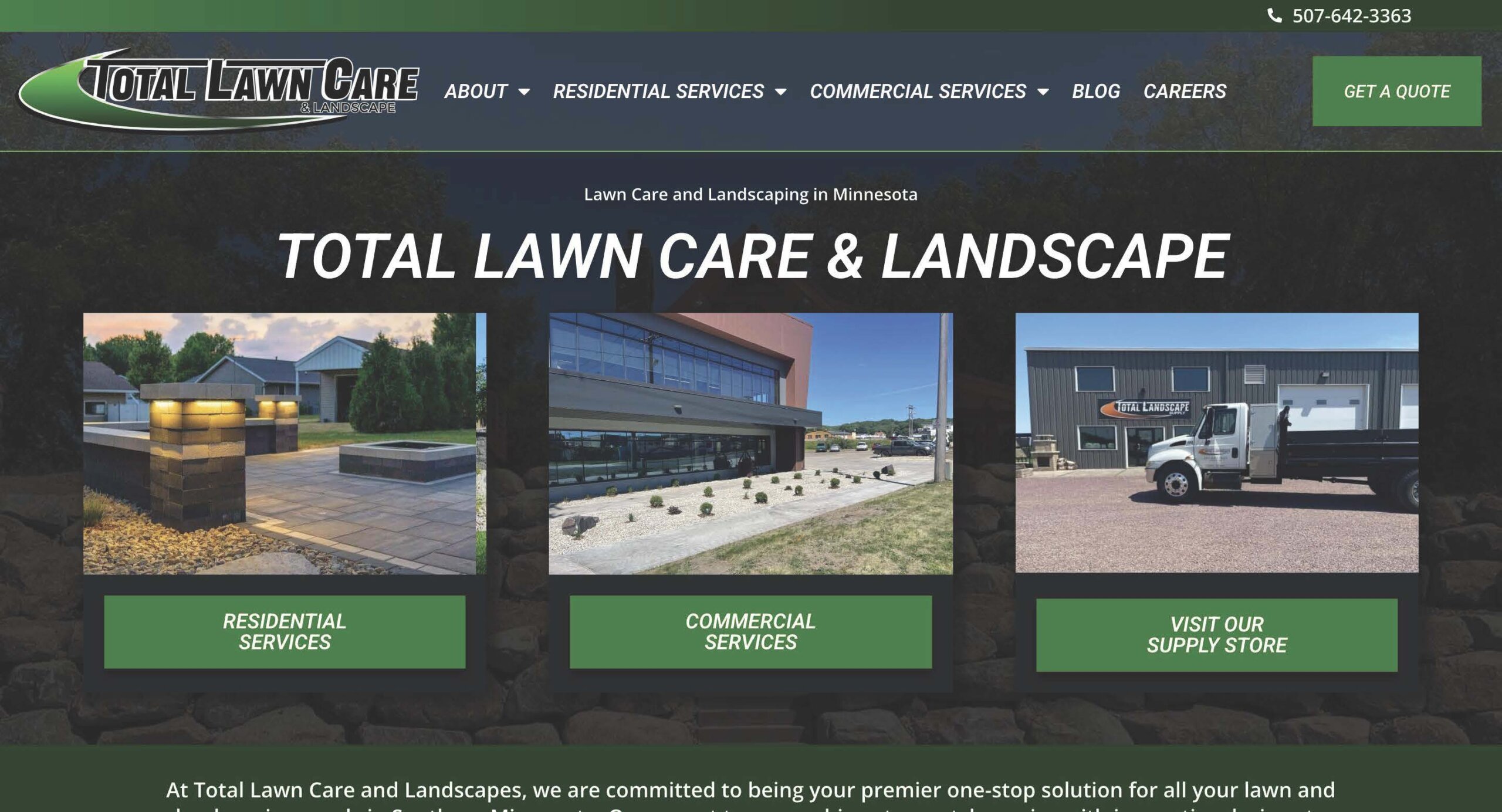
Total Lawn Care & Landscape serves both residential and commercial clients, with separate service pages for each. This makes it easy for customers to find the service they’re looking for, no matter whether it’s for their own lawn or a commercial property.
7. Landscaping
The best landscaping websites are visually appealing, include online shops for products, and promote seasonal services.
While what you include will depend on what you offer, these examples can help you get started.
Use professional photography
Any pictures are great, but professional photography goes a long way on a landscaping website. Mango Paving and Landscaping uses professional images on every page and features a gallery of completed work to show clients what they can do.
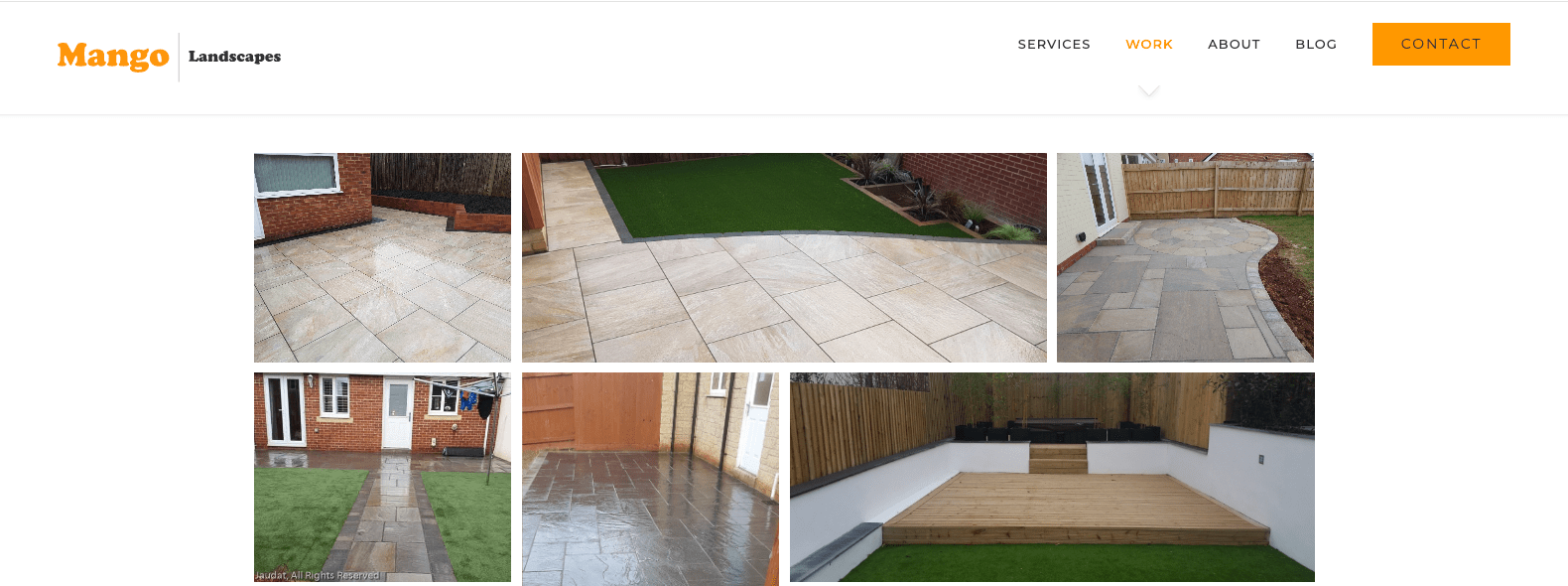
Since landscaping projects often make for visually appealing images, it’s an effective way to show off your skills and enhance your website.
Have an online shop
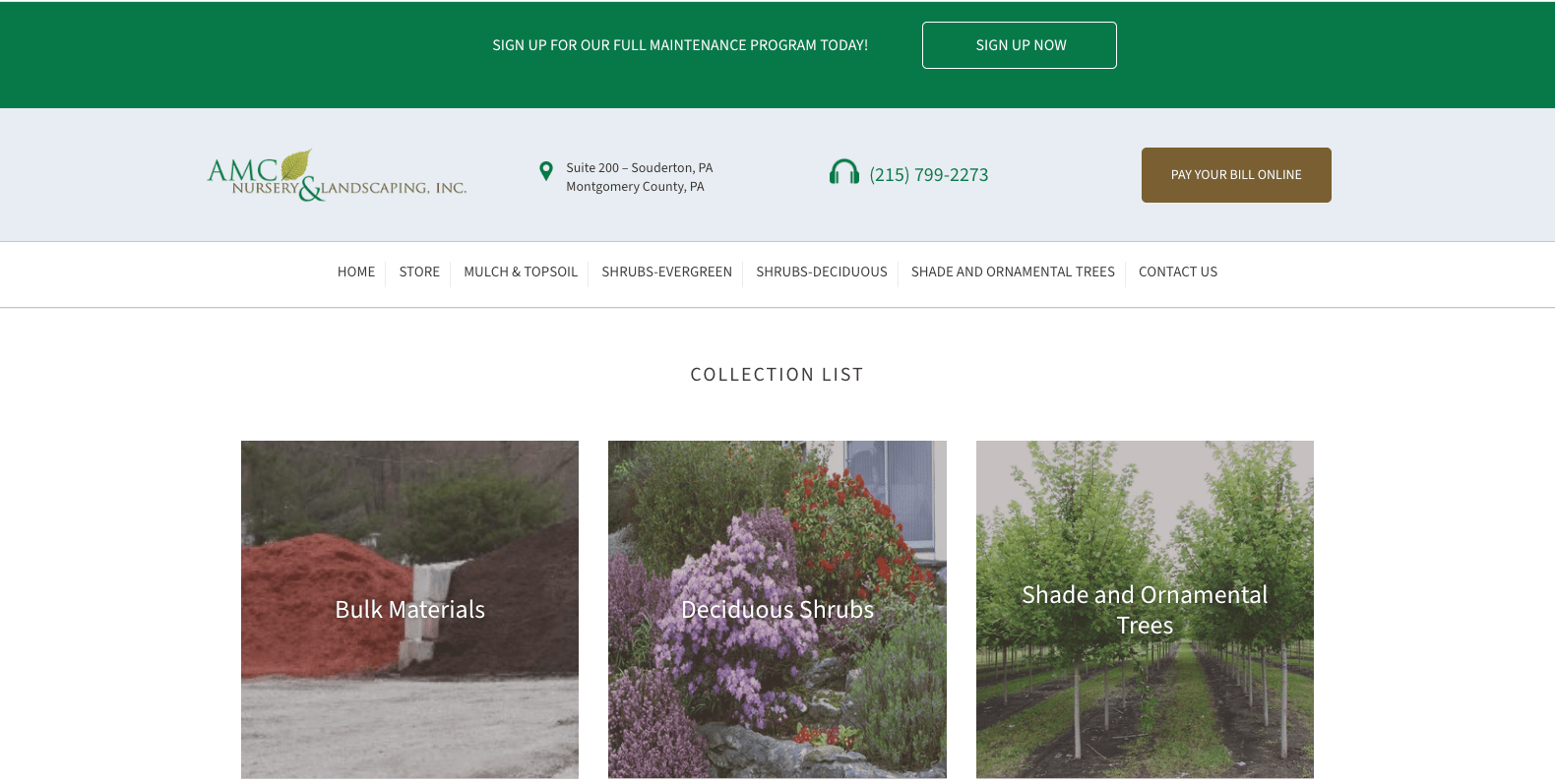
If you sell products, like fertilizer, trees, or accessories, having an online shop as part of your website makes buying from you more convenient and helps your website be more profitable.
AMC Nursery & Landscaping uses its online shop to sell a variety of items, like trees, shrubs, and landscaping materials.
Promote seasonal offerings
If you switch your services between seasons, don’t forget to note it on your website. JT Madison Landscaping & Snow offers lawn care and snow removal seasonally, and they make it clear from the minute you land on their home page.
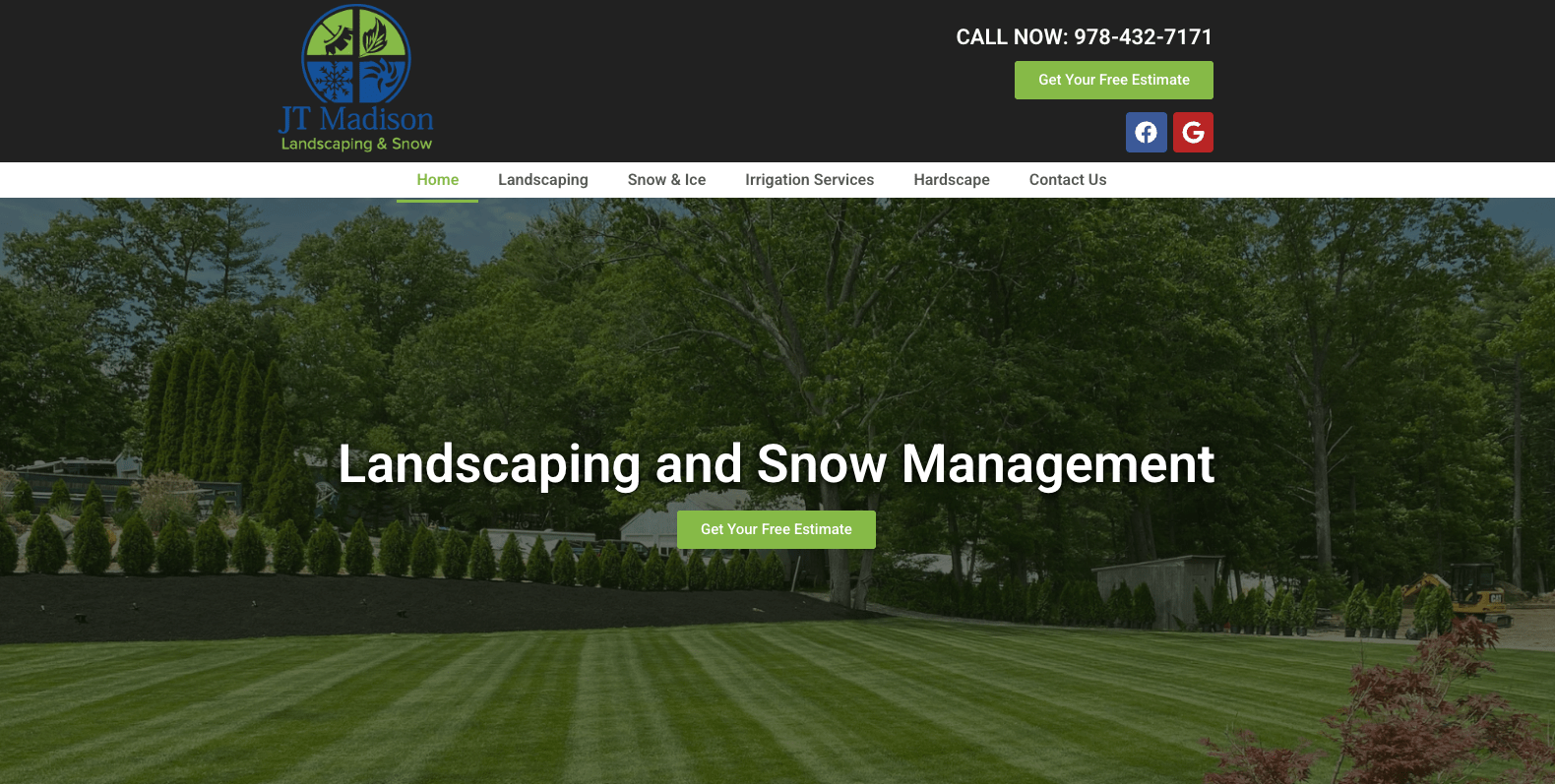
This way, prospective clients know they can hire JT Madison any time of year.
8. Pest control
When making a home service website for your pest control business, you want to convince customers that your methods are effective. They don’t want to deal with bugs or critters more than once, so knowing you’re committed to getting the job done right matters.
Assure clients your results are effective
B&C Pest Control promises effectiveness through annual treatments, making sure the message is clear as soon as a potential customer lands on their website.
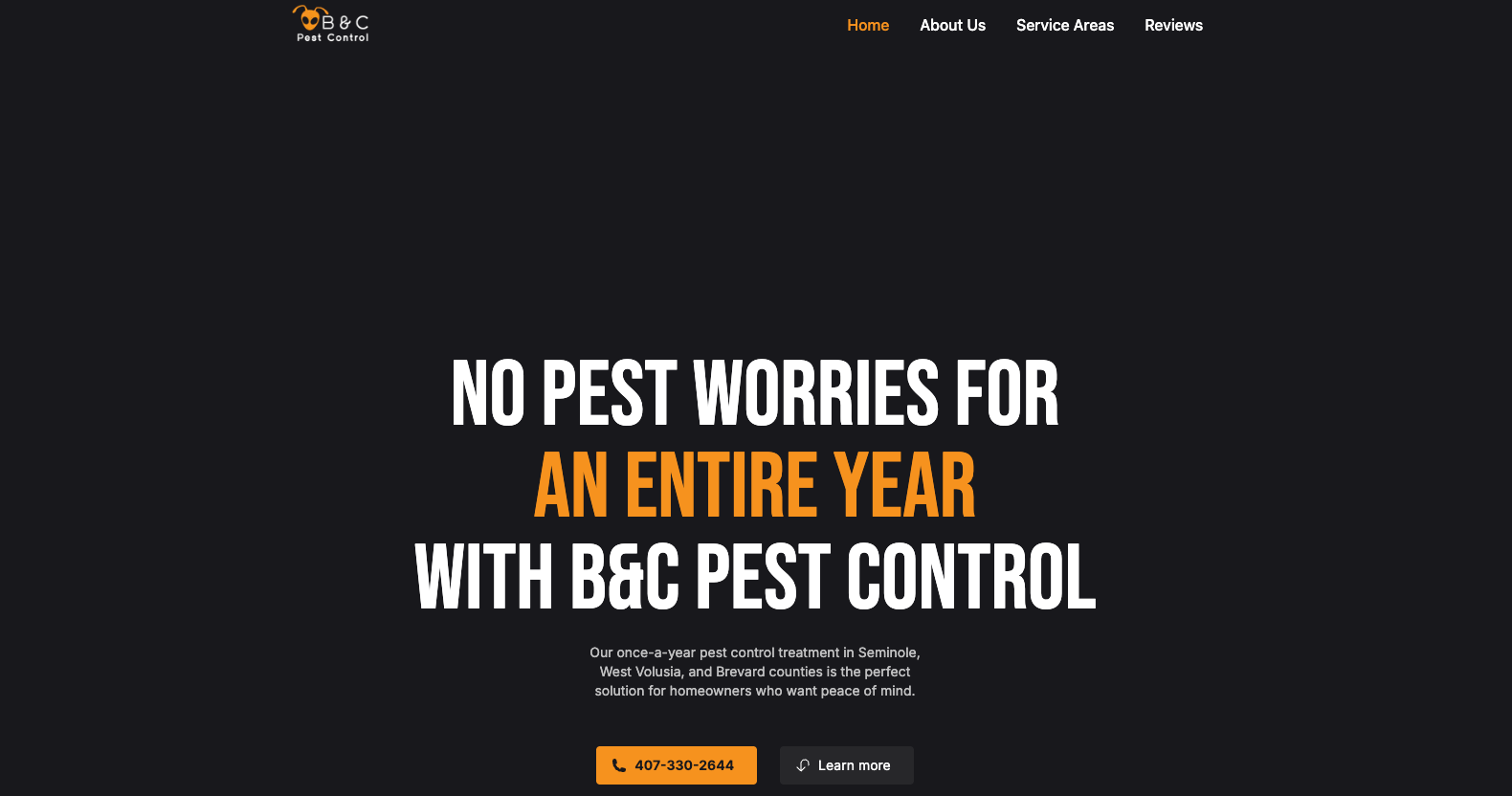
Telling customers that you can give them a pest-free year offers peace of mind and speaks to the reliable, effective methods B&C Pest Control is confident in.
Offer warranties and guarantees
Get ‘Em Out Wildlife Control immediately gives customers multiple reasons to trust in their services, such as a satisfaction guarantee and a lifetime warranty.
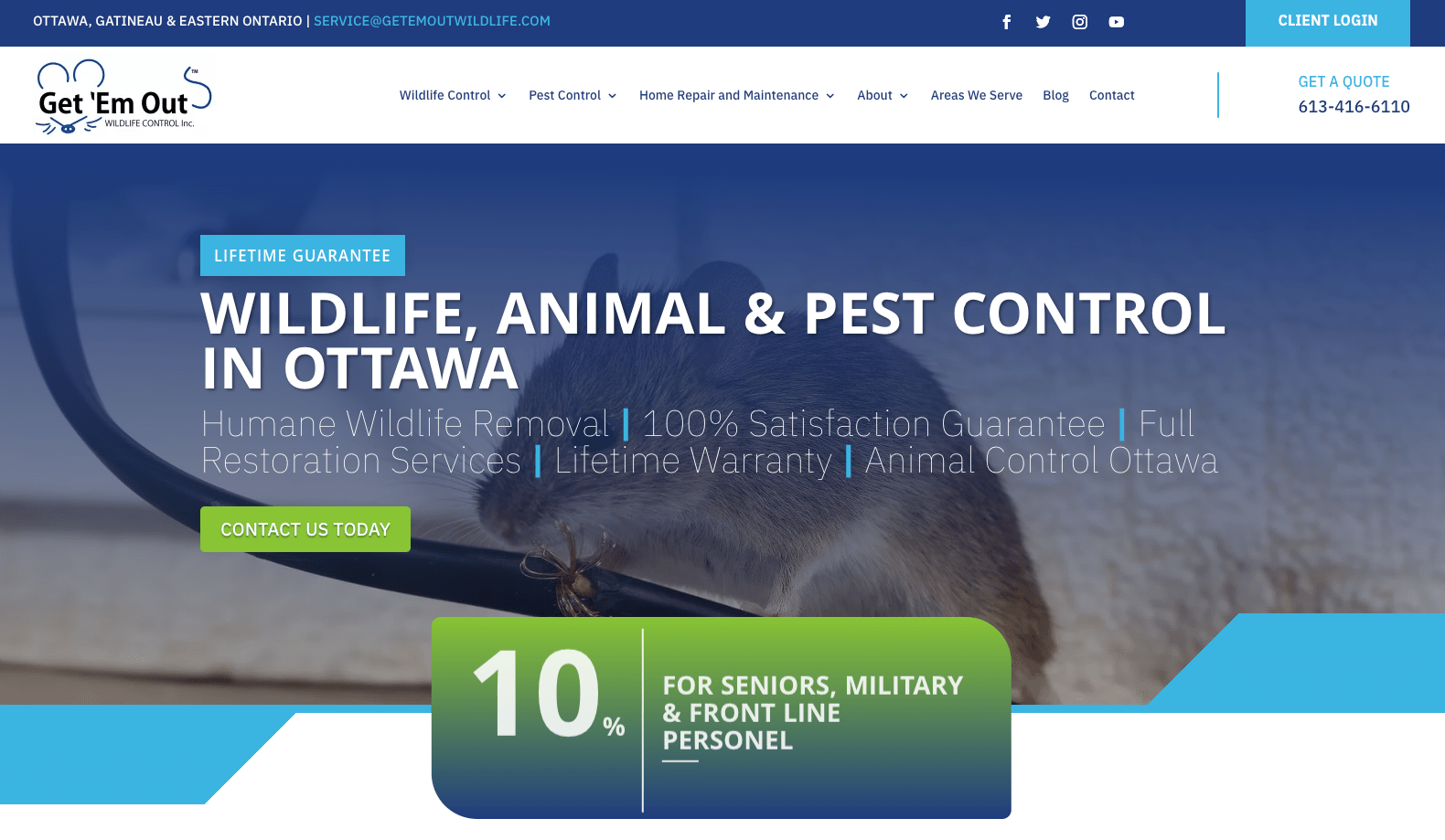
This tells customers that their comfort and happiness are valued, so if they encounter an issue with the service down the road, they know it’ll be addressed.
9. Electrical
Since becoming an electrician typically requires a license, it’s a good idea to mention your certifications and expertise on your website. That way, potential customers will know you’re legit and experienced.
Here are some examples of how to show clients you’re fully licensed and know your stuff.
Share your qualifications
Willxon Electric uses its about page to tell potential customers why to choose them, including that they’re both fully licensed and insured.

They also use this as an opportunity to mention that this means they can do virtually any kind of electrical work.
Post expert articles
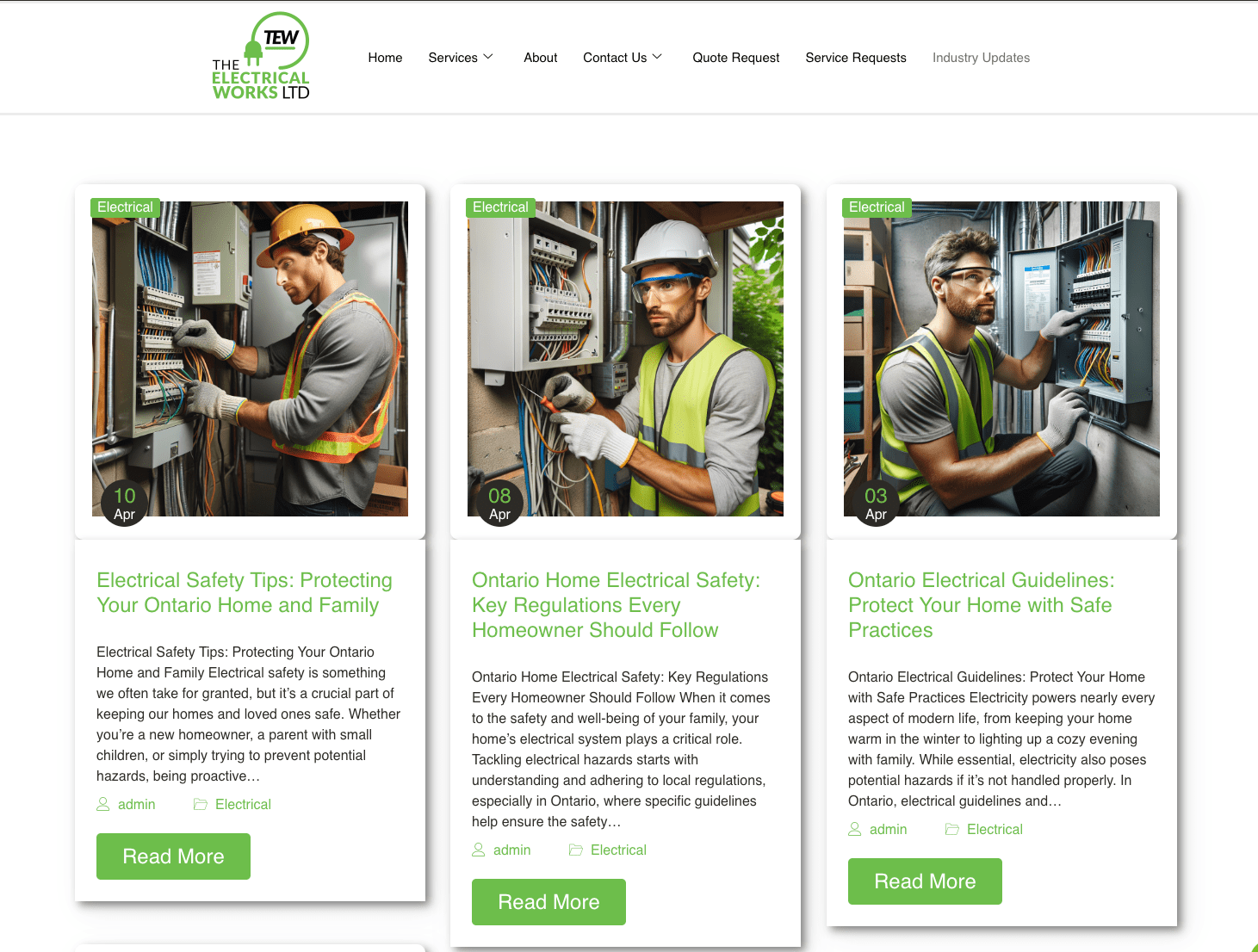
Another way to prove your expertise is by having a blog on your website. The Electrical Works Ltd uses theirs to post articles about new electrical safety guidelines and regulations to help customers stay safe.
This also demonstrates they’re on the ball when it comes to industry changes and news.
READ MORE: 18 electrician website examples
10. Tree service
For a tree service website, potential customers care about protecting their properties and maintaining the health of the trees around them.
When making a tree service website, you can make these elements clear by following this example.
Put customers at ease
Logan Tree Experts uses their about page to drive home two essential points:
- They have liability insurance, which means customers are protected from any damage related to a job.
- Their staff members are certified by the International Society of Arboriculture, so customers know that they have the necessary training to care for their trees.
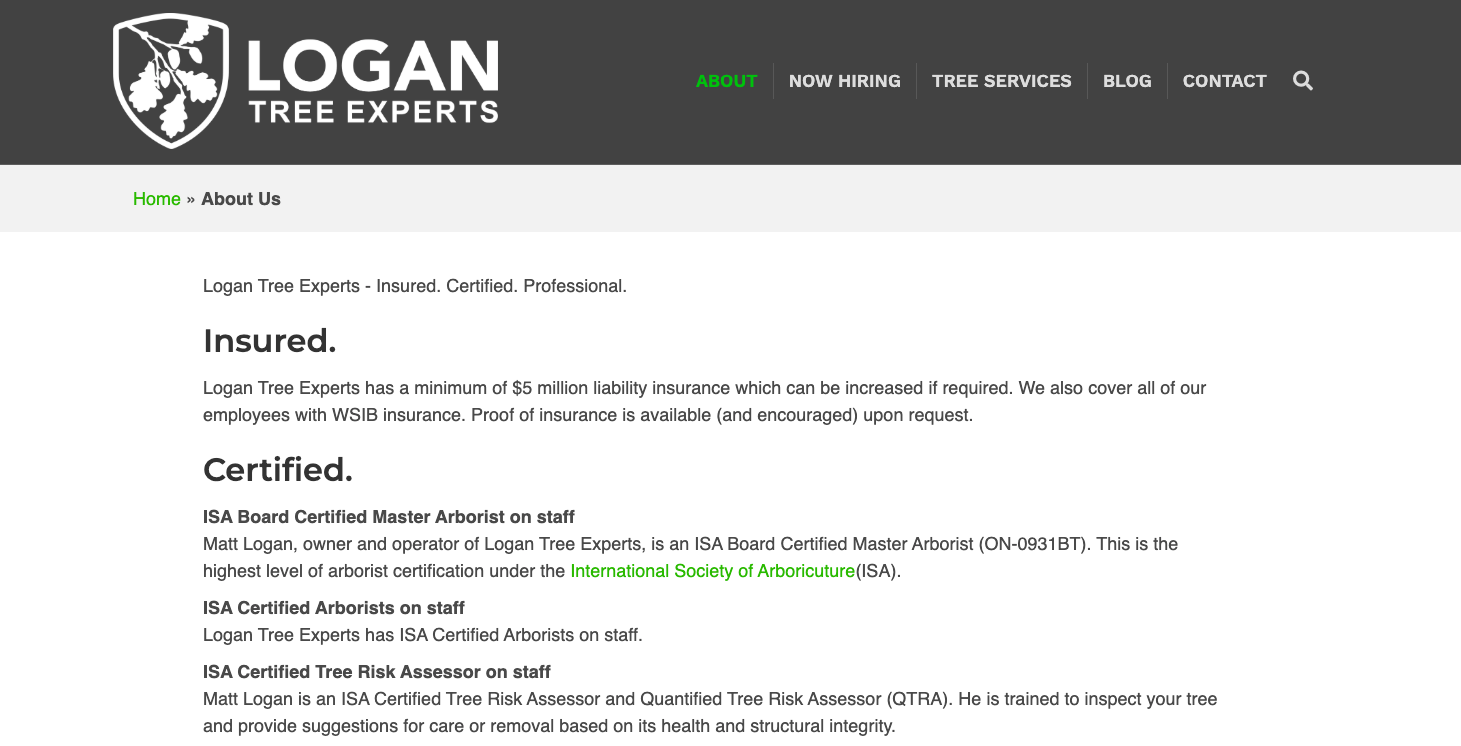
This puts the customer at ease and addresses any concerns they may have about potential property damage or tree care.
11. HVAC
HVAC businesses often deal with high-cost jobs, making trust and professionalism a must. Creating a recognizable brand and using that branding to build an HVAC service business website, helps build that trust with prospective cients.
Build trust with branding
Guin Service uses a simple, well-designed logo and consistent colors throughout its site to create a cohesive, branded experience.
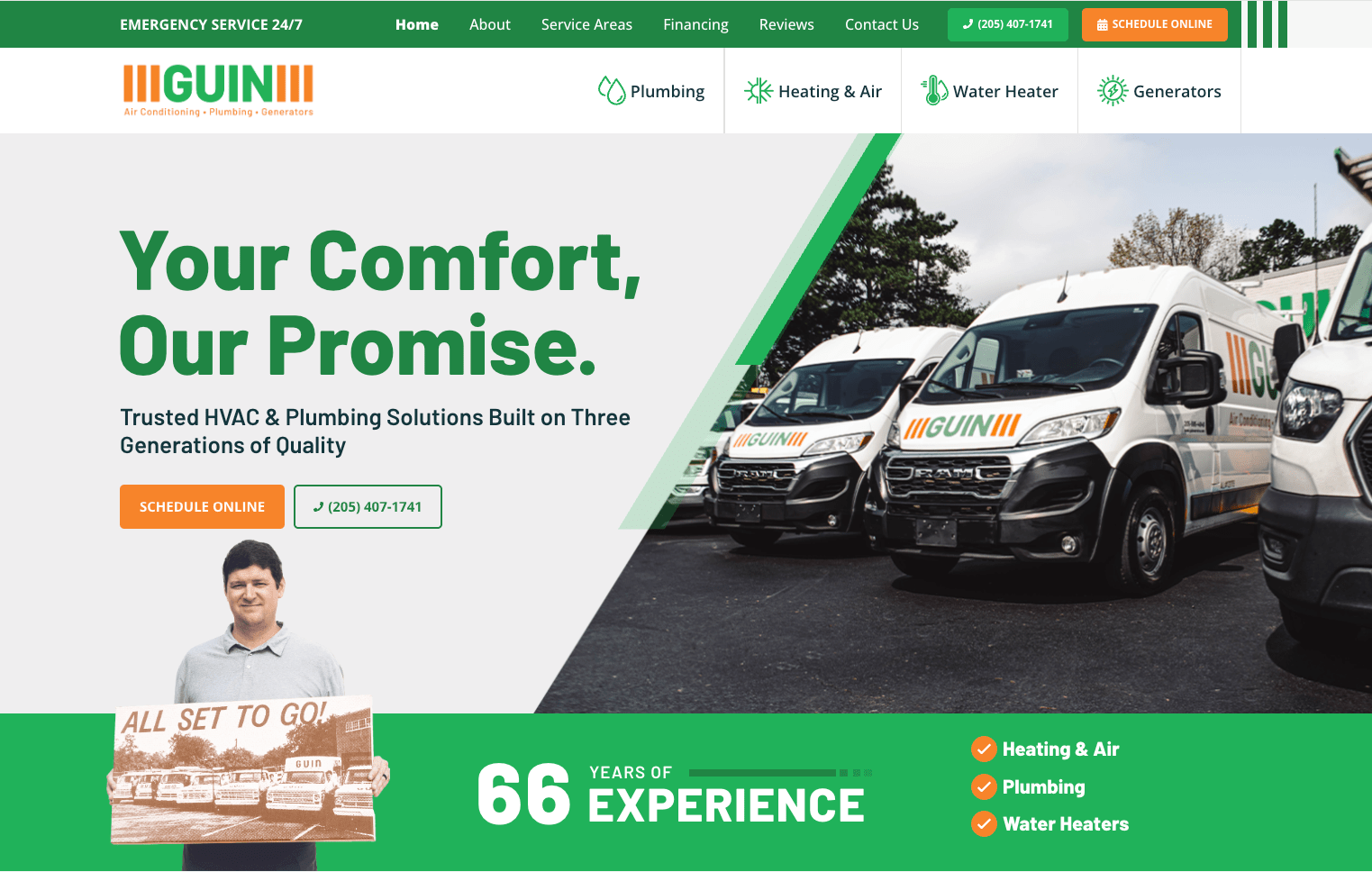
It’s clear they put time and effort into building a website that stands out and makes customers feel like they’ll be choosing a legitimate, professional service provider.
It makes their brand recognizable, and by choosing a bold color, like orange, as an accent color, it’s easy for customers to see how to schedule an appointment.
12. Handyman services
If you’re a handyman, you probably cover a wide range of tasks, and it’s important that your website shows that. Since potential customers may be looking for someone to do anything from installing a new light fixture to unclogging a drain, it’s essential to highlight your versatility.
There are a few different ways you can do this on your home service website.
Design a professional logo
Your website should quickly tell customers who you are and what you do. Designing a logo that reflects your services helps potential clients understand your versatility at a glance.
Zach of All Trades makes it clear that they offer a variety of services across their business through their logo by including different tools such as a hammer, wrench, and paint roller.

Include a services page
Another way to make sure customers know what you do and don’t offer is to have a clear services page on your website.
Handyman on Purpose has a services page that lists each of their core services with a description.
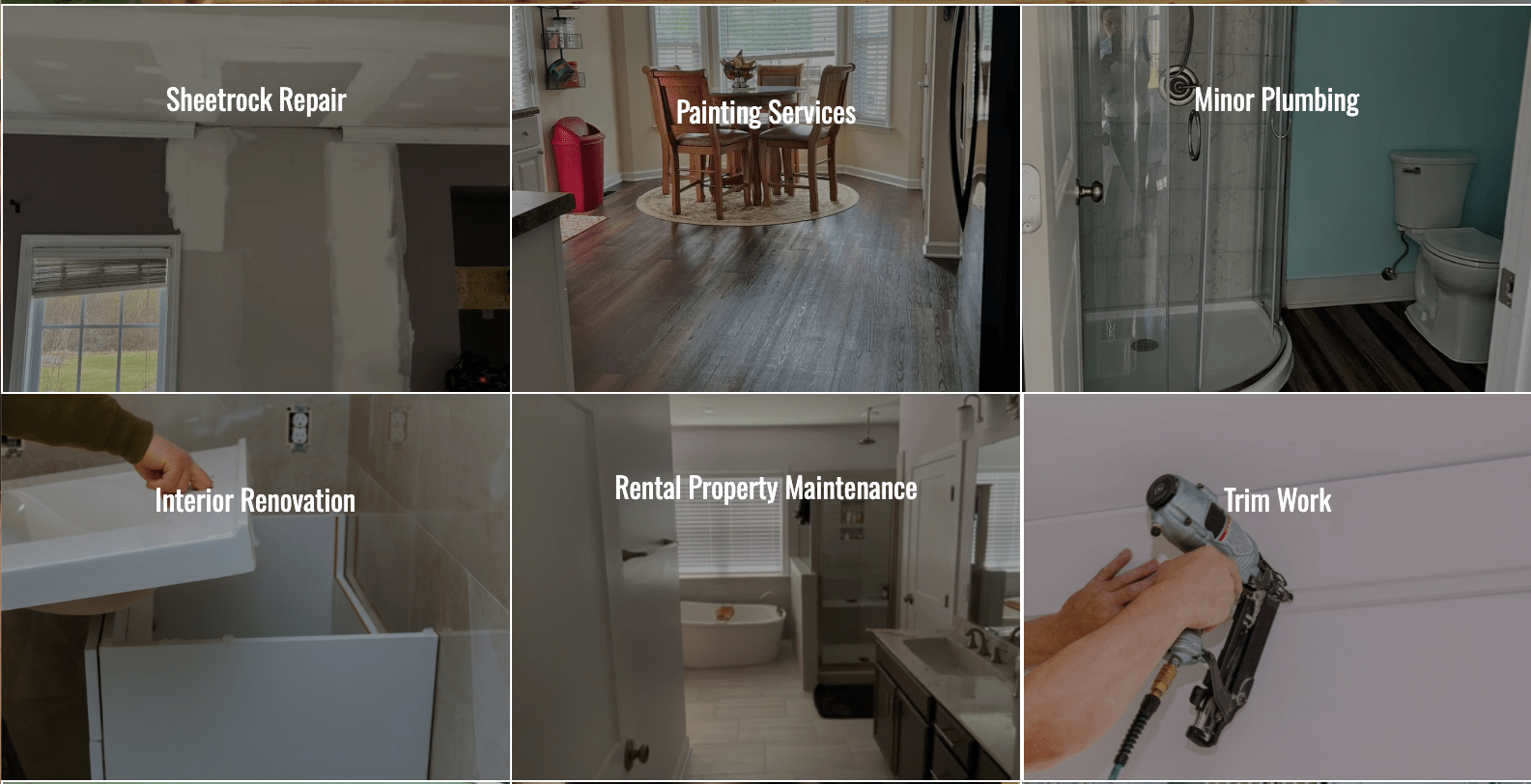
And at the bottom of the page, they include a miscellaneous services section to cover any niche or one-off tasks, like assembling furniture and cleaning gutters.
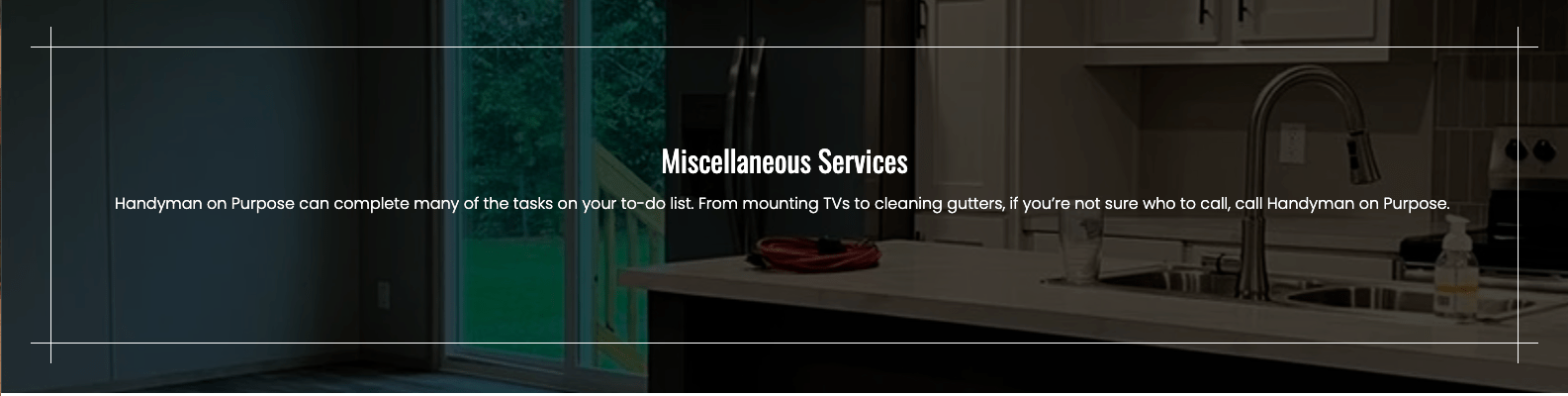
This encourages customers to call no matter what they need help with, reassuring them that Handyman on Purpose can assist.
READ MORE: The best handyman websites
What to include on a home service website
Some elements should be included on your home services website, no matter which industry you’re in. For example, make sure you have:
- A home page that includes your logo, business name, and contact information
- A service list with descriptions and any bundles, packages, or recurring services you offer
- Call-to-action buttons that tell customers how to book an appointment or contact you
- Basic search engine optimization (SEO), like title tags, meta descriptions, and industry-specific keywords
- Testimonials, reviews, and ratings from real customers
- A mobile-friendly design so customers can navigate your website on their smartphone
- A contact page or form where customers can reach out with service requests and questions
You can also offer online booking and payment processing to improve customer experience.
How to make a home services website
To make a home services website, you have a few options. You can:
- Hire a web designer
- Make one yourself
- Use a website builder
Hiring a web designer
Hiring a web designer or marketing company to build your website works for service businesses that:
- Also need help with a logo and branding
- Want a highly customized website
- Have complex functionality requirements
Hiring a web designer can cost anywhere from $3000-$10,000 for a small business, depending on your needs, but it delivers professional, customized results.
Making your own website
If you’re comfortable with computers and want more control over your website, you can make it yourself by:
- Choosing a domain and hosting
- Designing and developing your web pages
- Writing content
- Setting up functionality
While not the same as a website builder, some platforms, like WordPress, offer templates and tools you can use to make your site without having to code it from scratch.
READ MORE: How to make a website without a website builder
Using a website builder
Website builders are best for people who:
- Have little to no web design experience
- Want to get their business online quickly
- Prefer simple drag-and-drop tools
- Need a site that’s easy to update and maintain on their own
- Don’t have complex functionality or design requirements
- Want built-in features like contact forms, service pages, and basic SEO
For example, Wix and Squarespace are both popular website builders that offer customizable templates and drag-and-drop tools. They also provide hosting, security, and technical setup so you can get up and running fast.
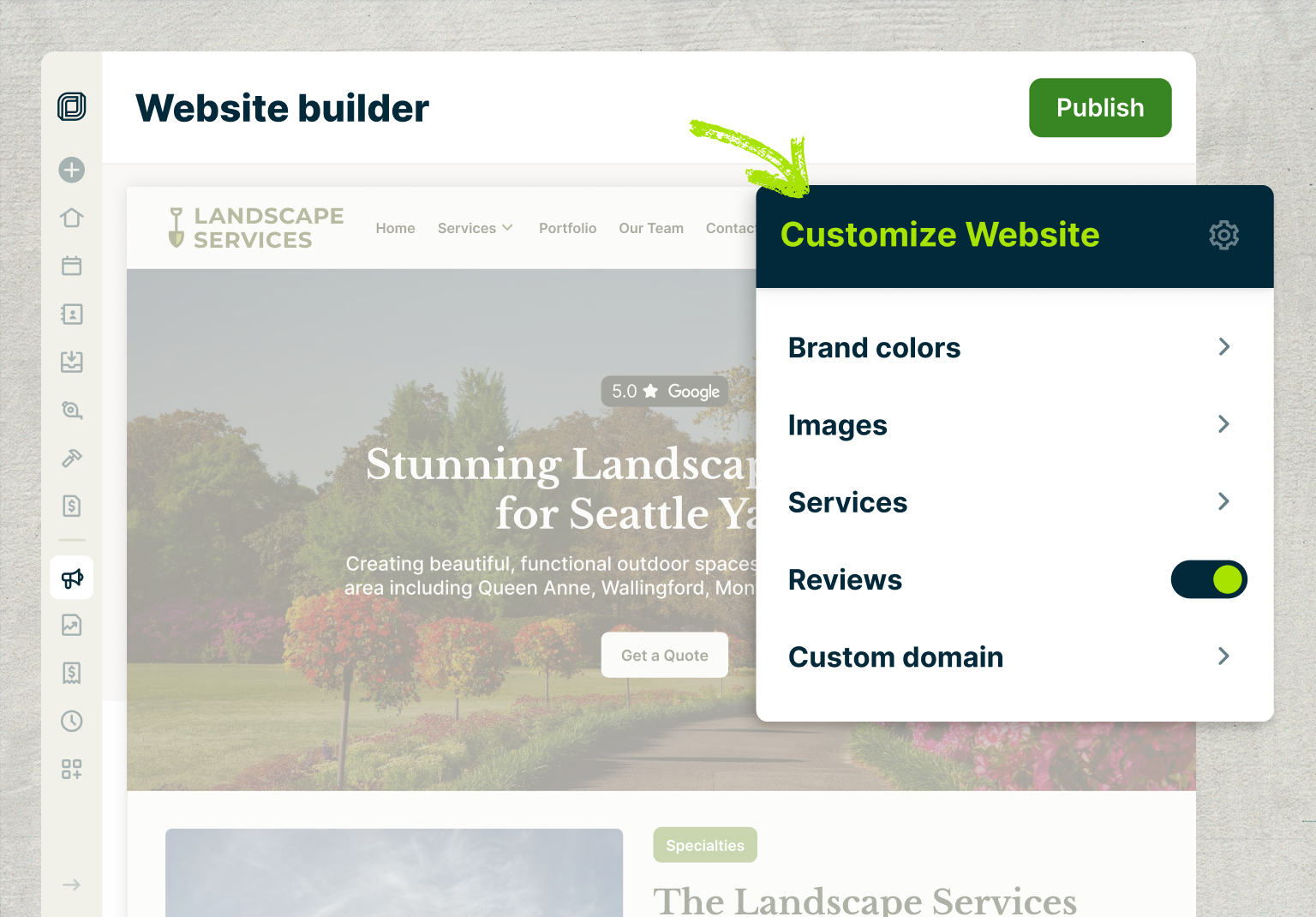
Building a Jobber Website
Jobber Websites makes it easy to create a home services website in minutes flat—without any technical know-how. Here’s what else you can do with a Jobber Website:
- Get a website up and running in minutes
- Customize your design so it matches your branding
- Make it easier for clients to find you on Google with built-in SEO
- Showcase Google Reviews from real customers on your home page
- Answer customer questions 24-7 and book jobs (even while you’re off the clock) with Jobber Receptionist
- Feature a request form to make sending quotes and booking jobs easy
How to improve an existing website
If you already have a website, but you want to make it better, try:
- Updating your logo, colors, and fonts so branding is consistent across every page
- Linking your website and Google Business Profile to boost SEO
- Adding a booking form or page so clients can book or request service straight from your website
- Featuring reviews and testimonials
- Revamping your service list to include descriptions, pictures, and pricing packages
- Starting a blog where you can post expert articles, industry news, or customer FAQs
Don’t be afraid to start from scratch if necessary. A new, functional, branded website that prioritizes good customer experience is better than an outdated one that no one visits.