
Key takeaways:
Getting more leads for your painting business is all about combining smart marketing tactics with strong systems for follow-up.
- Identify and target your ideal customer. Define your primary audience (residential or commercial) and tailor messages, service areas, and marketing materials to their unique needs and concerns.
- Boost your local online presence. Claim and update your Google Business Profile, keep your business info consistent across platforms, and create a simple, trustworthy website that makes it easy for customers to request quotes.
- Showcase proof of work. Regularly share before-and-after photos, collect and respond to customer reviews, and turn completed jobs into social media content to build trust and credibility.
- Leverage low-cost lead strategies. Launch referral programs, use yard signs and door hangers in neighborhoods where you work, build partnerships with related local businesses, and reconnect with past customers for repeat business.
- Consider paid channels wisely and track results. Start small with paid ads or lead services, track where leads come from, and invest more in sources that reliably turn into booked jobs and profit.
- Follow up quickly and review what’s working. Set up automated responses, use intake checklists, and regularly check your lead sources and conversion rates to focus your efforts where they bring the best returns.
Stay ahead with the latest business tips and strategies for your painting company—sign up for the Jobber Newsletter at https://www.getjobber.com/academy/#newsletter-signup.
The most dependable approach to getting more leads for your painting business is a combination of local visibility, proof of work, referrals, targeted outreach, and fast follow-ups.
There are several reliable ways to get in front of the right customers and turn those opportunities into booked jobs.
This guide covers practical ways to generate painting leads, from improving your local online presence to reconnecting with past customers and testing paid channels. Learn how to build a 30-day plan you can fit around running your business.
Start with your target customer
The first step to getting more painting leads is deciding who you want to attract. The more specific you are about your ideal customers, the easier it’ll be to choose which regions to market to and what to say.
Residential vs. commercial
Start by determining which painting services contribute most to your revenue today. Is it residential work like cabinet refinishing and exterior trim? Or do recurring commercial contracts like HOA repaints and property maintenance make up more of your business?
Trying to target everyone can make your painting business marketing less effective. Homeowners want to know that you’ll treat their home with care and do quality work. Property managers and facility teams care more about insurance requirements and scheduling flexibility.
If you serve both residential and commercial markets, you don’t necessarily need to pick one audience. Just don’t make them share the same message. Create separate service pages and marketing materials so each audience sees that you’re built to handle their needs.
READ MORE: How to start a painting business
Let your customers shape your service area
Your ideal customer should also influence how far you’re willing to travel.
For residential work, a tight service area (e.g., a 20-minute drive radius) can help cut down on driving time between estimates and jobs. It also gives you more chances to build a name in one local area.
Commercial work can justify a wider radius. A larger contract or project can make a longer drive worthwhile, and your customers may not expect you to be located in their immediate area.
Speak to what customers care about
Once you’ve decided on your primary audience, start shaping your message around the concerns they likely have.
Residential audiences are buying the peace of mind that comes with knowing your crew will take care of their home. For homeowners, emphasize:
- Respect for their home and belongings
- Clean job sites
- Definitive project timelines
- Detailed prep work
- Professional crews
- An easy estimate process
Commercial customers like property managers, for example, are looking for a contractor who will show up and do the work as promised. For this audience, emphasize:
- Minimal disruption to employees, tenants, or customers
- Night and weekend scheduling
- Insurance and liability coverage
- Durable finishes suited to the space
- Clear scopes and project specifications
- Reliable scheduling and deadlines
Build a local online presence
You don’t need to be a full-time digital marketing expert to get more painting leads. Start with the places that homeowners and property managers will probably look when they need a contractor, like your Google Business Profile and company website.
Claim your Google Business Profile
Think of your Google Business Profile as the front door to your local search presence. This is one of the first things potential customers see when they look up your business online or search for the paint services you offer.
Claim your business profile and fill out every field that’s relevant. Add your service area, hours, primary category, and descriptions of the services you offer. Here’s one example of what your Google Business Profile could look like:

Every few weeks, update your profile with photos of recent paint jobs. Show off finished rooms, exterior work, prep, and anything that demonstrates the quality of your work. A few great project photos can say more than a paragraph of text about your craftsmanship.
97% of people are going onto Google Business Profile or Google and searching for services in their area.

Your business name, address, and phone number (also referred to as “NAP”) should be consistent across your Google Business Profile, website, and social media profiles. This clearly tells customers and search engines who you are and where you provide services.
Jobber’s Google Manager feature helps you create and automatically optimize and update your Business Profile directly inside of your painting contractor software to keep your information fresh and accurate.
READ MORE: How to market a painting business
Build a simple website that collects leads
You don’t need a flashy website with animations or a ton of pages. A fast, mobile-friendly site can do the job. Homeowners mainly want to know what you can paint, where you work, and how to get a painting quote.
Once someone visits your site, they should see a button or link such as “Get A Free Estimate” or “Request a Quote” near the top of each page. Don’t make them poke around to do that. On mobile, a tap-to-call phone number can be just as useful.
Here’s an example of Paint Denver’s website. At the top of the site are two buttons—one to get a painting quote and one to call. Those same buttons give visitors multiple ways to ask questions or get pricing information.

If your website’s not optimized to convert into leads, then you’re going to get crushed.
You’re just going to be spending all this money and not have any real results from it.
Keep your contact form short. The customer’s name, phone number, ZIP code, and an optional project description are enough to start the conversation. You can ask about square footage, surfaces, colors, and other details once you’ve connected.
You should also put trust signals near the top of the homepage, such as:
- Years in business
- Licensing and insurance information, where applicable
- Main service areas
- Customer reviews or ratings
- Photos of your work
The goal is simple—make it easy for site visitors to get a painting quote or simply contact you, and build trust so they’re more willing to do it.
With Jobber Websites, you can get your business online in minutes by creating a website that includes:
- Customizable colors and layouts to match your branding
- Reporting so you can track visitors and leads
- Built-in search engine optimization (SEO)
- A virtual receptionist to answer questions and provide customer support
- Desktop and mobile optimization so your site works on all devices
- A quote request form to simplify booking requests
Show proof of your work
When you’re trying to convince customers you’re the best company for the job, the best proof is the real work your crew does. A few well-timed photos and customer reviews can turn completed painting jobs into marketing assets.
Take before-and-after photos
Before-and-after photos are some of the most useful pieces of content your company can create. Make them part of every job, no matter how simple or complex.
With the customer’s permission, take the before photos and after photos from the same spot and at the same angle. That makes the transformation easy to see, giving potential customers a better sense of your abilities.
Photos of masking, patching, sanding, and priming show the work that happens. That’s especially useful when someone is comparing your estimate vs. a painter who does it cheaper. You’re charging for the work that makes the finished job look right.
Keep it simple. A smartphone and some natural light will work just fine—you don’t need everything to look like it came out of a magazine.
Here’s an example of a before-and-after post from Paint Denver on Facebook:
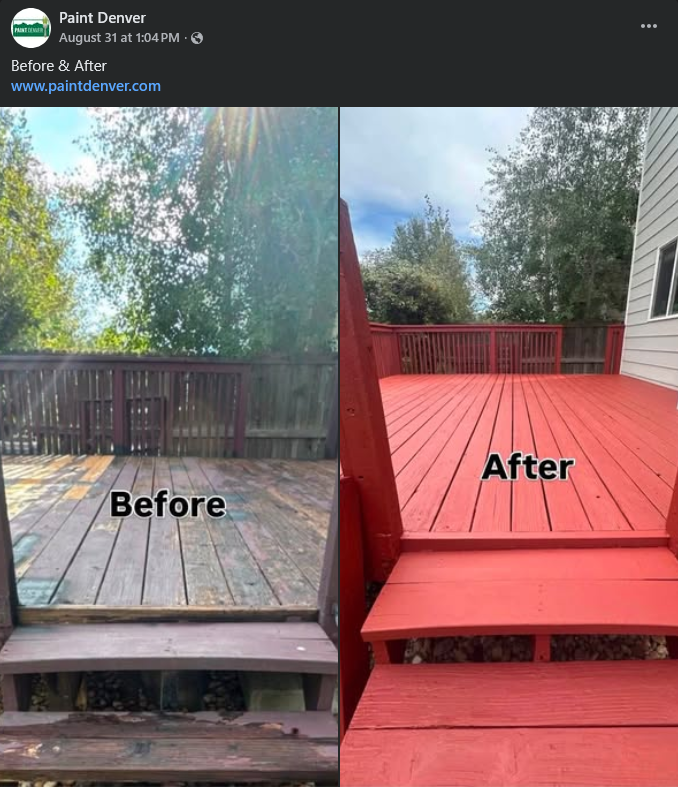
Jobber’s Job Showcase turns completed jobs into ready-to-publish marketing content. Collect photos and details from a job, and then share that work across email campaigns, Facebook, and Google Business Profile.
Collect reviews to build trust
Ask for a review when the customer is happy, which is usually during the final walkthrough when they’re looking at the finished work.
You can ask the customer to mention what stood out most from the project. A review that talks about the quality work or professional crew can give future customers a better idea of what to expect from your painting company.
Reply to the reviews, too. Thank customers for positive reviews, and respond to negative reviews without getting defensive. Potential customers will read your responses, so all of them should be calm and professional.
With Jobber Reviews, you can automatically earn positive customer reviews on your Google Business Profile and make your business easier to find on Google.
Turn past work into social media content
Build a simple marketing routine without creating from scratch every week. With the photos you took from the job site, that single project can become a:
- Before-and-after photos post
- Google Business Profile update
- Social media post
- Website project photo
- Direct-mail postcard
When you post, mention the neighborhood where you did the work. For larger projects, like an exterior transformation or cabinet refinishing, a short walkthrough video can show more of your craftsmanship than a single photo would.
If fitting social media into your schedule feels challenging, Jobber’s Social Posting feature simplifies the process. You can create and publish posts to Facebook and your Google Business Profile from the same place you manage jobs.
Try low-cost lead tactics
Low-cost lead generation works best when it fits into work you’re already doing. Your crews are already finishing jobs, your customers already know your company, and your contact list already contains people who’ve paid you.
The goal is to turn those existing assets into a steadier stream of opportunities. Below are a few ways to do that.
Start a referral program
A referral program gives past customers a clear reason to recommend you. Make the referral request part of your normal project closeout. You might offer a reward to both sides, such as a gift card for the existing customer and a discount for their referred lead.
A seasonal check-in is another opportunity to mention your program. It can be a natural reason to reconnect with past customers and remind them that you’re available for their next project.
Use Jobber’s referral program to turn satisfied customers into new leads. Jobber sends referral requests automatically after every job is done. Then, say thanks with service credits that apply to their next job.
Leave yard signs and door hangers
When your crew starts a job, the surrounding homes are potential customers, too. Ask the homeowner if it’s OK to put up a branded yard sign. Then consider leaving door hangers or postcards with the neighbors.
On these materials, stick to basic information, like your business name, phone number, and website (or QR code linking to a specific web page).
Tap into local partnerships
Look for businesses that serve the same homeowners but don’t compete with you. They should be professionals who encounter customers in need of painting before or after their work, such as:
- Realtors
- Drywall contractors
- Roofers
- Carpet cleaners
- Interior designers
A simple referral relationship can work both ways, where you both send each other customers. You can also build relationships with property managers and HOA contacts who might need painters for maintenance work.
Local partnerships are one of those painter marketing ideas that sound more complicated than they are. Start with a handful of businesses you’re friendly with. A coffee and a 15-minute conversation could be a great source of passive leads and help you get painting contracts.
Re-engage your past customers
Before spending money to find new customers, turn to your past customers. They already know you, which makes them a natural audience to follow up with.
Send a simple text or email once or twice a year with a reason to reconnect with past customers, such as:
- Spring exterior painting work
- Fall interior painting projects
- Touch-ups before the holidays
Email can be done almost as frequently as you want.
Your average email open rate is about 15–20%. So, if you have 10,000 people, you can get in front of a decent amount.
You can also reach out with a check-in rather than a sales pitch. Reach out to ensure they’re still happy with your work and encourage them to let you know if they need any touch-ups.
To send marketing emails faster, use a tool that prepares email templates and audiences for you. When you use Jobber to create email campaigns, you can choose from premade templates built for specific goals and customers.
Consider paid lead sources carefully
Paid channels can help fill your schedule with qualified leads, but they can also use up your marketing budget quickly. Treat paid marketing as a test with a clear business goal, not just a way to get more leads fast.
Different channels reach customers at different points in the buying process. Pick a channel that best fits your customers when you’re building your home service marketing strategy.
| Paid channel | Best for | What to know |
|---|---|---|
| Google Local Services Ads and Search Ads | Homeowners actively looking for a painter | It brings you high-intent traffic, but your targeting needs to be tight to avoid wasting budget |
| Facebook and Instagram ads | Visual projects like cabinet refinishing, deck staining, and accent walls | Great for showing off before-and-after transformations, but leads may need more follow-up before they’re ready to hire you |
| Paid lead marketplaces | Filling a short-term gap in your schedule | Angi, HomeAdvisor, and Thumbtack can generate inquiries quickly, but shared leads can consume budget quickly and put you in competition with other painting companies for the same leads |
| Local sponsorships | Building recognition in your community | Sponsoring youth sports or school calendars can build goodwill, but treat it as a long-term brand play, not a short-term source of exclusive leads |
Pick one paid channel and set a budget you can afford to lose while testing. Then give it enough time to produce data you can make decisions on. More importantly, make sure those inquiries are turning into estimates and booked jobs.
A dozen inquiries about small jobs aren’t necessarily better than three strong, higher-value prospects. What matters is which source is producing profitable work.
Track metrics such as:
- Cost per booked job: How much you spend to acquire each customer who hires you
- Close rate by source: The percentage of leads from each channel that become customers
- Net profit by channel: What you make after marketing and other job costs
For example, a $20 painting lead from a marketplace isn’t necessarily cheaper than an $80 search lead if the cheaper leads hardly ever turn into jobs.
Respond fast and track leads by source
When you’re busy, you might not have the time to answer a new inquiry, or you might forget where it came from. A simple response process can help you follow up faster and see which sources bring you the best customers.
- Set up an immediate response. Use an automated text or email to acknowledge new painting leads when you’re on a job. It could say something like, “Thanks for reaching out. I’m on a job right now, but I’ll get back to you today.”
- Call back as soon as you can. Follow up fast to show that you’re organized and serious about the work.
- Use a simple intake checklist. Capture the project scope, property address, and desired timeline from the customer. Keep their questions handy on your phone for easy reference.
- Make scheduling easy. Offer a booking link or a few call times so customers don’t have to play phone tag with you.
- Follow up after every estimate. Set a reminder to check in if you haven’t heard back. A simple message like “Just checking in to see if you had any questions about the estimate” will keep the conversation moving.
- Ask where every lead came from. Asking how the customer first heard about your business can be part of every phone call or initial conversation.
- Review your numbers once a month. Spend 15 minutes looking at booked revenue by source. Compare what you spent (including any time you invested) with the jobs each source produced.
- Put more effort into what works. For example, if referrals consistently produce good jobs while a paid channel doesn’t, shift your budget to referrals.
A practical 30-day starting plan
The goal of your marketing strategy is to put a few basic systems in place, get more value from the customers and jobs you already have, and learn which tactics bring you profitable work. Here’s how to get started in 30 days:
Week 1: Set up the basics
- Claim or clean up your Google Business Profile by updating your hours, service area, categories, services, and job photos.
- Pick your target customer. Focus your messaging on residential, commercial, or specialty work.
- Start tracking leads with a simple spreadsheet for dates, prospects, sources, estimate amounts, and outcomes.
- Write an intake script with 3–5 questions about project scope, address, timeline, and ideal start date.
Week 2: Check in with past customers
- Reach out to past customers about your upcoming availability, seasonal work, or potential maintenance projects.
- Create a photo routine by taking prep, before, and finished shots at job sites.
- Ask recent customers to leave a Google review (and provide a link).
Week 3: Work the neighborhoods you’re already in
- Place yard signs during and after a job (with the customer’s permission).
- Distribute door hangers or postcards to neighboring homes, telling them you were in the area.
- Meet local trade partners who could send painting referrals your way.
- Brand your vehicles and uniforms to show your company name and contact information.
Week 4: Review what’s working
- Take 15 minutes to review your leads to see which sources generated inquiries, estimates, and booked jobs.
- Set a budget and test one paid channel if you still have schedule gaps.
- Set up an instant response to acknowledge new inquiries even when you’re busy.
- Pick next month’s priority based on whatever tactic produced the most qualified and profitable opportunities.
Build a lead system you can rely on
A strong lead generation strategy for painting uses a mix of tactics and channels. Improve your local online presence, try low-cost lead tactics, and consider paid options to keep qualified leads coming in. Focus on the sources that bring you the right painting projects.
With painting business management software like Jobber, you can organize leads, send professional estimates, automate follow-ups, and turn more opportunities into booked work.
Frequently Asked Questions
-
Start with the customers and jobs you already have. Here are a few free tactics to try:
• Ask happy customers for referrals and Google reviews.
• Reconnect with past customers.
• Build relationships with local realtors and other contractors.
• Use lawn signs or door hangers around active job sites where permitted.
These tactics take time, but they can generate exclusive painting leads without needing to pay for each opportunity. -
To get more jobs fast, start with your existing network. Contact past customers about upcoming availability and ask them for referrals. Let local trade partners know that you’re taking on new work.
Paid search ads and lead-generation sites can also produce inquiries faster than organic marketing, but you’ll need to weigh the cost and quality of leads. -
Leads from lead-gen sites like Angi and HomeAdvisor can work, but the results vary by market, project type, lead quality, and how quickly you respond.
You’re also competing with other painting contractors for leads, so don’t judge a given service by its shared lead volume alone. To see whether the source is profitable for you, track how many leads turn into estimates and booked jobs. -
There’s no single number of leads to stay booked. Your needs depend on:
• Average job size
• Close rate
• Crew capacity
• How long your typical projects take
For example, if you close a high percentage of larger commercial painting jobs, you probably won’t need as many leads. On the other hand, a painting business selling smaller residential projects like cabinet painting will likely need more leads to stay busy. -
For painters, there’s no one-size-fits-all budget for marketing. Start with an amount you can afford to “play with” on a regular basis, and then track how much you spend to generate estimates and booked jobs.
Your painting company marketing budget should grow when a channel can reliably bring you profitable work—not just because you’re getting more leads.