
Key takeaways:
Scaling your pest control business requires a strategic approach to capacity, pricing, operations, and team management to ensure growth is profitable and sustainable.
- Optimize existing resources and set measurable goals. Before expanding, address bottlenecks in sales, scheduling, routing, and profitability. Establish clear growth targets for revenue, route density, service capacity, and customer retention.
- Focus on efficient growth strategies before expansion. Build density within your current service area, tighten routes, and add capacity in stages. Enhance route efficiency and support your team before hiring or investing in new equipment.
- Use robust pricing and service plans for recurring revenue. Calculate true service costs to set profitable prices, review profit by job type, and implement recurring service agreements to predictably increase revenue and customer lifetime value.
- Build strong customer retention and referral systems. Consistently deliver on service promises, automate reminders and follow-ups, and encourage reviews and referrals to keep marketing costs low and grow your customer base organically.
- Use software for organization and growth. Pest control business software streamlines scheduling, quoting, lead tracking, and job costing, ensuring you can scale operations while maintaining service quality and cash flow.
Stay ahead with more tips on scaling and organizing your service business. Sign up for the Jobber Newsletter.
As demand for your pest control services grows, so does the opportunity to increase your revenue, expand your team, and serve more customers.
Scaling a pest control business means taking on more work while maintaining healthy profit margins and delivering quality service. To grow sustainably, focus on building recurring revenue, improving route efficiency, pricing services for profit, and hiring when demand supports it.
In this guide, we’ll cover how to grow a pest control business, from getting more out of your existing resources to expanding your team and customer base.
Steps to scaling your pest control company:
-
Turn demand into capacity
-
Choose pest control growth strategies
-
Build a pricing strategy to protect profit
-
Sell recurring service plans
-
Build a repeatable marketing system
-
Hire and train pest control technicians
-
Improve route density
-
Protect cash flow
-
Use software to stay organized
-
Pest control business mistakes to avoid
Turn growing demand into reliable capacity
Before you hire another technician or invest in a new truck, make sure you’re getting the most out of your existing resources. Improving how you sell, schedule, and deliver pest control services can help you take on more customers without significantly increasing operating costs.
Start by identifying where your business has room for improvement, then set measurable growth targets to guide your next steps.
Find where growth is breaking your current process
You’ll know you’re ready for growth when current processes stop working. As a first step, recap your pest control business plan. Then, review how your business handles each stage of service, from the initial quote request to the first treatment and ongoing visits.
As you scan your current business, look for these common roadblocks to growth:
- Sales: You’re missing calls, taking too long to respond to service requests, or forgetting to follow up on quotes.
- Scheduling: You’re overbooking technicians, relying on overtime hours, or missing customer appointments entirely.
- Routing: Your technicians are spending too much time driving between jobs, leaving gaps in their schedules, and using more fuel than necessary.
- Service delivery: Your team is delivering inconsistent treatments, handling more callbacks, or receiving more customer complaints.
- Profitability: You’re charging too little for services, spending too much time on non-billable work, or facing rising material costs.
- Cash flow: You’re waiting on overdue customer payments or struggling to cover payroll, supplies, and equipment expenses.
Talk to your technicians and office staff to find out where they lose the most time during a typical workday. Then, prioritize fixing the problems that cost your business the most time or money.
As your route volume grows, use Jobber’s scheduling and client management tools to keep jobs, customer details, and team schedules in one place. This makes it easier to see where you have room to take on additional work and how you can expand without creating stress.
Set measurable growth targets
Decide what successful growth looks like for your pest control company over the next 12 months. How much additional revenue do you want to generate? How many more customers can your team serve without sacrificing profitability?
Use your current business performance to set realistic, measurable targets across these six areas (numbers are examples only):
| Growth metric | What to measure | Current performance | 12-month target |
|---|---|---|---|
| Annual revenue | Total income from pest control services | $500,000 | $600,000 |
| Net profit margin | Percentage of revenue you keep after expenses | 12% | 15% |
| Route density | Number of jobs completed per mile driven | 0.15 | 0.20 |
| Service capacity | Average number of jobs each technician can complete per day | 6 | 7 |
| Customer retention | Percentage of existing customers who remain customers over a year | 80% | 90% |
| Customer lifetime value (CLV) | Estimated total revenue a customer generates throughout their relationship with your business | $1,200 | $1,500 |
Review your progress each month to see where your business is growing and where it needs improvement.
For example, if revenue is increasing but profit margins are falling, you may need to raise your prices or improve route efficiency. And if your technicians are consistently reaching their daily service capacity, it may be time to grow your team.
Choose pest control business growth strategies that fit your market
There are several ways to grow a pest control company in a way that’s personal and unique to your operation. For example, you could expand into a neighboring town, introduce mosquito treatments, pursue commercial contracts, or sell more recurring service plans.
Consider the demand for each opportunity, how much it will cost to pursue, and whether your team has the skills and capacity to deliver the service consistently. Just make sure to follow these tips in the process:
Tighten your service area before expanding it
Imagine you have 30 recurring customers in one neighborhood and another 30 scattered across three neighboring towns. Even if those customers generate the same revenue, the concentrated route will likely cost less to service.
Map your existing customers by ZIP code or neighborhood to identify where you already have a strong presence. Then, focus your marketing and referral efforts on those areas.
You might also establish minimum service charges for customers outside your core territory or dedicate specific days to servicing outlying areas.
Once you’ve built a profitable customer base within your existing territory, you’ll be in a better position to expand into adjacent neighborhoods without significantly increasing travel costs.
High volume only works if it’s high volume. But if you’re driving all over town, you’re not achieving a high enough volume. You’re achieving medium volume, and that doesn’t cut it.
The only way that you can be efficient is by knowing how much time you’re driving around town and how much gas you’re spending.

Add capacity in the right order
Before hiring another technician, look for ways to help your existing team complete more work with skill and precision.
Say your technicians spend an hour each day driving between appointments on opposite sides of town. Reorganizing their routes could free up time for another service visit.
In the same way, replacing unreliable equipment or eliminating manual paperwork could help technicians complete their workday without as much manual lift.
Once you’ve addressed some of the operational issues, you can then think about whether additional equipment, vehicles, or employees would help you meet demand.
Build a pest control pricing strategy that protects margin
Your pest control pricing strategy needs to account for labor, materials, travel, overhead, and service risks while generating enough profit to fund future growth.
Follow the steps below to set profitable prices that support your business as it scales.
Calculate the full cost of each service
Start by calculating how much it costs your business to complete a typical pest control service.
As a general rule, always include the following expenses:
- Labor: Technician wages, payroll taxes, benefits, and paid travel time
- Materials: Pesticides, bait stations, traps, protective equipment, and other supplies
- Equipment: Equipment maintenance, repairs, and replacement costs
- Travel: Fuel, vehicle maintenance, and other transportation expenses
- Callbacks: The anticipated cost of return visits or additional treatments
- Overhead: Insurance, licensing, office staff, software, rent, and marketing expenses
Once you know your total service cost, use this formula to calculate your price:
Service price = Total service cost ÷ (1 − Target profit margin)
For example, here’s how you might price a general pest control treatment with a target profit margin of 25%:
| Type of expense | Estimated cost |
|---|---|
| Technician labor | $40 |
| Chemicals and supplies | $15 |
| Travel expenses | $10 |
| Equipment costs | $5 |
| Callback allowance | $5 |
| Allocated overhead | $15 |
| Total service cost | $90 |
| Target profit margin | 25% |
| Service price | $120 |
Adjust your estimates for more complex infestations, difficult property access, or treatments that carry a higher risk of callbacks. Revisit your pricing whenever labor, chemical, insurance, or fuel costs change.
Review profit by service and customer type
Understanding how much profit each pest control service generates can help you make better decisions about where to focus your growth efforts.
For example, a high-priced termite treatment might require specialized equipment and several hours of labor. A routine quarterly treatment, however, could generate reliable profit with much less travel and setup time while still allowing time for other appointments that day.
To find out which jobs are most profitable, compare revenue and job costs across your residential, commercial, one-time, and recurring services. For each service, calculate:
- Average revenue per job: How much customers pay for the service
- Average cost per job: How much you spend on labor, materials, travel, and allocated overhead
- Average profit per job: How much money remains after subtracting job costs
- Profit per technician hour: How much profit you earn for every technician hour spent on the job, including travel and setup
A $400 job that generates $100 in profit over four technician hours earns your business $25 per technician each hour. A $150 job that generates $50 in profit for one technician hour earns twice as much profit per hour.
Use these findings to identify which services deserve more room on your schedule. You should also look for which services need a price increase, and which ones tie up your technicians without generating enough profit.
Increase pest control revenue with recurring service plans
Recurring pest control services give you a more predictable source of income. Rather than starting each month looking for new customers, you can build your schedule around existing service agreements and fill remaining capacity with new work.
Follow these tips when you set up your service plans:
Create clear pest control contracts
A pest control contract is an agreement between your business and a customer that outlines the services you’ll provide, how often you’ll provide them, and what the customer will pay.
Develop service plans based on local pest activity and the needs of your customers. Depending on the property and treatment requirements, you might offer monthly, bimonthly, quarterly, or seasonal services.
Your pest control contracts should clearly explain:
- Service frequency and covered pests
- Treatment areas and service exclusions
- Whether follow-up treatments are included
- Pricing and payment schedules
- Renewal and cancellation terms
- Customer responsibilities before and after treatment
Review these terms with customers before they sign an agreement. Clear contracts help set customer expectations. They also make it easier to manage recurring work as your customer base grows.
Use upselling and cross-selling to solve related problems
Upselling encourages customers to upgrade their existing service, while cross-selling involves offering complementary services that match similar needs. Both strategies can help you increase revenue from existing customers while addressing more of their pest control needs.
Look for opportunities to recommend additional services based on:
- Property needs: Offer enhanced pest monitoring to commercial customers who operate food storage or preparation facilities.
- Seasonality: Recommend seasonal mosquito or tick treatments to residential customers who spend time outdoors during warmer months.
- Technician observations: If a technician notices signs of rodent activity during a quarterly treatment, recommend a rodent inspection or exclusion service.
Train your technicians to recognize these opportunities and recommend additional services when appropriate. Make sure they can explain what each service includes, how it benefits the customer, and how much it costs.
Whenever you upsell, focus on recommendations that solve real customer problems. This helps you build trust, increase the value of each customer relationship, and generate additional revenue without taking on as many new customers.
Improve pest control customer retention
Keeping your existing customers happy is just as important as bringing in new ones. Your pest control customer retention rate tells you how many customers stick with your business over time.
The more customers you retain, the easier it is to build a steady stream of recurring pest control revenue without spending more on marketing and sales.
You can keep more customers coming back by focusing on these four areas:
- Reliable service: Arrive within the promised service window, deliver consistent treatments, and explain what customers should expect afterward.
- Appointment reminders: Send automated reminders before scheduled treatments, including any instructions customers need to prepare their property.
- Customer follow-ups: Check in after complex treatments, and respond promptly when customers report continued pest activity.
- Contract renewals: Contact customers before their service agreements expire to review their treatment plans, discuss any changing needs, and confirm their renewal.
When a customer cancels an appointment or contract, ask why and document their feedback. Tracking cancellation reasons can help you identify and address recurring service issues, communication gaps, or pricing concerns.
Build a repeatable pest control marketing and referral system
Your pest control marketing strategy should help you attract customers who fit your growth plans. Focus on advertising your most profitable service areas, getting strong reviews and steady referrals, and quickly responding to leads.
Say you’re trying to build a profitable route in a particular neighborhood. Focus your marketing budget on reaching homeowners in that area. You might run geo-targeted Google Ads, optimize your Google Business Profile, or distribute door hangers.
As you test different marketing channels, pay attention to which ones attract local customers who are likely to sign up for recurring services.
Turn satisfied customers into referrals and reviews
Your existing customers can help you attract new business, build your reputation, and reach more homeowners and commercial clients in the areas you already service.
To make current customers part of your marketing strategy, create a consistent post-service routine that includes these important steps:
- Follow up after any service. Send a thank-you note summarizing the work your technician completed. Check in at an appropriate time to see how the treatment is working and address any outstanding concerns.
- Ask for a review. Send customers a direct link to your Google Business Profile, and invite them to share an honest review of their experience. Make review requests a standard part of your follow-up process.
- Encourage referrals. Let customers know you’re accepting new clients and would appreciate referrals. Consider creating a referral program that rewards existing customers with a service credit when someone they refer becomes a paying customer.
Make these steps part of your regular service routine to attract more customers, build a strong local reputation, and keep marketing costs down.
Track leads from first contact to booked work
Before increasing your marketing budget, find out how effectively you’re converting your existing leads into paying customers. To get started, track the following details:
- Lead source: How prospective customers heard about your business
- Response time: How quickly your team responds to new requests
- Quote follow-up: Whether your team contacts customers after sending estimates
- Quote conversion rate: The percentage of sent quotes that customers accept
- Customer acquisition cost (CAC): How much you spend to acquire each new customer
Let’s say you spend $1,500 on a marketing campaign that brings in 30 new paying customers. Your acquisition cost for that campaign is $50 per customer, excluding additional sales expenses.
Once you have that figure in mind, compare that cost with the profit you expect to earn from those customers over time.
A marketing channel that attracts recurring customers within your existing service area may be worth a higher acquisition cost than one that primarily generates distant, one-time jobs.
Hire and train pest control technicians for consistent service
At some point, your business will need more technicians to keep growing. But every new employee brings additional expenses, technician training requirements, and management responsibilities.
Before you start recruiting, make sure you’re ready to support your new roles and keep the high service standards your customers know and trust. Here’s how to do it:
Know when to make the next hire
Hiring your first employee can help you serve more customers, expand your routes, and take on new business. The key is timing your hire so you have enough work and revenue to support that additional employee.
These signs will tell you that your business is ready to hire:
- Growing backlog: Customers regularly wait several days or weeks for service.
- Consistent overtime: Your technicians frequently work beyond their scheduled hours to keep up with demand.
- Missed opportunities: You’re turning down profitable jobs because your team is unavailable.
- Full route capacity: Your technicians are completing as many daily appointments as they can without compromising service quality.
- Healthy cash reserves: You have enough money set aside to cover pest control hiring, onboarding, and payroll while your new technician builds a full schedule.
Before you hire, review your recurring service schedule and anticipated demand for the next several months to make sure you can keep another technician busy beyond your peak season.
Then, calculate how much additional revenue the technician will need to generate to cover their employment costs and contribute to your target profit margin. Factor in wages, payroll taxes, licensing, training, equipment, vehicle expenses, and non-billable time.
Document standard operating procedures
As your team grows, you may have less time to personally oversee every inspection or treatment. Standard operating procedures (SOPs) give your technicians a consistent process to follow, regardless of their experience level.
Start by documenting how your team should handle things like:
- Property inspections and pest identification
- Treatment methods and pesticide label requirements
- Chemical handling, storage, disposal, and safety procedures
- Customer communication and post-treatment instructions
- Service documentation and required application records
- Callbacks, complaints, and escalations
Make these procedures accessible to any technicians in the field. Update them as your services, equipment, or regulatory requirements change.
Train technicians to protect customer trust
Your technicians represent your business at every appointment. Along with knowing how to identify and treat pests, they need to communicate clearly, respect customers’ property, and handle concerns professionally.
Pair new hires with experienced technicians before assigning them their own routes, and make sure they meet applicable state licensing, certification, and supervision requirements.
During training, always teach technicians how to:
- Arrive on time and notify customers of delays.
- Explain treatment plans and answer customer questions.
- Protect customers’ belongings and leave treatment areas clean.
- Secure gates and respect property access instructions.
- Communicate safety precautions and post-treatment instructions.
Keep scheduling ride-alongs and checking in with your technicians after their initial training. This gives you a chance to offer feedback, sharpen their skills, and make sure every customer receives the same quality of service as your team grows.
Improve route density and daily operations
Efficient routes and streamlined daily operations help your technicians serve more customers in less time. They’re also better equipped to complete profitable work without affecting service quality.
Make sure to schedule jobs close together and use pest control apps to organize routes, manage job details, and simplify administrative tasks. That way, you can reduce operating costs and make the most of your existing team and vehicles.
Organize routes by territory and service frequency
Group recurring customers into geographic service territories to help technicians complete more appointments with less travel. Assign specific days or weeks to each territory based on treatment frequency and customer availability.
For example, you might schedule quarterly residential treatments in your northern service area on Mondays. You could then dedicate Tuesdays to general pest control and mosquito treatments in your eastern service area.
As you bring on new customers, schedule their appointments on days when technicians are already working nearby. This helps you build route density as your customer base grows.
When planning routes, consider:
- Appointment length and treatment requirements
- Traffic patterns and travel time between properties
- Technician qualifications and equipment needs
- Customer availability and preferred service windows
- Seasonal demand and treatment frequency
Leave some room in each day’s schedule for urgent service calls or extra treatments. This helps your technicians handle unexpected jobs without falling behind on recurring appointments.
Track the operating numbers that guide growth
Fortunately, you don’t need to track dozens of metrics to understand how your pest control business is performing. Start with the numbers that tell you whether your team is working efficiently, delivering consistent service, and generating profit.
To get started, look for the following figures:
- Route completion rate: The percentage of scheduled visits your technicians complete
- Revenue per technician: The average amount of service revenue each technician generates over a given period
- Callback rate: The percentage of completed jobs that require a corrective return visit
- Customer retention rate: The percentage of existing customers who remain with your business over time
- Quote conversion rate: The percentage of sent quotes that customers accept
- Net profit margin: The percentage of revenue your business keeps after expenses
Review your team’s performance each week and your revenue and expenses each month to see how changes in your daily operations affect your bottom line.
For example, if your technicians are completing more jobs but spending more time and money on callbacks, consider allowing more time for each treatment. You may also want to reassess your standard operating procedures or provide more training to ensure better service quality.
Protect cash flow while you add capacity
As you scale a successful pest control business, you’ll need money to cover additional payroll, vehicles, equipment, supplies, and marketing. Plan for these expenses ahead of time so you can grow while keeping your business running smoothly.
Build a cash reserve for growth costs
Before hiring another technician or purchasing equipment, calculate how much you’ll need to cover upfront and ongoing expenses until your investment generates steady revenue.
Let’s say that hiring and equipping a new technician costs $9,500 upfront and adds $6,000 in monthly expenses. Setting aside $27,500 would cover your initial investment and three months of additional operating costs.
As a basic rule, keep your growth funds separate from the cash reserves you rely on to cover your existing business expenses.
Forecast revenue and expenses by month
Create a monthly cash flow forecast to estimate how much money will come into and go out of your business as you grow. You can factor in:
- Recurring revenue: Expected payments from existing service contracts
- Seasonal demand: Changes in revenue during busy and slow months
- Customer payment timing: When you expect customers to pay their invoices
- Growth expenses: Planned hires, vehicle purchases, equipment, supplies, and marketing
Update your forecast each month using actual payments and expenses. Having a clear picture of your finances gives you the confidence to invest in sustainable growth when your business is ready and build up your cash reserves when needed.
Use software to keep growth organized
Managing a handful of pest control routes with spreadsheets, paper service records, and a shared calendar might work when you’re first starting a pest control business. But as you add technicians and recurring customers, keeping those systems up to date becomes a job in itself.
Pest control business software like Jobber helps you manage your operations in one place, from the moment a customer requests a quote to the day they pay their invoice.
Manage leads and quotes with less manual follow-up
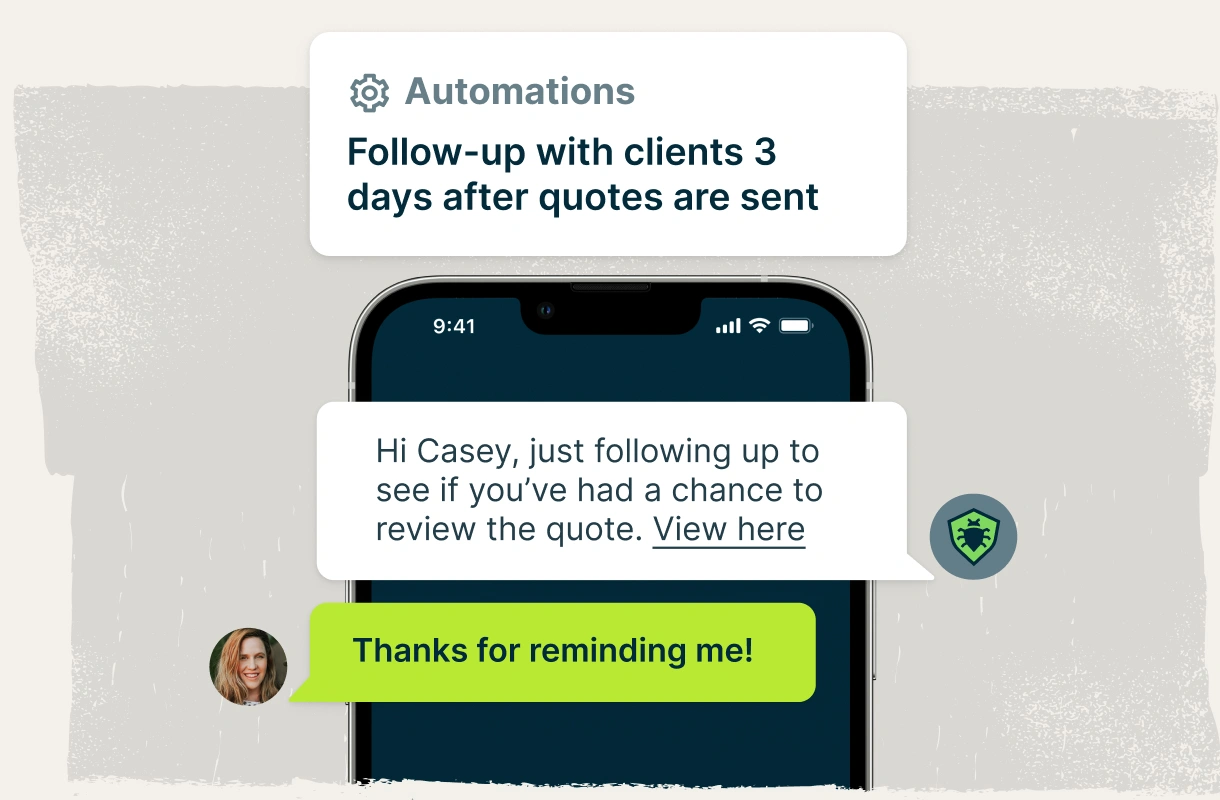
When you’re busy managing technicians and servicing customers, it’s easy to forget about a quote you sent last week.
With Jobber’s professional quotes, you can create branded quotes that outline treatment options, service frequency, and pricing. Include optional add-ons, like seasonal mosquito treatments, so your pest control customers can select the services they need.
If the customer doesn’t approve the quote right away, Jobber can send automated follow-ups after a few days—no need for you to remember. This increases the odds that the customer will respond.
Schedule routes and online bookings
An organized scheduling process helps you fit new treatments into existing routes and make room for more customers as your business grows.
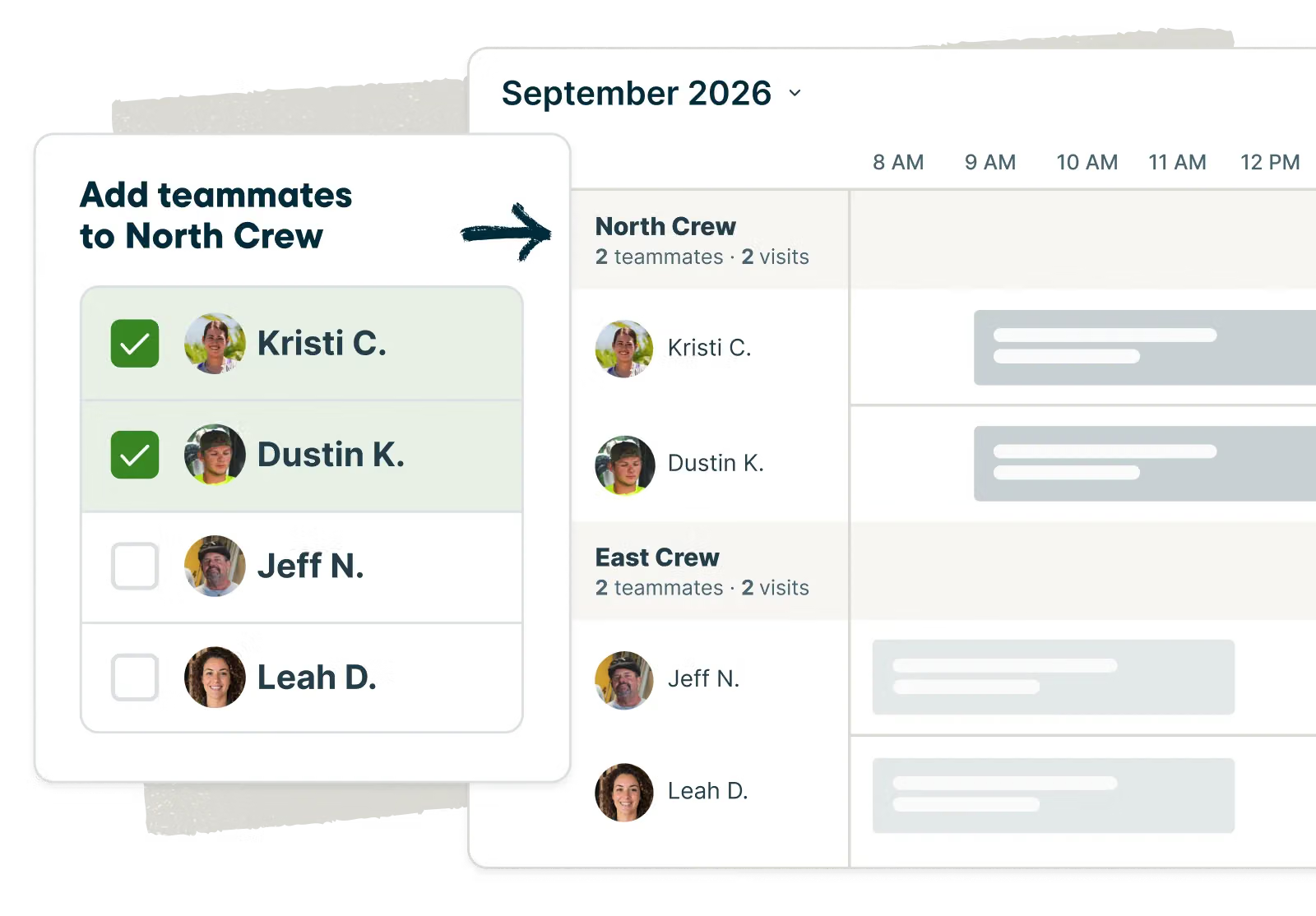
Jobber’s scheduling software lets you view upcoming appointments and assign technicians. You can also fine-tune your route optimization processes to save on time and fuel costs.
If a customer reschedules or an urgent service request comes in, Jobber lets you quickly adjust your dispatching, update the calendar, and notify your team.
With online booking, customers can even schedule appointments based on your availability and booking preferences. New bookings can go directly into your team’s schedule, reducing the time you spend coordinating appointments.
Protect margin with job costing and reporting
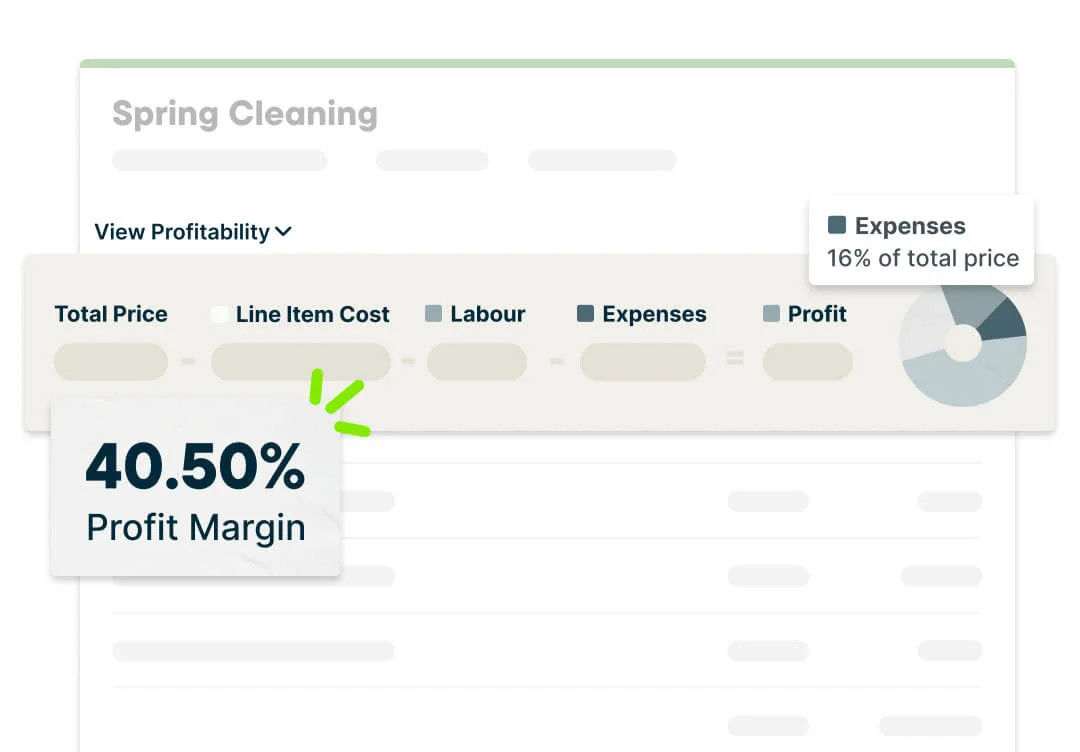
You might know how much revenue your pest control business generates each month. But do you know how much you’re actually making on individual jobs?
Jobber’s job costing and reporting tools allow you to track labor, materials, and other recorded job expenses alongside revenue to better understand profitability.
Use these insights to identify treatments that consistently cost more than expected, adjust future quotes, and make more informed decisions about which services to promote.
Instead of waiting until the end of the month to discover that a particular job wasn’t profitable, you can monitor recorded costs and course-correct as work progresses.
Common pest control business growth mistakes to avoid
Making informed decisions about hiring, pricing, and expansion can help you build a stronger, more profitable pest control business.
As you plan your next stage of growth, avoid these common mistakes and issues that can pop up for many pest control business owners:
- Expanding your service area too soon: Build a profitable customer base in your current service area before branching out into new neighborhoods.
- Charging too little for your services: Set prices that cover your expenses and leave enough profit to invest back into your business.
- Hiring before you can afford it: Make sure you have enough cash on hand to cover wages, training, and equipment while your new technician builds a full schedule.
- Rushing through employee training: Give new technicians the time and resources they need to deliver quality service and represent your business well.
- Letting leads slip through the cracks: Respond to new service requests quickly. Follow up on outstanding quotes before spending more money on marketing.
- Overlooking route efficiency: Book jobs close together whenever possible so your technicians spend more time treating properties and less time on the road.
- Taking existing customers for granted: Give your recurring customers the same attention you give new ones. Reliable service and regular communication go a long way toward earning repeat business.
With the right pricing, processes, people, and tools in place, you can build a profitable pest control business that serves more customers, delivers quality customer service, and runs smoothly as it grows.
Frequently Asked Questions
-
To scale your pest control business profitably, focus on getting more out of your existing team, equipment, and service routes before investing in additional resources.
Regularly review your job costs to make sure your prices keep up with changes in wages, fuel, and material costs. Set a target profit margin and use it to guide your spending decisions.
As you take on more work, track how much profit you’re earning—not just how much revenue you’re bringing in.
-
Increase recurring revenue by giving customers a reason to schedule their next treatment before you leave their property. Explain how regular pest control can help prevent future infestations, and recommend a service plan that fits their needs and budget.
You can also reach out to past customers who booked one-time treatments to see if they’d benefit from ongoing service. Make it easy for customers to stay on a recurring plan by offering convenient scheduling, automatic payments, and clear renewal terms. -
Consider hiring another pest control technician when you have enough consistent work to fill their schedule and enough cash to cover their employment costs.
Look at how many jobs your team completes each week, how far out you’re booking appointments, and how often you’re turning away new business.
If demand consistently exceeds your team’s availability, start planning your next hire. Remember to allow time for recruiting, licensing, and training so your new technician is ready when you need them. -
Improve route density by booking more jobs within a smaller geographic area. For example, if you already service several homes in a neighborhood, distribute door hangers or run targeted local ads to attract customers who might live right around the corner.
Give customers appointment options that fit your existing routes, and use route planning software to find efficient driving routes for your technicians. Over time, aim to increase the number of properties each technician can service while reducing vehicle fuel costs and mileage. -
Software for pest control businesses like Jobber helps you manage more customers, jobs, and employees from one place. You can:
• Schedule recurring treatments
• Send new quotes
• Organize service routes
• Communicate with customers
• Collect payments without switching between tools
Look for software that gives your technicians access to customer details and job instructions from their mobile devices. Features like automated appointment reminders, online booking, and business reporting can also help you spend less time on administrative work as your company grows.