Free Electrical Invoice Template
Skip the blank page and send a professional invoice before you leave the job site. Jobber’s free electrical invoice template generator lets you add your license number, labor, materials, and permit fees in one place. Download it as a PDF and send it to your client in minutes.


Create an electrical invoice fast with our free invoice template generator
- Enter your business name once, and the generator auto-fills the rest of your business details
- Add your own line items for labor, materials, and fees, or choose from the pre-loaded options
- Fill in your client’s name, contact details, and service address
- Download your invoice as a PDF, or save it in Jobber

Why use Jobber’s free electrical invoice template?
- Ready to customize: Add your own services, rates, and notes for service calls, panel upgrades, or rewiring. Change the details to fit every job
- Set up with the essentials: Start with fields for your business details, client info, line items, and payment terms. Add your license number and list permit fees as their own line items
- Free to download: Download your finished electrical invoice as a PDF at no cost. Email it to your client or print it for your records
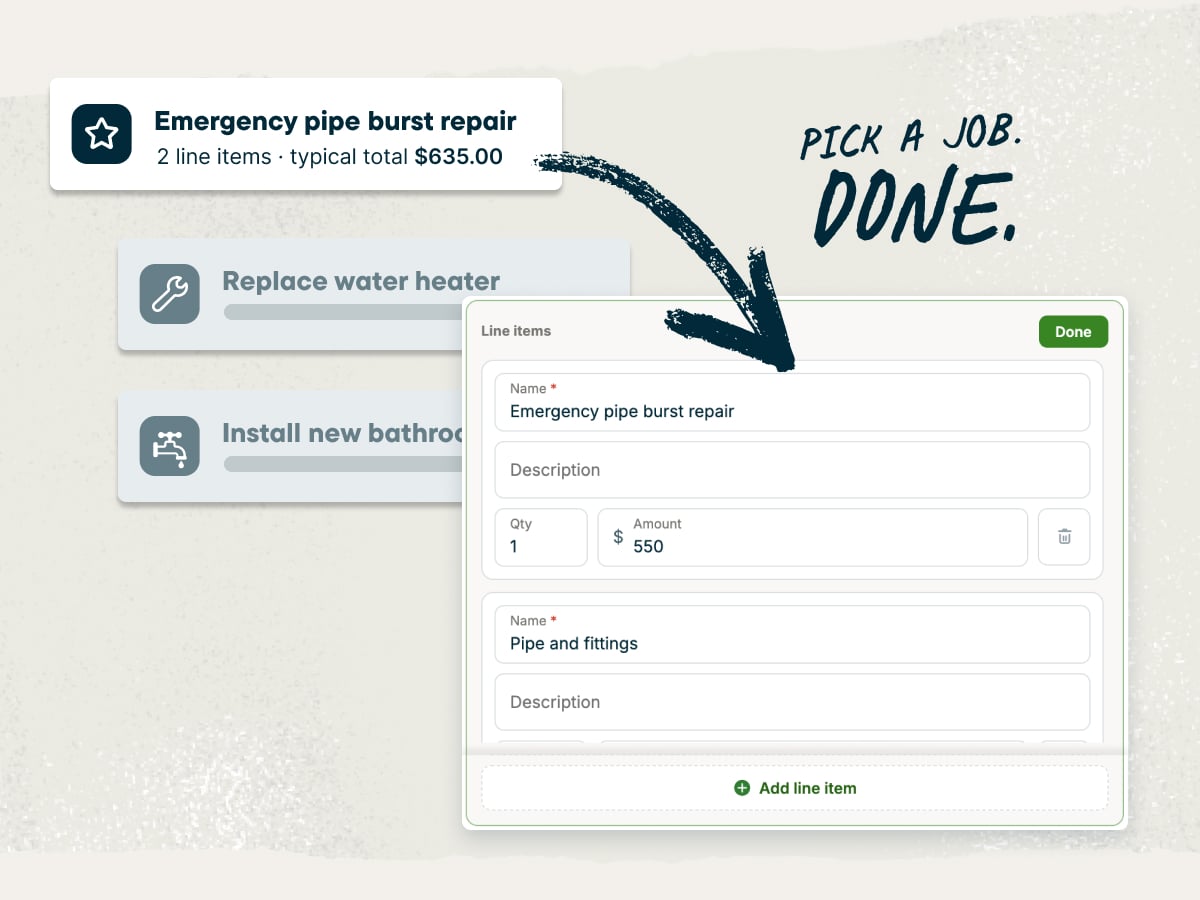
An electrical invoice template built for electrical contractors
When emergency calls come in or on-site troubleshooting runs long, your schedule gets thrown off fast. That leaves little time for paperwork at the end of the day. The electrical invoice template generator lets you invoice from the field right after a service call or installation.
Explore more Jobber free tools for your electrician business
Get the rest of your paperwork and pricing sorted with these free tools:
Over 400,000 home service pros in 50+ industries trust Jobber
“Having quotes, job notes, photos, and invoicing in one platform with Jobber has improved customer communication and helped us maintain a more professional experience from first contact through payment.”
How to create an electrical invoice
You can write an invoice in Microsoft Word, Google Docs, Microsoft Excel, or Google Sheets. However, you’ll spend more time on formatting and adding up totals. Use the electrical contractor invoice template generator instead—it handles the layout, so you only have to fill in the job details.
Use these tips to make your electrical invoice clear and easy to pay:
- Put the service call fee on its own line. List your service call, trip, or diagnostic fee separately. Note whether it’s credited toward the repair so the client knows what they’re paying for.
- Separate labor from materials. Show labor hours and rates in one section and parts in another. That way, your client can see exactly where their money went.
- Itemize every part. List breakers, wire, conduit, ground-fault circuit interrupter (GFCI) outlets, fixtures, and panels. Include the quantity and unit price for each.
- List permit and inspection fees separately. Give each permit or inspection fee its own line. That keeps those costs apart from your labor and materials, and it shows clients what they’re paying for.
- Describe the work in plain language. Write “Installed two GFCI outlets in kitchen” instead of a part code. Your client should understand the invoice without having to call you.
- Add your license number. Put your electrician license or contractor number next to your business details. It shows clients they hired a licensed pro.
- Show your pricing method. Say whether you billed hourly, flat rate, or per unit. Current residential electrician rates range between $50–$130 an hour, and commercial work runs 20–30% more.
- Label emergency and after-hours rates. Put any emergency or after-hours rate on its own line. Label it properly so the client knows why the call cost more than a standard visit.
- Send it while the job is fresh. Fill in the invoice as soon as the work wraps up. Your notes, hours, and parts counts are easiest to get right on site, and you’ll get paid faster.
Need to create lots of invoices, fast? Invoicing software saves your client details and turns finished jobs into invoices for you. It also helps to know which types of invoices fit deposits, progress billing, and recurring work.
What is the electrical invoice template generator best for?
The electrical invoice template generator is best for electricians who need to send a clear, professional invoice right after the work is done. It works as an electrician invoice template for both solo pros and growing teams.
Use it for these common electrical jobs:
- Service calls and repairs: Bill for the diagnostic visit, labor, and parts before you head to the next call.
- Installations: Itemize equipment and labor for electric vehicle (EV) charger installs, panel upgrades, and new circuits.
- Larger projects: Bill a $20,000 commercial buildout with progress invoices: 30% upfront, 40% after rough-in and panel install, and 30% after final inspection.
- Recurring commercial maintenance: Use the same clear format for regular inspections and maintenance visits at commercial properties.
- Consistent branding: Keep your business name, contact details, and license number the same on every invoice so your company looks professional.
What should be included in an electrical invoice?
An electrical invoice should include the same details as any other home service invoice, with some details that are specific to electrical work.
Here’s what to include on an invoice for electrical services:
- Invoice number: Give each invoice a unique invoice number so you and your client can track it.
- Issue and due date: Show the date you sent the invoice and the date payment is due.
- Company information and license number: Add your business name, contact details, address, and electrical license or contractor number.
- Client information and service address: List your client’s name and contact details, as well as the address where you did the work.
- Line items: Describe each service in plain language with a quantity, unit price, and line total.
- Labor: Show your hours and hourly rate, or the flat rate for the job.
- Materials: Itemize breakers, wire, conduit, GFCI outlets, fixtures, and panels with quantity and unit price.
- Service call fee: List the trip or diagnostic fee and note whether it’s credited toward the repair.
- Permit and inspection fees: Put each permit or inspection fee on its own line with the permit number, if you have one.
- Payments received: Subtract any deposits or progress payments your client already made.
- Subtotal, taxes, and fees: Show the subtotal, then add sales tax and other fees. Tax rules for labor and materials vary by state, so check them before adding tax to your invoice.
- Total: Put the final amount due in a place where your client can spot it right away.
- Payment terms: Spell out your payment terms, the payment methods you accept, and any late fees that may apply.
- Warranty notes: Note any warranty on your workmanship and on the parts you installed.
- Thank-you note: End with a short thank-you note to show your client you appreciate their business.
Free electrical invoice template vs. Jobber invoicing software
The free electrical invoice template works well when you need a quick invoice for a single job. Add your business and client details, list the work, and download a PDF to send to the client.
When you’re invoicing every day, invoicing software does more of the work for you. It saves client and job details, turns completed jobs into invoices, sends them by text or email, and automatically follows up on unpaid invoices.
If you’re starting an electrical business, set up your invoicing process before your first job. Jobber customers get paid 4x faster collecting payment online vs. waiting on checks.

and payment history organized in one place for easier access.
and pricing already recorded on the completed job.
making it easy for them to review and pay.
it is time to invoice at job completion or on a recurring schedule.
and send them to customers in a few clicks.
remind customers when an invoice remains unpaid.
so they can pay directly from their digital invoice.
while working from the office, on the road, or at a job site.
Frequently asked questions about electrical invoices
-
An electrical invoice template generator is a free online tool that turns the job details you enter into a professional electrical invoice. Fill in business details, client info, services, and pricing. From there, the generator handles the layout, adds up totals, and gives you a PDF to send to the client.
-
Yes, you can customize every field in the electrical invoice template. Add your own line items for jobs, like panel upgrades or GFCI installs. Set your hourly or flat rate, and adjust the payment terms and notes for each client.
-
Yes, you can download your electrical invoice as a free PDF once you’ve filled it in. Email the PDF to your client, print it, or save the invoice in Jobber.
-
Yes, the electrical invoice template is free to use. There’s no cost to create and download your invoice.
-
To make an electrical invoice template, start with a blank document in Word, Google Docs, Excel, or Google Sheets. Enter your business and client details, service line items, tax, totals, and payment terms. You’ll need to update this template every time you write an invoice.
When you use the electrical invoice template generator, it takes care of the formatting and math for you. You only need to enter job details. Or, skip manual invoicing altogether and use field service invoicing software that creates invoices from your completed jobs. -
An electrical invoice should include your license details, client details, service address, itemized labor and materials, fees, taxes, total amount owing, payment terms, and a thank-you note. List service call, permit, and inspection fees on their own lines. Add a note about any warranties or guarantees on your work.
-
An electrical invoice usually fits on one page, with your business and license details at the top and your client’s details below. An itemized table of labor, materials, and fees fills the middle. The subtotal, tax, and total sit at the bottom, followed by your payment terms and a short thank-you note.

-
Use this template to bill for electrical services by listing each part of the job as its own line item with a quantity and price. Add any service call fee or after-hours rate on its own line.
For hourly work, enter your hours and rate. For flat-rate jobs like an EV charger install, enter one price for the job and list permits separately. For per-unit pricing, like a set price for each outlet, enter the number of units and the price for each. -
The two words describe the same thing, but the document’s name varies depending on who’s holding it. You’ll send the client an invoice, and they’ll call it a bill when they pay it. For example, after you replace a homeowner’s panel, you send an invoice, and it lands in their inbox as a bill to pay.
-
A quote tells your client what a job will cost before you start, and an invoice asks for payment after the work is done. You first send a quote for a panel upgrade, then send an invoice once the work passes inspection. The two documents often share the same line items, but a quote and an invoice do different jobs.
-
Yes, it’s a good idea to include your electrical license or contractor number on every invoice. Requirements vary by state or local jurisdiction, so check the rules where you work. Even where it’s optional, a license number shows clients they hired a licensed pro.
-
Bill for permits and inspections by listing each fee as its own line item on your electrical invoice. Include the permit number, if you have one. Permit and inspection requirements and fees vary by state or local jurisdiction, so confirm them before you quote the job.
-
You can send an invoice to clients by email, text message, mail, or in person. A PDF from the electrical invoice template generator works for email or print. With Jobber, you can send invoices by text or email, and clients can pay online.
-
The best time to send an electrical invoice is right after the job is done, or within 48 hours at the latest. Sending it while the work is fresh helps your client remember what they’re paying for. For bigger projects, decide early whether to invoice before or after a job with deposits or progress billing.
-
Ask clients to pay their electrical invoice within two weeks, and set terms no longer than net 30. Shorter terms help keep your cash flow steady.
For larger jobs like rewiring, offering financing helps clients pay without delay. If a payment runs late, follow a defined process to collect on unpaid invoices. -
Electrical invoicing software is a tool that creates, sends, and tracks invoices for your electrical jobs. These types of electrician invoicing apps connect your invoices to the rest of your work.
Jobber’s invoicing software works with these tools:
• Credit card processing: Accept card payments in the field or online with credit card processing.
• Consumer financing: Offer consumer financing so clients can pay for bigger jobs like panel upgrades over time.
• Scheduling: Book and assign jobs with scheduling, then invoice when the work is done.
• Customer communication: Send reminders and follow-ups with customer communication tools.
Over 400,000 home service pros in 50+ industries trust Jobber
“If you can make a quote on the spot, you’re 10 steps ahead of the competition.”
Jobber changed the game because it’s right at people’s fingertips.
