How to Start a Construction Company: Step-by-Step Guide for 2026

Key takeaways:
Starting a construction company in 2026 is a detailed process that requires careful planning, smart budgeting, and effective systems to ensure long-term success.
- Define your construction niche and business plan. Specialize in in-demand services you’re skilled at and create a simple business plan outlining your goals, services, target customers, budget, and marketing approach.
- Register your business, choose the right structure, and obtain proper licensing. Select a business structure, register the business. Make sure you secure all required licenses, permits, and bonds for your state and specialty.
- Protect yourself with the right insurance and organized finances. Acquire essential coverage such as liability, workers’ compensation, and tools insurance. Set up separate business bank accounts, accounting software, and cash flow systems from day one.
- Invest wisely in tools, hire strategically, and build strong supplier networks. Start with only the equipment necessary for your niche, consider renting before buying large items, and establish reliable relationships with suppliers and subcontractors as you scale.
- Price jobs for profit and focus on winning your first clients. Include all costs in your estimates (like labor, materials, overhead, and profit margin) and use referrals, local reputation, and targeted marketing to land your initial projects.
- Set up systems for efficiency and avoid common pitfalls. Implement repeatable workflows for quoting, scheduling, communication, and invoicing with construction management software.
For more tips, tools, and step-by-step business advice, sign up for the Jobber Newsletter.
Starting a construction company takes more than knowing how to build. It requires a plan for licensing, insurance, pricing, finances, and winning contracts.
Whether you’re leaving an established general contractor, turning side jobs into a full-time business, or launching your first crew, the right foundation helps you grow confidently and avoid costly mistakes.
This guide walks you through how to start a construction business step by step. You’ll learn how to choose a business structure, register your company, and price jobs. We’ll also explain how to find customers and build systems that support long-term growth.
How to start a construction business:
-
Choose your construction niche
-
Write a simple construction business plan
-
Register your business and choose a structure
-
Get licensed, bonded, and permitted
-
Get the right insurance
-
Set up finances, funding, and cash flow
-
Buy tools and equipment
-
Hire your first crew
-
Price jobs for profit
-
Win your first customers
-
Set up systems to run the business
How much does it cost to start a construction business?
Startup costs for a construction company typically range from around $10,000 to $125,000+. The full total depends on your specialty, the equipment you already own, and whether you plan to hire employees.
A solo handyman or remodeling contractor may be able to launch for $10,000–$25,000. On the other hand, a general contractor with employees, vehicles, and specialized equipment may need $50,000–$100,000 or more.
Beyond one-time startup expenses, you’ll also want to budget for ongoing costs. These can include payroll, raw building materials, insurance policies, and overhead.
Here are some common construction business startup costs to budget for:
| Startup expense | Typical cost range |
|---|---|
| Business registration | $50–$500 |
| LLC formation (varies by state) | $50–$800 (cost is higher if using a filing service) |
| Contractor or construction license (varies by state) | $50–$500+ (depending on state and license class) |
| General liability insurance | $500–$3,000 per year for many small contractors |
| Surety bond | $100–$1,500+ annually (premium varies by bond amount and credit) |
| Tools and equipment | $2,000–$15,000+ |
| Vehicle or trailer | $10,000–$60,000+ |
| Website and marketing | $99–$5,000 |
| Accounting and job management software | $30–$300+/month |
| Working capital | $5,000–$50,000+ (typically based on a percentage of annual revenue) |
What affects your startup budget?
Every construction business has different startup costs. However, a few key decisions will have the biggest impact on your budget. Before you estimate how much money you’ll need, think about how you plan to operate your business.
- Residential vs. commercial work: Residential contractors can often start with lower insurance limits, fewer licensing requirements, and less specialized equipment. Commercial contractors often need higher liability coverage, extra certifications or bonds, and the financial capacity to take on larger projects.
- Employees vs. subcontractors: Hiring employees increases startup and ongoing costs. You’ll need to budget for payroll, workers’ compensation, taxes, benefits, and additional tools or vehicles. Working with subcontractors reduces overhead while helping you scale as demand grows.
- Buying vs. renting equipment: Purchasing equipment gives you full ownership but requires a larger upfront investment. Renting or leasing specialized equipment can reduce initial startup costs. That’s especially true if you only need tools occasionally or want to save cash when you’re getting started.
The more intentional you are about these decisions, the easier it is to control your startup costs. Focus on the essentials first. Then invest in additional equipment, employees, and services as you expand.
1. Choose your construction niche
One of the first decisions you’ll make is what type of construction work your business will specialize in. Trying to offer every service can make it harder to market your business, price jobs accurately, and build a strong reputation.
Instead, focus on in-demand construction services you already know how to provide. Some of the most popular construction niches include:
- Kitchen and bathroom remodeling: Complete renovations, cabinetry, fixtures, tile work, and layout updates for homeowners
- Custom carpentry: Built-in shelving, trim work, cabinetry, framing, and other custom wood projects that require special skills or craftsmanship
- Roofing: Roof repairs, replacements, inspections, and storm damage restoration for residential or commercial properties
- Concrete work: Driveways, patios, sidewalks, foundations, retaining walls, and decorative concrete installations
- Deck construction: New deck builds, repairs, resurfacing, railing installation, and outdoor living space projects
- Home additions: Room additions, garage conversions, second-story additions, and other major home expansions
- Flooring: Installation and replacement of hardwood, luxury vinyl plank (LVP), tile, laminate, and carpet
- Painting: Interior and exterior residential or commercial painting, staining, and surface preparation
- Commercial tenant improvements: Renovating office, retail, restaurant, or industrial spaces for new tenants or changing business needs
- General contracting: Managing complete construction projects by coordinating subcontractors, schedules, permits, inspections, and client communication
As you evaluate specialties in the construction industry, consider local demand, your existing skills, startup costs, and long-term profitability. A focused niche makes it easier to establish your reputation and earn referrals. You can always expand your services as your business grows.
2. Write a simple construction business plan
A construction business plan doesn’t have to be a lengthy, formal document. For many new contractors, a one-page plan can be enough. It just needs to clarify your goals, guide day-to-day decisions, and keep your business moving through the first year.
Your business plan should include:
- Construction company name and basic information: Pick a professional, memorable name and outline how people can contact you.
- Business goals for your first year: Define what initial success looks like. You might set a revenue target, hire your first employee, or complete a certain number of projects.
- Services you’ll offer: List the core services you’ll provide so you can plan your equipment purchases, pricing, and marketing accordingly.
- Your ideal customers: Identify the homeowners, businesses, or property managers you want to work with. This will help you better target your outreach.
- Pricing strategy: Decide how you’ll estimate construction jobs, calculate labor and material costs, and maintain healthy profit margins.
- Startup budget: Outline your expected startup expenses and how you’ll fund them so you can avoid cash flow surprises.
- Revenue targets: Set realistic monthly or annual income goals to measure progress and plan for future growth.
- Marketing plan: Determine how you’ll attract your first construction leads and get your first customers. This might be through referrals, online reviews, local SEO, social media, paid advertising, or in-person networking.
- Daily operations: Document how you’ll handle estimates, employee scheduling, project management, invoicing, and final payment to create a consistent customer experience.
Writing down these details gives you a roadmap for launching and growing your business. As your company evolves, you can revisit your plan, refine your goals, and adjust your strategy.
3. Register your business and choose a structure
Before you can legally operate your construction company, you’ll need to choose a business structure. The structure you choose affects your personal liability, taxes, and recordkeeping.
It’s important to understand your options before filing any official paperwork. Here are the most common business structures for construction companies:
- Sole proprietorship: This is the simplest and least expensive option to start. It comes with minimal administrative prep. However, there is no legal separation between you and your business. As a result, your personal assets could be at risk if you take on debt or someone sues your business.
- Limited liability company (LLC): An LLC protects personal assets from most business liabilities. It also offers flexible tax options and a straightforward setup process. For many independent contractors and small construction companies, an LLC strikes the best balance between liability protection and stress-free management.
- Corporation: A corporation provides the strongest separation between personal and business finances. This model offers advantages for raising capital or bringing on multiple owners. However, corporations have more administrative requirements and ongoing compliance obligations than other structures.
After choosing your business structure, you’ll also need to complete several important tasks before tackling your first project:
- Register your business name. File your business with your state and register any trade or “doing business as” (DBA) name you’ll operate under.
- Obtain an Employer Identification Number (EIN). Apply for a free EIN through the IRS. You’ll need one to hire employees, open business financial accounts, and file certain business taxes.
- Open a business bank account. Keep your business and personal finances separate from the beginning. This will help simplify bookkeeping, taxes, and liability protection.
- Register for any required state taxes. Depending on where you operate, you may need to register for sales tax, employer taxes, unemployment insurance, or other state and local tax programs.
Complete these steps early to avoid compliance issues. It’s also the best way to protect your personal assets and manage your business as it grows.
How to start an LLC construction company
For many small construction businesses, forming a limited liability company (LLC) is the smartest choice. An LLC protects your personal assets if your business experiences any hardship.
It can also build credibility with customers, suppliers, and lenders. At the same time, it requires less administrative work than filing for a corporation.
If you plan to grow beyond occasional side jobs, hire employees, purchase expensive equipment, or bid on larger projects, an LLC is also the best long-term option. To create an LLC construction company, you’ll generally need to:
- Choose an official LLC name. Verify that your desired business name is available. It must also comply with your state’s LLC naming requirements.
- File your Articles of Organization. This is the legal document that creates your LLC with your state. Submit it, along with the filing fee, to your state’s business registration office.
- Create an operating agreement (if required). An operating agreement outlines LLC ownership, management responsibilities, and business operations. While not required in every state, it’s a good idea even if you’re a single-member LLC.
- Maintain your LLC in good standing. Depending on your state, you may need to file annual reports, pay renewal fees, or meet other ongoing compliance requirements to keep your LLC active.
The exact process of starting an LLC varies by state. Completing these steps before advertising your services or signing contracts will put your business on a stronger legal foundation.
4. Get licensed, bonded, and permitted
Construction licensing requirements differ by state and, in some cases, by city or county. Depending on your business, you may need:
- A state contractor license: Many states require contractors to be licensed before performing construction work. Requirements may include work experience, an exam, and proof of insurance.
- A local business license: Many cities and counties require businesses to register before operating within their jurisdiction.
- Specialty trade licenses: Contractors performing electrical, plumbing, HVAC, or other regulated work often need trade-specific licenses or certifications.
- Project-specific permits: Many construction projects require permits and inspections before work can begin. This is to ensure compliance with local building codes.
Some larger projects also require surety bonds. These help protect customers if you don’t meet your contractual obligations. Bonds also demonstrate that your business is financially responsible and qualified to perform the work.
Before bidding on projects, always check requirements with your state’s contractor licensing board and your local building department. Set aside time to secure the proper licenses, permits, and bonds.
This can help you avoid costly project delays, legal issues, and lost business opportunities that come with performing unlicensed work.
5. Get the right insurance for a construction company
Insurance protects your business from costly accidents, property damage, lawsuits, and other unexpected events. It can also help you meet legal requirements, satisfy contract obligations, and give customers confidence that they’re hiring someone trustworthy.
Many construction businesses carry:
- General liability insurance covers third-party property damage, bodily injury claims, and legal expenses if your business is held responsible for an accident.
- Workers’ compensation insurance pays for medical expenses and lost wages if an employee is injured on the job. In many states, it’s required once you hire employees.
- Commercial auto insurance covers vehicles used for business purposes, including work trucks, vans, and trailers transporting tools and materials.
- Builder’s risk insurance protects buildings and materials during construction from covered events such as fire, theft, vandalism, or certain types of weather damage.
- Tools and equipment coverage helps repair or replace stolen, damaged, or lost tools and equipment that your business relies on every day.
The right insurance protects your business financially. It can also help you qualify for larger projects and stand out when competing for new work.
General contractors, commercial clients, and property owners often require a Certificate of Insurance (COI) before work begins. This verifies that you have adequate coverage and helps protect the client from financial liability if an injury or property damage occurs during the project.
6. Set up finances, funding, and cash flow
Even profitable construction companies can run into trouble if they don’t manage cash flow. This is especially true when you’re paying for labor and materials before customers pay their invoices.
When you set the right financial systems from the beginning, you’re more likely to stay organized, make informed decisions, and keep projects moving at a good pace. Follow these tips to get started.
Open a business bank account
A separate business bank account simplifies bookkeeping, tax preparation, and financial reporting. It also protects you if you’ve formed an LLC or corporation. Additionally, it presents a more professional image when accepting customer payments.
Secure business funding
If you’re a new construction business owner, you might need additional capital to cover startup costs, purchase new equipment, or bridge gaps in cash flow. Depending on your financial situation and business goals, secure funding options may include:
- Small business loan: Borrow a lump sum to cover startup expenses, equipment purchases, or business expansion.
- Equipment financing: Spread the cost of expensive tools, vehicles, or machinery over time instead of paying the full amount upfront. (Before agreeing to a contract, check to see how much interest you’ll pay over time.)
- Business lines of credit: Access flexible funds to cover short-term expenses, purchase materials, or manage seasonal cash flow.
- Personal savings: Use your own savings to fund startup costs and avoid taking on debt. This gives you full ownership of the business but puts more of your own capital at risk.
- Investor or partner funding: Bringing on a business partner or investor can provide additional capital. At the same time, this option means sharing ownership, profits, or decision-making.
Choose accounting software
Construction businesses have unique financial needs that go beyond basic bookkeeping. Choose accounting software that can:
- Track expenses
- Generate invoices
- Manage payroll
- Monitor job costs
- Produce financial reports
Having accurate, up-to-date financial data makes it easier to price jobs, understand which projects are profitable, and make smarter business decisions. Putting these financial systems in place before you take on your first projects can save countless hours later.
7. Buy the tools and equipment you need
Start with the tools required for your specialty rather than purchasing everything immediately.
As your company grows, evaluate whether buying or renting equipment makes the most sense for your operations. Some companies start by renting larger items, then buy them later on.
When you first get started, you’ll most likely need:
- Specialty trade tools: Purchase the hand tools and power tools required for your niche. Based on how you work, get all the items you need to handle remodeling, framing, roofing, flooring, or any other construction speciality.
- Safety equipment and PPE: Stock up on items like hard hats, safety glasses, gloves, hearing protection, respirators, and fall protection. These items keep your crew safe and ensure that you comply with job site requirements.
- A work truck or trailer: Get a reliable work vehicle that fits the size and scope of your projects. This will help you transport tools, equipment, and materials.
- Storage solutions: Organize and protect your tools with secure storage systems. This could include jobsite boxes, trailer organization, shelving, or a mobile workshop.
- Equipment maintenance plans: Schedule regular inspections and maintenance for all equipment. It’s the best way to extend the life of your equipment, reduce downtime, and avoid costly repairs.
Build your supplier network
Reliable suppliers keep projects on schedule and within your set budget. Strong supplier relationships ensure better pricing, dependable service, and faster access to materials.
When comparing suppliers, look for things like:
- Competitive pricing: Fair, consistent pricing helps you estimate jobs accurately and protect your profit margins. Shop around and negotiate to get the best pricing.
- Reliable inventory: Choose construction suppliers that regularly stock the materials and products your business depends on.
- Flexible payment terms: Trade credit or extended payment terms can improve cash flow, especially as your business grows.
- Fast delivery: Quick, dependable delivery helps prevent costly project delays and keeps your crews productive.
- Responsive customer service: A knowledgeable supplier can help resolve product issues, source hard-to-find materials, and communicate quickly when schedules change.
It’s also a good idea to establish relationships with one or two backup suppliers. Having alternative sources for materials can help you avoid delays if there are inventory shortages, price increases, or supply chain disruptions.
8. Hire your first crew
As your business grows, you’ll need extra help to keep projects on schedule and maintain quality.
Instead of hiring full-time employees right away, consider starting with subcontractors. You can take on more construction jobs without the costs and responsibilities of full-time payroll.
When you’re ready to build your crew, take these steps to make sure each hire is a good fit:
- Verify licenses and certifications. Confirm that employees or subcontractors hold any licenses, certifications, or trade qualifications required for the work they’ll perform.
- Check references and work history. Review previous projects and speak with past employers or clients to evaluate reliability, workmanship, and professionalism.
- Complete background checks when appropriate. Depending on the type of work you do, background checks may reduce hiring risks and build trust with clients.
- Provide safety training. Make sure everyone understands your safety procedures, jobsite expectations, and any OSHA or local safety requirements before work begins.
- Clearly define roles and expectations. Set clear expectations for job responsibilities, communication, quality standards, and schedules. This can reduce confusion and improve accountability.
Growing your team at the right pace is just as important as finding the right people. Hiring strategically allows you to tackle more work without overextending your business.
9. Learn how to price construction jobs for profit
One of the biggest mistakes new contractors make is pricing jobs based on labor and materials alone. Every new construction estimate should account for your true costs and leave room for a healthy profit margin.
When calculating your pricing, always include:
- Labor costs: Account for wages, payroll taxes, benefits, and the time required to complete the project.
- Costs of materials: Include all building materials, supplies, and delivery fees. Account for any expected price changes, too.
- Equipment: Factor in equipment purchases, rentals, fuel, maintenance, and depreciation where applicable.
- Permits: Include the cost of any required building permits, inspections, or fees that are specific to the project.
- Overhead: Cover ongoing business expenses like insurance, office costs, software, construction apps, marketing, vehicles, and utilities.
- Profit margin: Add enough construction profit margin to support business growth, future investments, and unexpected expenses. To avoid simply breaking even on jobs, you’ll want to use a formula like this:
Profit margin percentage = [ (Service price – Cost) / Service price ] x 100 - Contingency: Build in a buffer for unforeseen issues. This could include material price increases, weather delays, or changes in construction project scope.
A clear proposal sets expectations before work begins. Include the scope of work, project timeline, payment schedule, and contract terms. That way, both you and your customer know exactly what to expect.
Pro Tip: Ask for a deposit upfront and collect payments at key project milestones. This can help you maintain healthy cash flow while reducing the risk of late or missed payments.
10. Win your first customers
Finding your first customers can feel like one of the biggest challenges of starting a construction business. But you don’t need a massive marketing budget to build momentum.
In the beginning, most contractors win work through a combination of referrals, local visibility, and reputation. Focus on building trust and making it easy for potential customers to find and contact you.
To start generating leads:
- Create a Google Business Profile. Help local customers find your business in Google Search and Maps. Build a profile, showcase your services, and collect customer reviews.
- Ask satisfied customers for referrals. Word-of-mouth customer referrals are one of the most effective ways to win new projects. Always ask happy customers to recommend your business to others.
- Build a professional website. Create a business website that highlights your services, service area, completed projects, and customer testimonials. Make it easy for prospective customers to contact you by displaying your phone number, email address, and contact form.
- Collect online reviews. Encourage customers to leave reviews on Google and other relevant platforms. This will help increase your visibility in local search engine results.
- Network with real estate agents, builders, and property managers. Build relationships with professionals who regularly need reliable contractors. It can help provide a constant stream of referrals.
- Participate in local business organizations. Join your chamber of commerce, trade associations, or networking groups. This helps you increase your visibility and connect with potential customers and partners.
Winning your first customers is only the beginning. You’ll need to deliver high-quality work, communicate clearly throughout every project, and provide an outstanding customer experience. That way, you’ll turn one-time clients into repeat customers or referrals.
11. Set up systems to run your business effectively
The more projects you take on, the harder it becomes to keep track of estimates, schedules, and customer conversations with spreadsheets or text messages alone.
Creating a repeatable process for every job helps you stay organized, deliver a more consistent customer experience, and spend less time on administrative work.
To build a consistent workflow for every project, outline your process for:
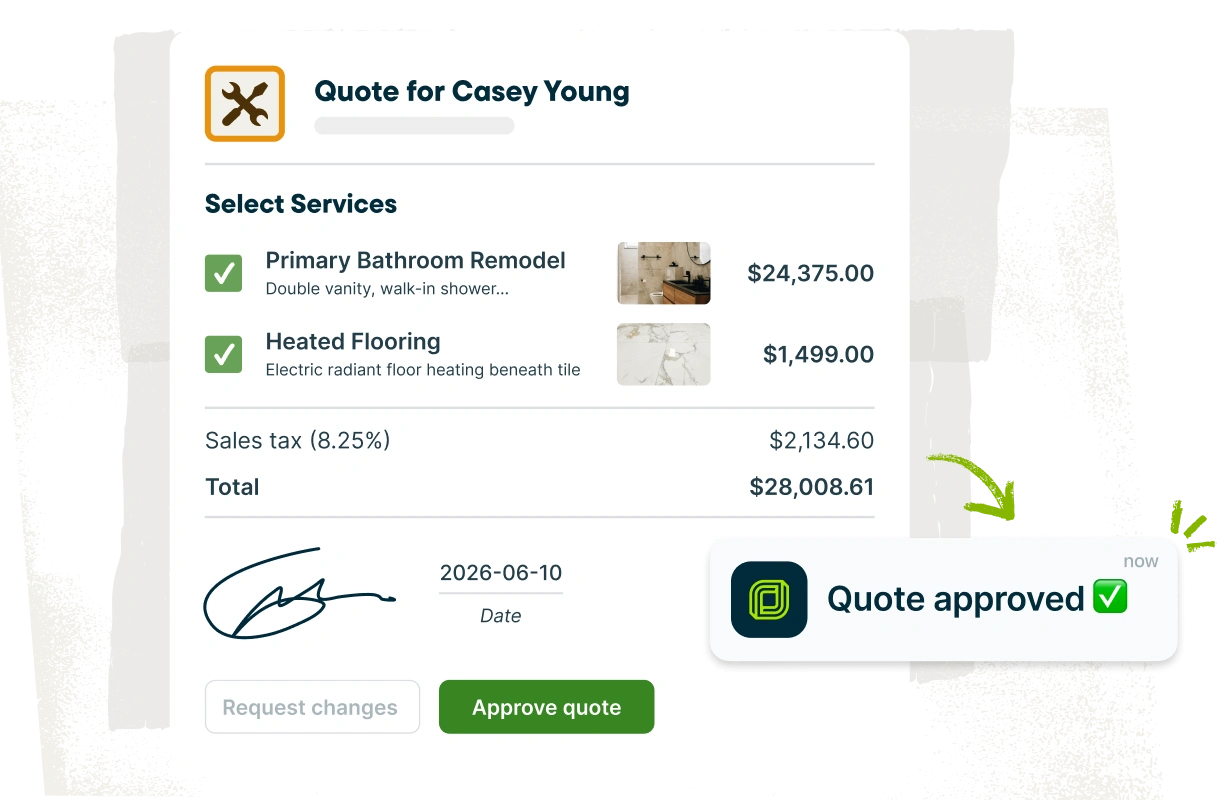
- Quotes, estimates, and approvals: Create professional quotes or estimates that clearly outline the scope of work and pricing. Send those estimates electronically so that customers can review and approve them quickly.
- Scheduling: Assign jobs to your calendar, schedule and coordinate your crew, and keep projects moving. With scheduling features on a platform like Jobber, you can fit more jobs into your day and even optimize routes to save on travel time.
- Customer communication: Keep customers informed with personalized confirmations, updates, and reminders throughout the project.
- Job completion and field documentation: Track your construction progress and document completed work so that everyone stays in the loop. Make sure every task is finished before closing a specific job or contract.
- Invoicing and payments: Send professional invoices as soon as work is complete to avoid delays in billing or payment. You can also offer convenient online payment options to get paid faster and improve your company’s cash flow.
[Look at] your current process or the current service that you’re offering. Are those processes scalable?
A lot of times, business owners get so caught up in pricing every single job. Standardize your pricing to help streamline the processes.

Construction management software like Jobber brings every step of your workflow together in one platform. Instead of juggling multiple apps and manual processes, you can create estimates, schedule jobs, send invoices, and collect payments more efficiently.
Common mistakes when starting a construction company
Even experienced tradespeople can run into challenges when they become business owners. Knowing what to avoid can help you protect your profits and set up your company for long-term success.
Watch out for these common mistakes:
- Underpricing jobs: Bidding too low may help you win work, but it can quickly cut down on your profit margins. Over time, this makes it difficult to cover your overhead expenses or grow your business.
- Taking every project that comes your way: Not every job is a good fit. Focusing on your ideal services and customers helps you build expertise, work more efficiently, and improve profitability.
- Skipping written contracts: A clear contract protects both you and your customer. It should outline the scope of work, timeline, payment terms, and expectations before the project begins. Refer back to the specifics whenever questions come up.
- Operating without proper licensing or insurance: Missing required licenses, permits, or insurance can lead to legal issues, costly fines, project delays, and lost business opportunities.
- Mixing personal and business finances: Simplify bookkeeping with separate bank accounts and financial records. It’s also a great way to simplify tax preparation, and it helps protect your personal assets.
- Hiring before your systems are ready: Growing your team too quickly without clear processes for scheduling, communication, and job management can lead to costly mistakes. It also might mean rework or wasted labor hours that eat into your profits.
- Not managing cash flow: Even busy construction companies can struggle with delayed invoices, late payments, and out-of-control expenses. Stay on top of billing and collections so you have enough cash to cover payroll, materials, and other operating expenses.
Building a successful construction business takes more than delivering quality work. It also means running an organized, profitable company that customers trust.
Put the right systems in place from the start with construction business software. You’ll be ready to take on more projects, deliver a better customer experience, and grow with confidence.
Frequently Asked Questions
-
Starting a construction company can cost around $10,000 to $125,000+. The full amount depends on your trade, location, equipment needs, and business size.
A solo handyman or remodeling contractor who already owns basic tools may have relatively low startup costs. On the other hand, a general contractor with employees, vehicles, and specialized equipment will typically need a much larger upfront investment.
In addition to startup expenses, make sure you factor in ongoing costs like payroll, materials, insurance, and overhead. While you may not need these on day one, you should have a plan in place to manage future finances as your business grows. -
In many states, you need a license to start a construction business. Licensing requirements vary depending on your location, the type of work you perform, and project value. As a new or future business owner, you should always verify requirements with your state contractor licensing board before accepting work.
-
Yes, it’s possible to start a business with little capital if you already own essential tools, focus on lower-overhead services, and carefully manage your cash flow. However, you’ll still need to budget for licensing, insurance, registration, and other startup expenses. Some of these costs are non-negotiable if you want to start your business and operate legally.
-
An LLC is a common choice for contractors because it provides liability protection while remaining relatively easy to manage. The right structure for your business depends on your goals, taxes, and state requirements. If you’re unsure, consider speaking with an accountant or attorney before deciding or filing official paperwork.
-
Licensing timelines vary by state and specialty. Some licenses can be issued within a few weeks. Others require exams, experience verification, or additional documentation that can take several months. Check your state’s contractor licensing board early in the process so you understand the requirements and can avoid delays before bidding on projects.