
Key takeaways:
Take your plumbing business to the next level with these practical management strategies designed to improve efficiency, organization, and profitability.
- Optimize scheduling and dispatching. Match jobs to technicians’ skills, use software to streamline schedules, minimize drive time, and leave space for emergency calls to keep operations running smoothly.
- Strengthen financial management. Track job profitability (not just revenue), send invoices promptly after each job, use systems for overdue payments, and ensure your pricing covers overhead to maximize cash flow.
- Improve inventory and truck management. Regularly track and standardize truck inventory to reduce delays, avoid duplicate purchases, and help technicians complete jobs on their first visit.
- Standardize estimating, pricing, and customer communication. Use reusable estimate templates, review pricing regularly, automate appointment updates, and offer online booking to provide a professional and consistent experience for customers.
- Support and train your team. Hire for attitude as well as skill, create clear standard operating procedures, measure technician performance, and engage subcontractors when needed to keep your team efficient and high-performing.
- Drive growth through marketing and retention. Encourage customer reviews and referrals, build a repeatable lead pipeline, track which marketing channels are most effective, and stay connected with past customers to encourage repeat business.
- Use business management software. Integrate all your processes—from scheduling to invoicing to customer management—in one place to save time, reduce errors, and support business growth.
Stay up to date on the latest business tips and strategies. Sign up for the Jobber Newsletter to keep learning and growing your business. Sign up here.
Running a plumbing business becomes more complex as your team grows and job volume increases. With manual systems, it becomes harder to manage your scheduling, invoicing, customer communications, and cash flow.
Growth is exciting, but you can only sustain it with good business management. The plumbing business tips in this guide will help you build better processes so you can stay organized, improve profitability, and run a more efficient operation.
Try these plumbing business management tips to improve:
Scheduling and dispatching
Right now, you may be managing your schedule with a whiteboard, a spreadsheet, or a group text message. That approach starts to break down as your team grows.
Plumbing software like Jobber can help with that. Once you have multiple technicians in the field, you’ll spend less time coordinating emergency calls, ongoing jobs, and drive time between locations, freeing you up for other tasks.
Follow these tips to ensure you’re sending the right professional plumber to the right job at the right time, while keeping technicians productive throughout the day.
1. Schedule work based on technician skills
Not every plumber on your team handles the same type of work. Some may focus on residential service calls, while others have more experience with commercial plumbing systems or complex diagnostics.
Your schedule should reflect those differences. Assigning the correct technician to each job improves first-time fix rates and reduces the need for return visits. It also helps prevent jobs from running long because someone is working outside their expertise.
This becomes especially important when your business is balancing residential and commercial work. Commercial jobs often have tighter coordination requirements and may take longer than expected, so allow extra time to protect your residential jobs.
Field service scheduling software helps you fit work into your technicians’ schedules based on their skills and availability.
2. Use software to coordinate dispatch
Once you have several technicians in the field, it’s hard to manually coordinate schedules. Dispatchers need to track employee availability, location, job progress, and customer updates, all at the same time.
Plumbing software like Jobber makes scheduling and dispatching easier. You can drag and drop jobs onto individual and shared team calendars, see who’s closest to the next job, and notify technicians when their schedules change.
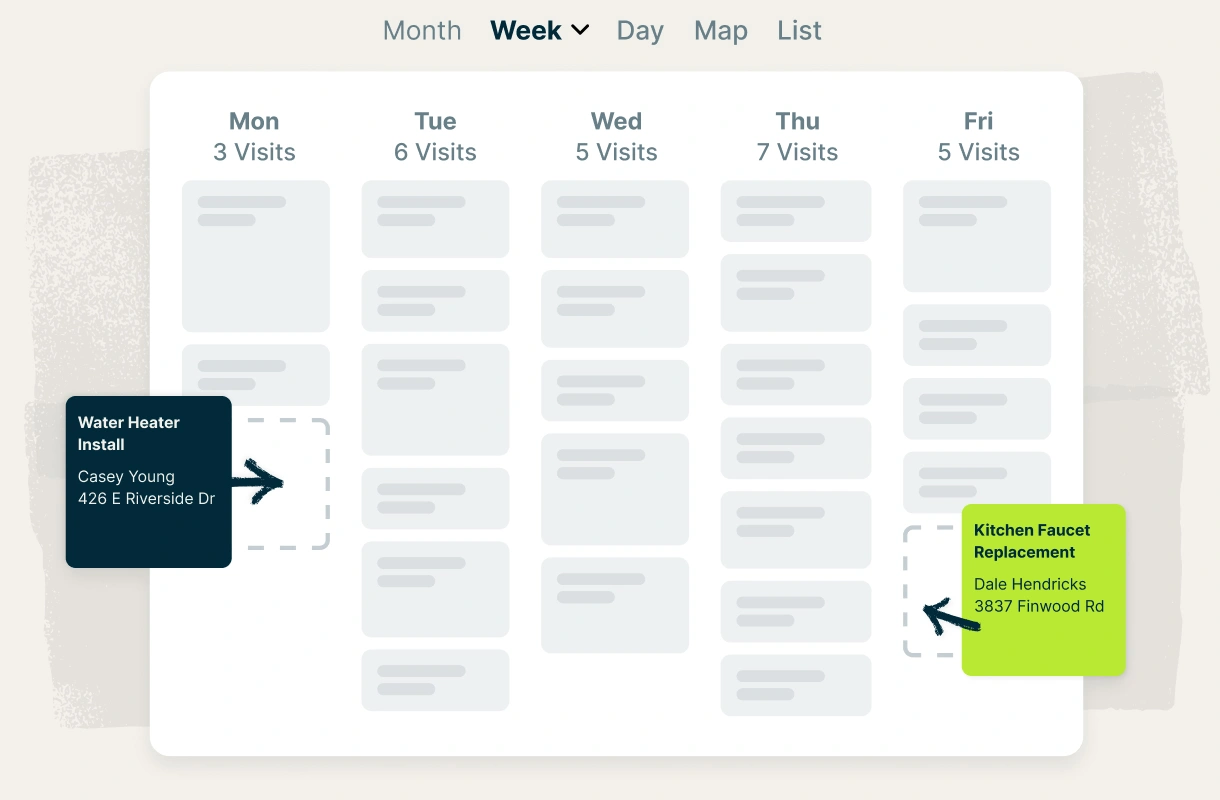
If your business completes more than a dozen jobs a day, real-time GPS tracking and route optimization can reduce manual coordination, direct your technicians effectively, and keep the day running smoothly.
3. Reduce drive time between jobs
Travel time is one of the biggest hidden costs in plumbing operations. If technicians spend large parts of the day driving across town, you’re losing valuable billable hours.
Route optimization (grouping jobs by geographic area) can boost your team’s productivity. When technicians work in the same neighborhood or service zone, they spend less time driving and more time completing jobs.
While you can do this using Google or Apple Maps, it’s more efficient to automatically generate the quickest routes for each team based on assigned jobs. Here’s what that looks like in Jobber:
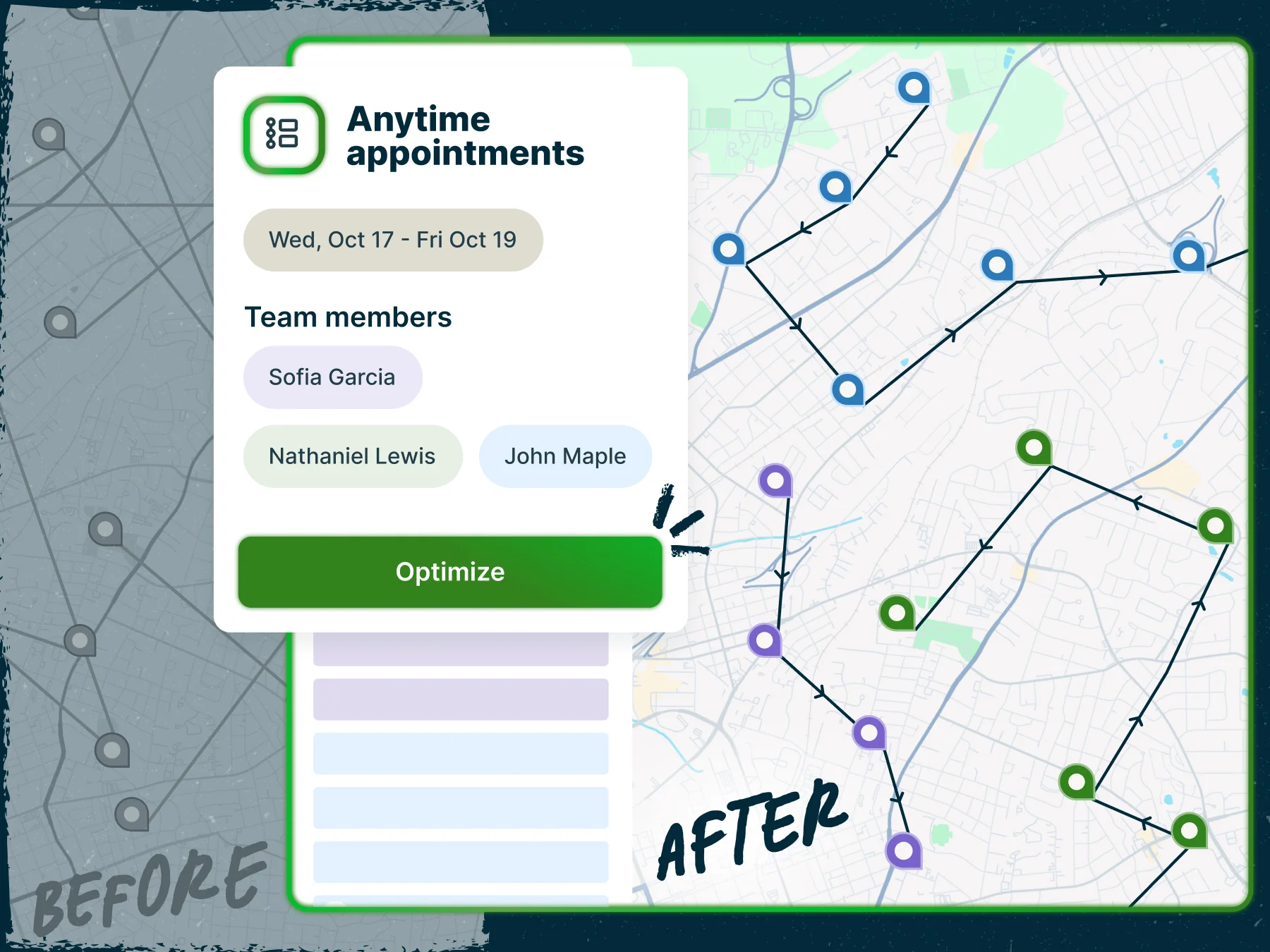
Real-time dispatching also helps when schedules change. If a technician starts running behind, you can adjust the schedule and send the next closest technician to the next job to catch up.
4. Track schedule efficiency
Scheduling performance can show you how much time your business is losing every day. Small improvements often boost revenue because technicians spend more of their day completing billable work.
Track job start and finish times to keep schedule overruns below 15%. If you can improve your schedule efficiency by 10%, each of your technicians can complete 1–2 more jobs each week. In a 4-crew shop billing $250 per job, this means $2,000 per month in added revenue.
Jobber’s automatic time tracking makes it fast and easy to capture your technicians’ start and finish times on jobs.
5. Move non-billable tasks out of peak hours
During business hours, your technicians need to stay focused on work that makes money. Many plumbers lose productive time during the day because they stop to handle non-revenue tasks like refueling, restocking fittings, or cleaning plumbing tools.
Move these non-billable tasks to the end of each shift. Reclaiming just 30–60 minutes of billable time per technician daily can unlock thousands of dollars in additional revenue per month—without needing to hire more staff.
6. Allow time for emergency calls
Emergency work is a normal part of running a plumbing company. Burst pipes, leaks, frozen pipes, sewer backups, and water damage can’t wait till tomorrow. That’s a problem when your technicians are fully booked.
When a plumbing emergency call comes in, make sure there’s always room to adjust the schedule without pushing back several other jobs. It can help to leave small scheduling buffers during the day.
For example, you might keep one technician slightly underbooked or reserve short windows to handle urgent calls. This allows you to quickly dispatch emergencies without disrupting the entire schedule—or disappointing customers.
Financial management
A full schedule doesn’t guarantee healthy cash flow. The problem isn’t always a lack of work. It can also be a lack of financial visibility and inconsistent billing processes.
Strong financial management helps you understand which jobs are profitable, how quickly you’re getting paid, and whether your pricing covers the cost of running the business.
7. Track job profitability, not just revenue
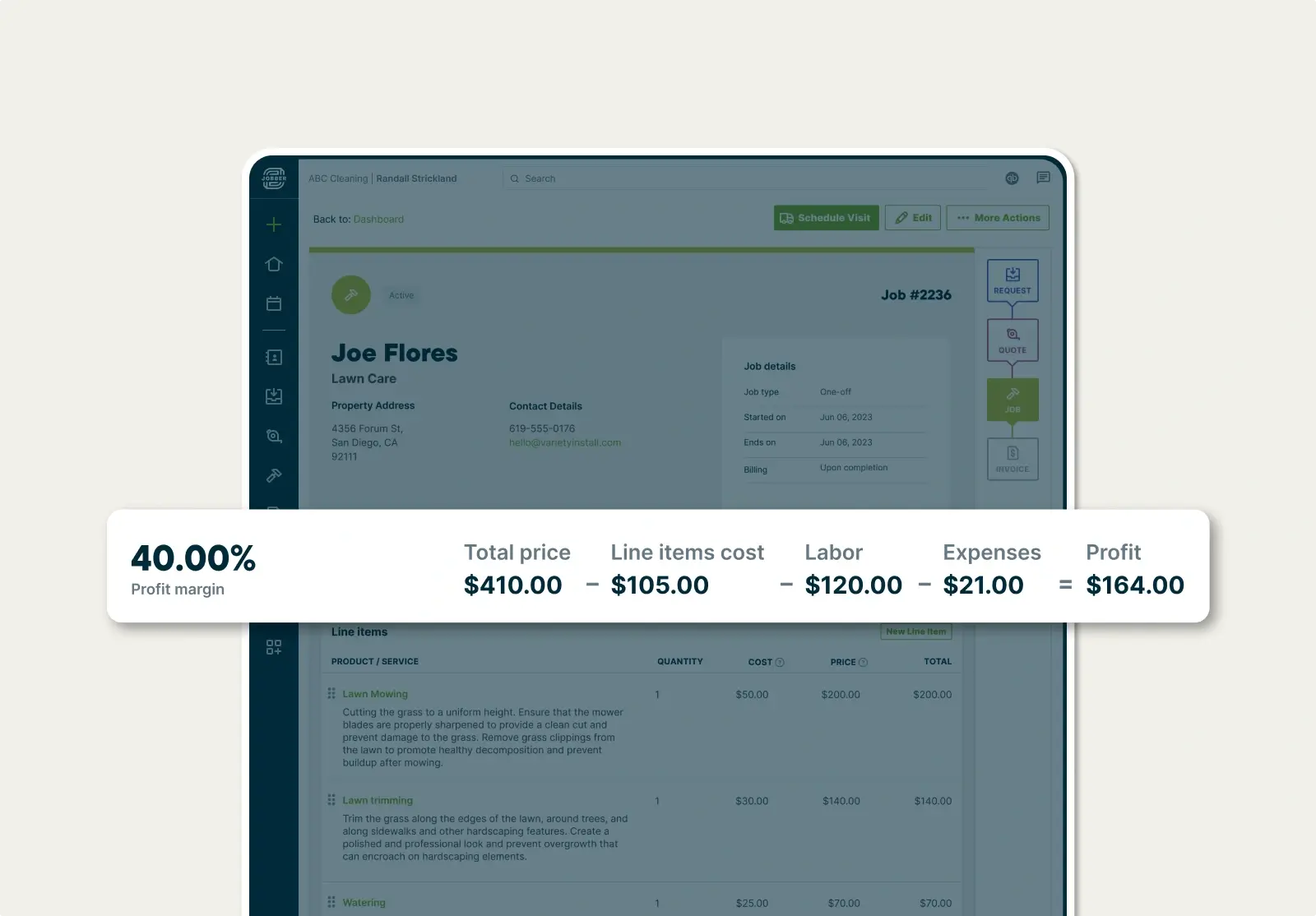
While revenue is important, it doesn’t tell the whole story of a business’s financial health. That’s what profit is for. To understand profitability, track job costs like labor, materials, and travel time.
When you compare those costs to the invoice amount, you can see which jobs made money and how much each one made. This is important for larger jobs that earn lots of revenue, but may create even greater expenses.
With job costing, you can compare income and expenses for each job to see where you’re making and losing money. This helps you adjust pricing, create more accurate estimates, and avoid unprofitable work that doesn’t help your business grow.
A financial tracking system will help you connect job data, invoices, and payments in one place. Job costing tools like Jobber track payments and monitor profitability from a single dashboard.
We had done work for a contractor for a long time. We did some job costing and we were losing money on every single job we did for him.

8. Send invoices immediately after every job
One of the most common cash flow problems in plumbing businesses is delayed invoicing. If you don’t have time to sit down and create your invoices until the weekend, cash will come in much more slowly.
The simplest fix is to invoice immediately after the job is finished. Jobber helps your technicians create and send invoices from their phone before they leave the job site.
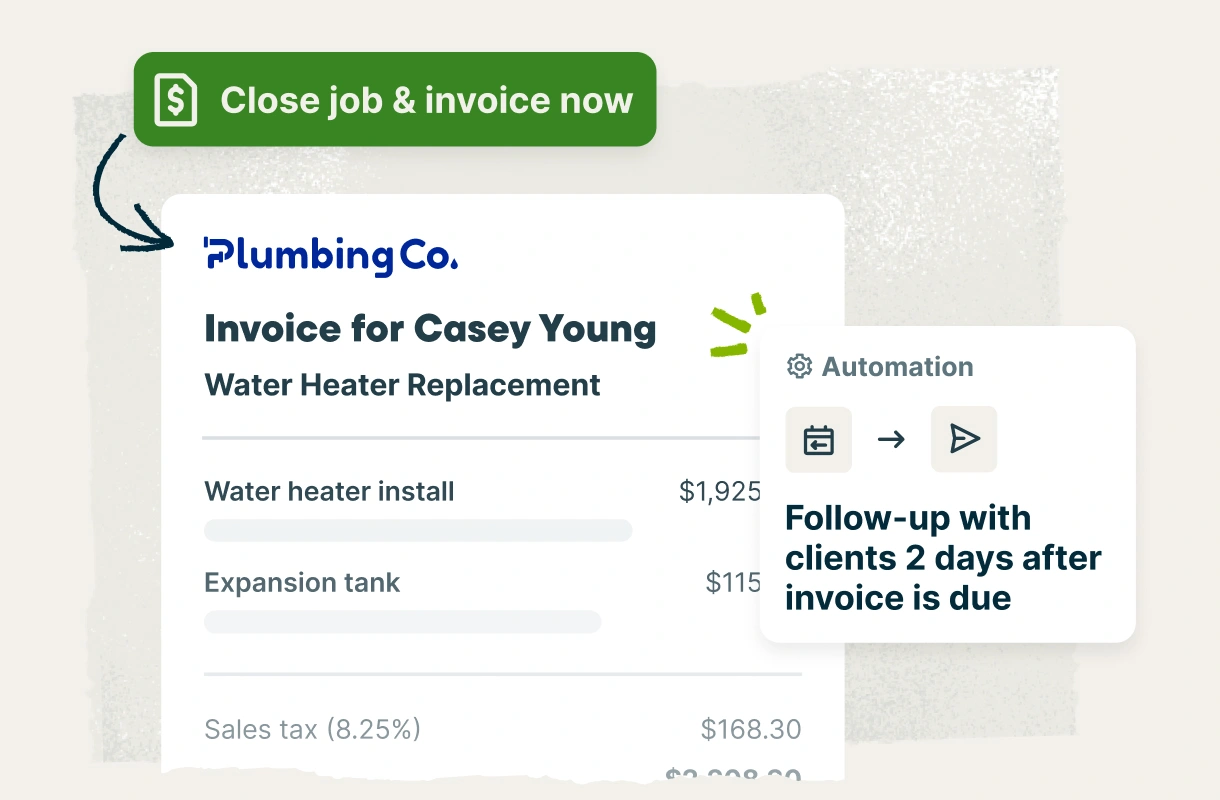
For healthy cash flow, aim to have 70%+ of jobs paid online or via mobile channels before the technician leaves the driveway. Jobber offers multiple payment options to speed up the process, like credit card, ACH, and automated payments.
9. Set up systems for collecting overdue payments
Even with prompt invoicing, some customers will pay late. A clear process for handling overdue invoices can help you get outstanding invoices paid faster and improve cash flow, without spending an entire day on the phone with customers.
Your accounts receivable system should include automated invoice follow-ups, supported by clear payment terms written on every invoice. For example, you can schedule reminder emails to send after 7, 14, and 30 days if an invoice remains unpaid.
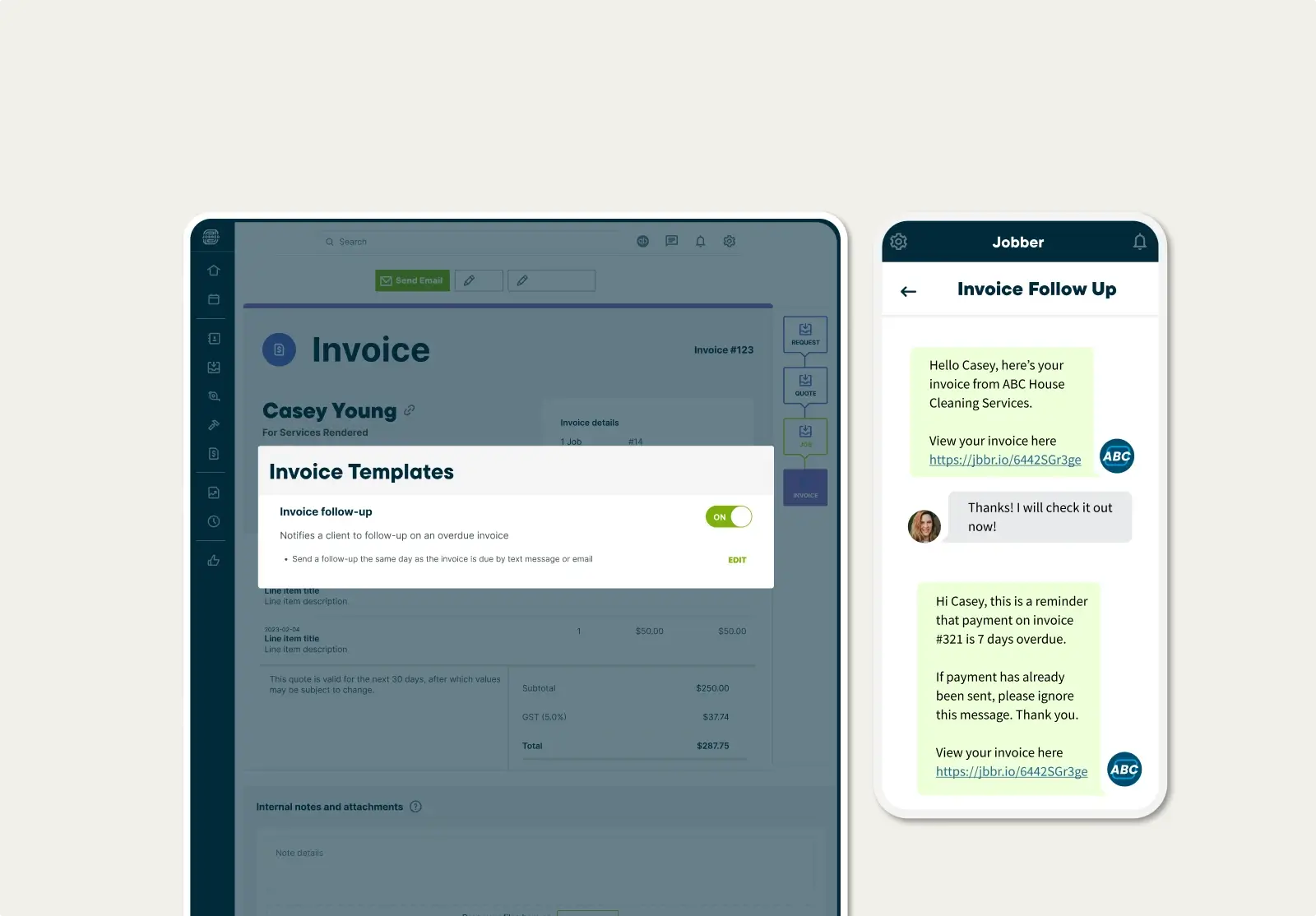
The goal is to address overdue invoices early before they become large outstanding balances that affect cash flow.
Pro Tip: For commercial plumbing clients who typically pay on net-30 terms, offering a 2% discount for invoices paid within 7 days can accelerate cash flow. This cuts down on admin time since you don’t have to keep following up with the client for payment.
10. Make sure pricing includes overhead
Overhead is all the costs that are essential for running your business, but aren’t specific to any single job. That means instead of billing one client for those expenses, you have to bill every client for them.
Every plumbing company carries overhead costs that must be included in every estimate to ensure there’s enough money to pay for them. This includes expenses like:
- Office staff wages
- Vehicle payments
- Plumbing insurance
- Software subscriptions
- Marketing costs
- Office rent and utilities
You can add your hourly overhead rate to each job for every estimated hour of work. Add up your overhead costs for the month, then calculate hourly overhead costs using this formula:
Total monthly overhead costs ÷ # of billable hours per month
Say your monthly overhead costs are $3,000 and you have 400 billable hours. Your overhead costs would be $7.50/hour. So if you have a two-hour job, include an extra $15 for overhead costs.
Inventory and truck stock management
Plumbing inventory management is one of the fastest ways to save time and money. When technicians arrive at a job with the parts they need, they save a trip back to the office and a return visit to the customer.
As you add more trucks, you’ll need to ensure there are parts for all of them. A simple inventory system keeps every truck properly stocked and guarantees common parts are always available when technicians need them.
11. Track inventory across trucks
Tracking truck inventory helps plumbing businesses monitor which fittings, valves, and replacement parts are currently stocked on each vehicle.
This makes it easier to restock regularly and reduces the chance that a technician will run out of commonly used items, such as supply lines, shutoff valves, fittings, repair kits, and connectors.
Some plumbing companies perform quick weekly inventory checks to confirm trucks still have the required parts. Others track inventory digitally so office staff can see what materials are available without calling the technician.
Knowing your truck stock also helps prevent unnecessary purchases and reduces the risk of duplicate inventory sitting unused in multiple vehicles.
12. Standardize truck stock for common jobs
You can reduce delays by standardizing what each truck carries. This ensures your technicians can complete typical service calls without leaving the job site.
Standardized truck stock also helps new technicians get up to speed faster. Instead of learning a different setup on every vehicle, they know where parts are located and what inventory should be available.
It’s a good idea to create a truck stock checklist that technicians follow when restocking their vehicles at the end of the day. That way, common parts are always available for the next shift.
As operations grow, some companies also use software to track materials. Jobber integrates with Ply for inventory management. This tells your office staff which parts are used most often, so they can order replacements as needed.
Estimating and pricing
A structured estimating process ensures every quote is clear, consistent, and priced for profit. It also lets your technicians and office staff create estimates quickly without having to rebuild them from scratch every time.
13. Build a reusable estimate template
Water heater replacements, fixture installations, drain cleaning, and basic plumbing repair work often involve the same types of labor and materials. Instead of creating a new estimate for every job, build reusable templates for your most common jobs.
That way, any technician can send a professional quote in minutes. This approach reduces the time spent preparing estimates and ensures consistent pricing across the team.
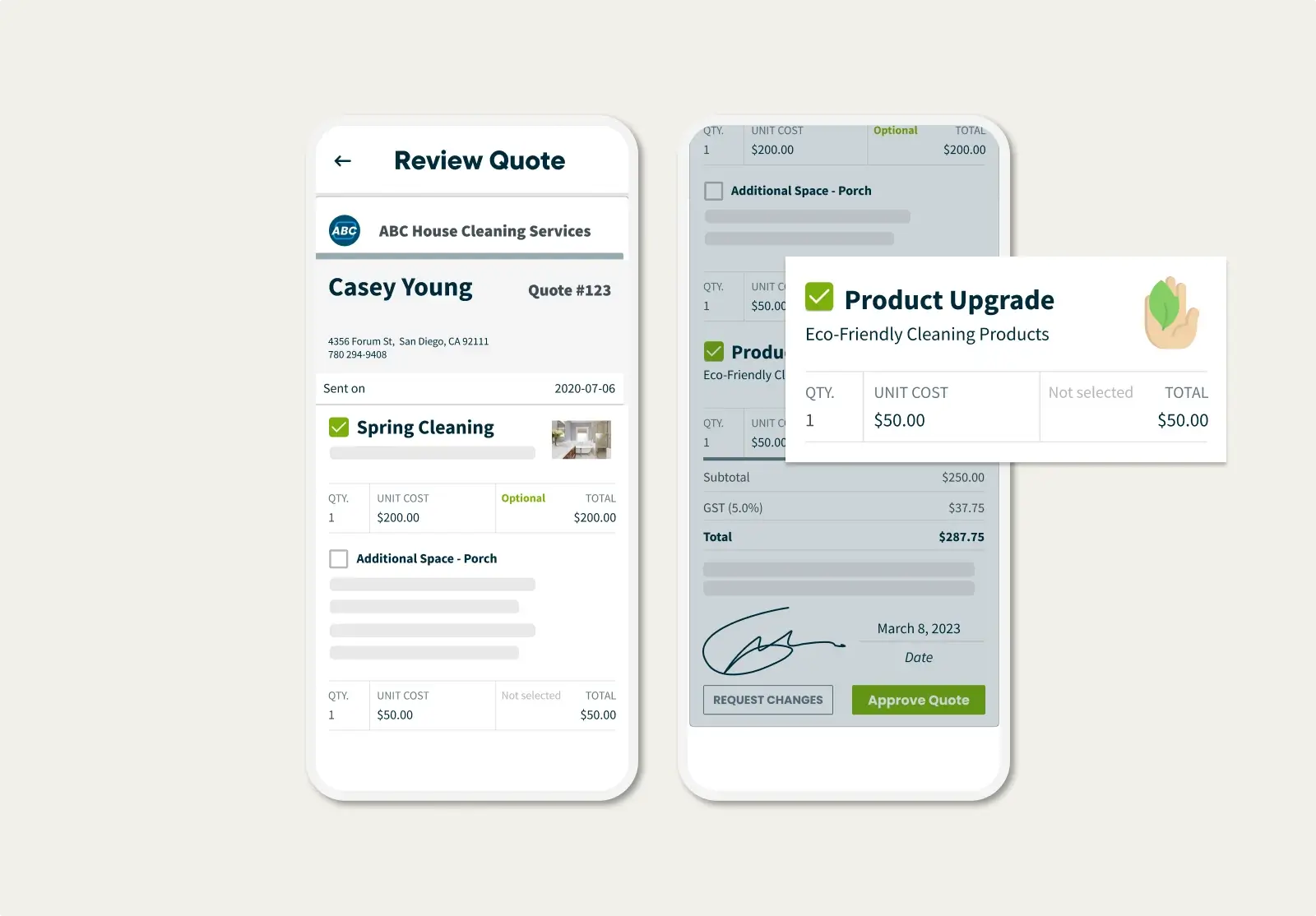
You can also include optional line items in your quotes. For example, if a customer is replacing their water heater, you can offer an optional regular maintenance plan with annual flushes. This gives customers clear choices while increasing the average job value.
Quoting software like Jobber supports this process with customizable estimate templates, optional line items, and automated follow-ups reminding the customer to approve your quote.
14. Review and increase pricing regularly
Material costs, fuel prices, and insurance premiums change all the time. You need to adjust your pricing regularly to reflect those increases so the business stays profitable. 74% of plumbers raised prices in 2025, often to invest in better tools or protect profit margins.
A simple approach is to review your plumbing job pricing at least once or twice per year. During this review, evaluate material costs, technician wages, overhead expenses, and average job profitability.
Even small adjustments can make a big difference. Increasing pricing slightly across common services makes the change easier for customers to accept, as long as you communicate it properly.
READ MORE: Price increase letter: tips and templates for service businesses
Customer management and communication
Customer communication is a major part of running a plumbing business. But there isn’t always time to make a phone call or send a text to let customers know when the technician will arrive and what to expect from their appointment.
As you add more jobs to your schedule, this process can be even harder to maintain. Putting communication systems in place ensures customers get timely updates without any manual effort on your part.
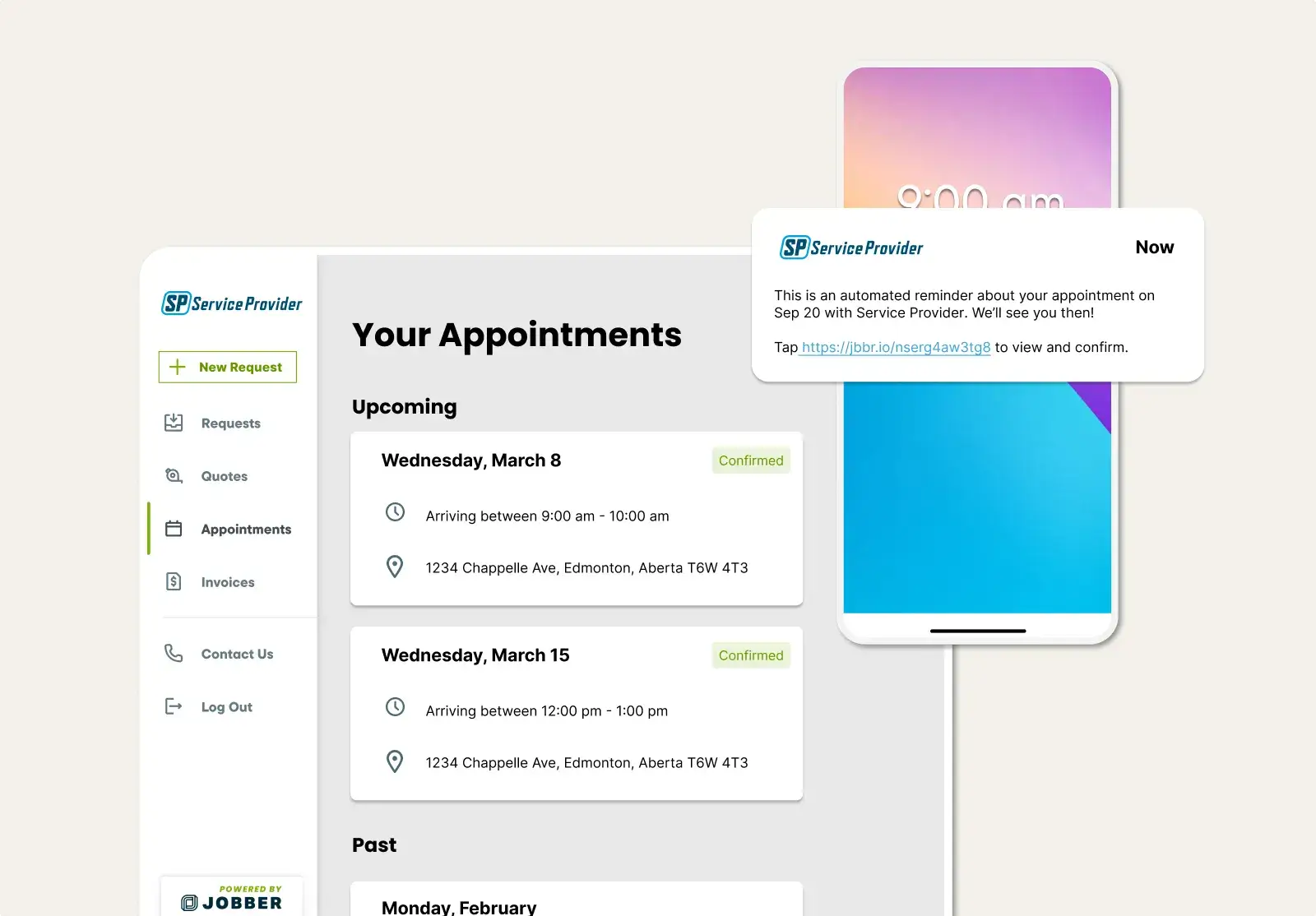
15. Automate appointment updates
Customers appreciate clear and timely updates about their service appointment, but you don’t always have time to send these updates during a busy workday.
Automated communication solves this problem by sending updates at predetermined times, like:
- When the job is booked
- A day or two before the appointment
- When the technician is on their way
- After the work is done
Jobber’s customer communication features make it easy to automate these updates. Just write what you want to say (or use a template) and define when you want to send messages. Jobber takes care of the rest.
16. Offer simple online booking
90% of customers prefer to book services online rather than picking up the phone. If the only option is to call the office, you may miss opportunities from customers who can’t or don’t want to communicate that way.
An online booking form lets customers request service directly on your plumbing website. They can choose the type of service they need, submit their contact details, and request an appointment without waiting on the phone.
If you’re dealing with high call volume, this is a great way to reduce the number of phone calls you have to answer. It also captures new leads even outside of regular business hours, so you can take back your downtime.
Pro Tip: Jobber’s AI Receptionist covers your bases and provides 24/7 client support while you’re on a job or clocked out. It can even transfer emergency calls when needed, so you’re only alerted about immediate issues like burst pipes.
READ MORE: AI plumbing tools for business owners
Team management and training
Adding technicians increases your capacity to take on more work. But to help your team grow and thrive, you’ll need consistent processes and insights into team performance.
Strong team management helps ensure technicians are productive, follow consistent procedures, and keep improving their skills over time.
17. Hire the right employees
Technical ability matters in plumbing, but so do attitude and reliability. A less-skilled technician who shows up on time, communicates with customers, and takes pride in their work can often be trained up to the level you need.
On the other hand, a highly skilled plumber with poor communication habits or an unreliable work ethic can create problems for customers and coworkers.
It’s best to hire for attitude and train for skill. During the plumbing interview process, look for candidates who are professional, willing to learn, and have strong customer service skills. Find these individuals by asking questions like:
- “Tell me about a time a job didn’t go as planned.” Look for accountability, problem-solving, and a focus on fixing the issue rather than blaming others.
- “How would you explain a complex plumbing repair to a customer?” Their answer should include clear communication and patience, as well as the importance of educating the customer.
- “What would you do if you arrived at a job and realized you didn’t have the right part?” Look for advance planning to help avoid this issue, paired with communication with the office and minimal inconvenience for the customer.
- “How do you handle a frustrated or upset customer?” Customer service is critical, so their answer should highlight their listening skills and focus on resolving the issue professionally.
- “What are you hoping to learn or improve in your next plumbing role?” It should be clear that the candidate wants to learn and grow as a plumber.
These questions help identify professional candidates who can represent your plumbing business well with customers.
READ MORE: How to write a plumber job description
18. Create standard operating procedures
To ensure a consistent service experience, every technician needs to handle every job the same way. Develop a standard operating procedure for every task, like:
- Plumbing problem troubleshooting and diagnostics
- Providing preventative maintenance for potential issues
- Quoting and invoicing work
- Talking to customers before, during, and after jobs
- Applying plumber safety tips and procedures
- Closing out completed jobs
These written guidelines also make it easier to onboard new technicians. Instead of learning through trial and error, new hires can follow established processes that reflect how the business operates.
19. Track technician performance
Measurable data makes it easier to identify your strongest performers or spot operational problems. It’s a good idea to track plumbing technician performance indicators like:
- Revenue generated per technician
- Number of jobs completed
- Number of hours worked
- Average job value
- Callback rates
You can only manage what you measure. Jobber’s reporting dashboard shows you all of these details so you know who’s performing and where you’re losing money.
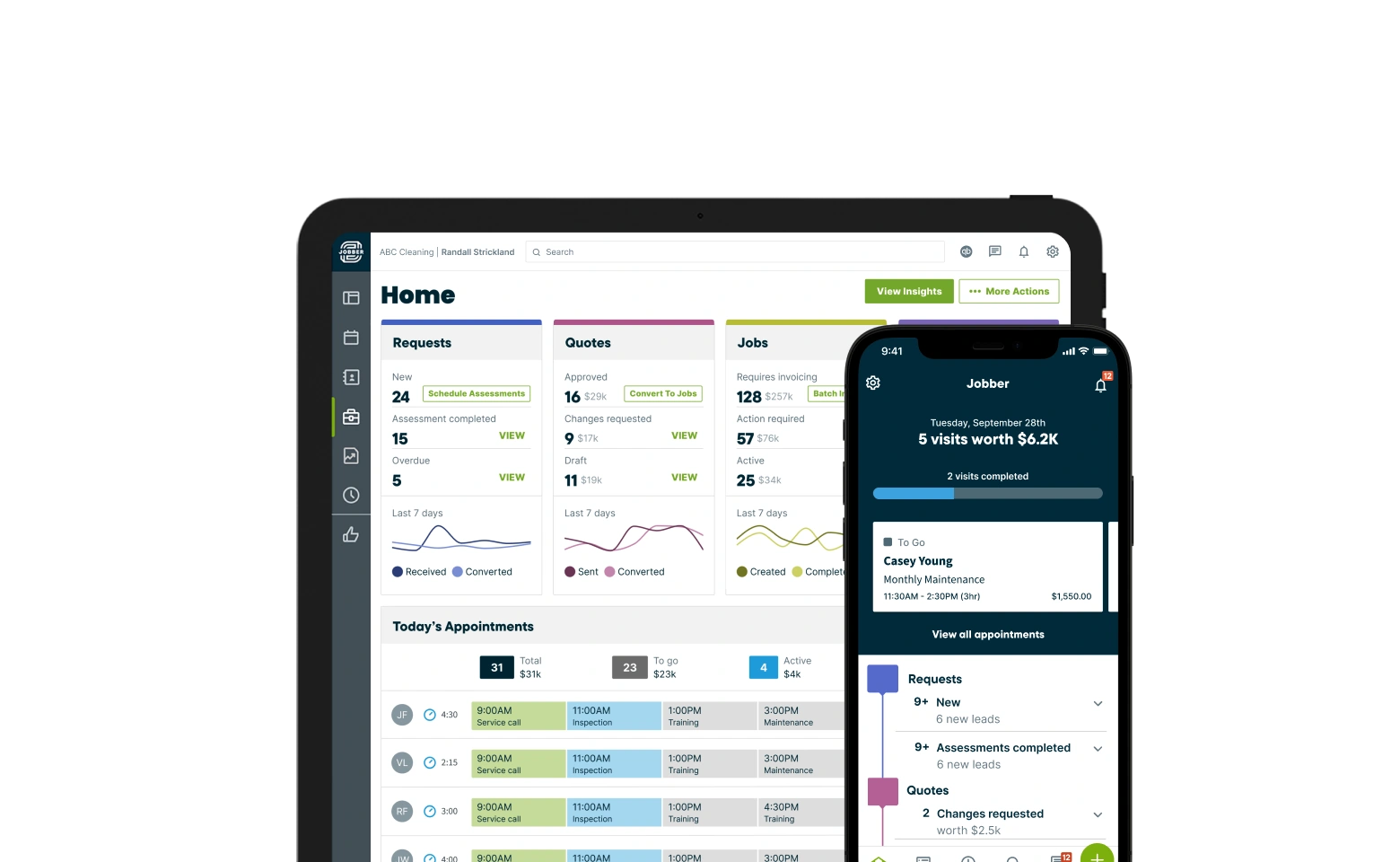
From there, you can identify performance trends and provide targeted coaching to keep the team operating efficiently.
20. Use subcontractors for overflow and specialized work
Your internal team may not be able to handle every job. This often happens during busy seasons, when several emergencies come in at once, or when a project requires specialized expertise.
In these situations, subcontractors can help you maintain service capacity without hiring more full-time employees. This is a great way to handle overflow work, specialized installations, excavation, or large commercial projects that require additional labor.
Just make sure subcontractors follow the same standard operating procedures as your in-house technicians. That way, the customer experience stays consistent—no matter who performs the work.
Marketing and lead generation
Every business needs a steady flow of customers to grow. There are many plumbing marketing ideas that can help you reach potential customers and win new work, but these expert tips are some of the most effective:
21. Encourage reviews and referrals
It’s common for homeowners to search online and compare companies before making a call. Positive online reviews help your business appear higher in search results and help build trust with new customers.
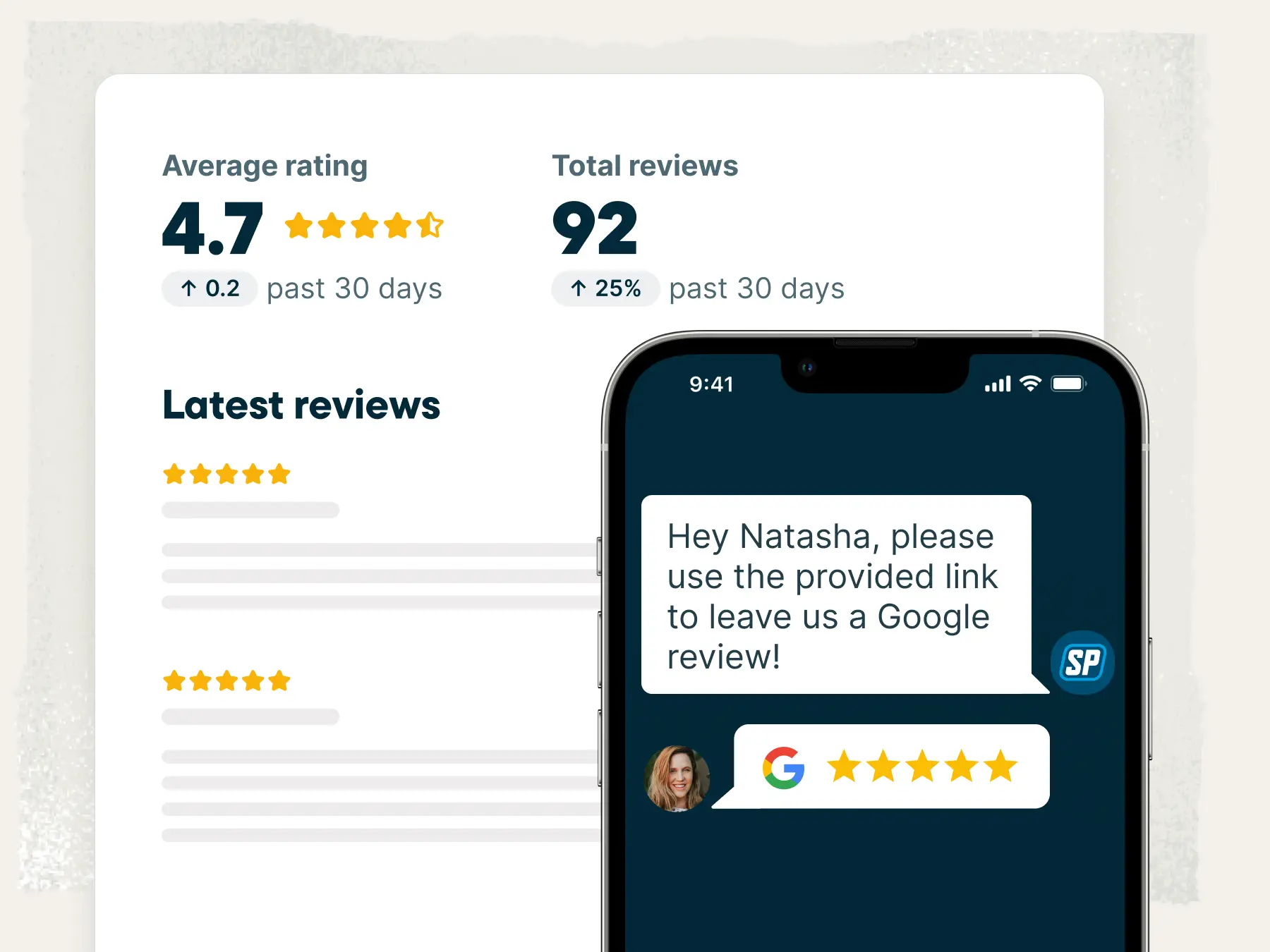
Your Google Business Profile listing is one of the most important assets for local plumbing service businesses. To ensure it’s working for you, aim for 50+ reviews and a 4.5+ average rating.
For emergency-driven trades like plumbing, hitting this target helps your business appear near the top of local search results. This can drive thousands of dollars in new bookings each month at virtually no cost.
The challenge is that many satisfied customers won’t leave a review unless you remind them. Instead of relying on your technicians to ask, automate review requests after each job.
A simple follow-up email or text asking for a review can increase the number of reviews your business gets. Some review software also includes links that take customers directly to your review page, making the process even faster and easier.
22. Create a repeatable lead pipeline
While referrals are important, relying on them alone can create inconsistent work volume. Every plumbing business should have several reliable sources of leads operating at the same time, including:
- Running paid plumbing ads on Google and on social media
- Investing in SEO for plumbers to attract website visitors for free
- Setting up profiles on lead generation sites for contractors
- Creating social media profiles on platforms like Facebook and Instagram
- Partnering with local builders, realtors, and HOAs
- Distributing flyers in local neighborhoods where you want to work
- Using vehicle wraps for advertising around town
Depending on the marketing tactic, you’ll want to send potential customers to your online booking form, provide your phone number to encourage calls, or both.
For example, an online ad should bring the customer to your online request form. With a flyer or vehicle wrap, on the other hand, a phone number is the easiest way for the customer to contact you.
23. Track where your leads come from
Tracking the source of your plumbing leads helps you understand which efforts are working. For example, a new customer might find your company through online search, a referral, a vehicle wrap, or a local advertisement
Go a step further by tracking three metrics for each channel to see which channels bring in calls and produce the most profitable work:
- How many leads it generates
- How many turn into paying customers
- The average job value from those customers
Once you have that information, you can adjust your marketing spend to match. Invest in marketing channels where you earn high-value jobs, and cut channels that don’t win new work or only bring in smaller, lower-value jobs.
24. Retain past customers with regular communication
Customer retention costs less and is more profitable than constantly acquiring new customers. Past customers already trust your company, making them more likely to call again when they need plumbing services.
Regular communication helps keep your business top of mind. Email newsletters, seasonal reminders for effective plumbing maintenance, and service promotions can encourage repeat work and produce measurable results.
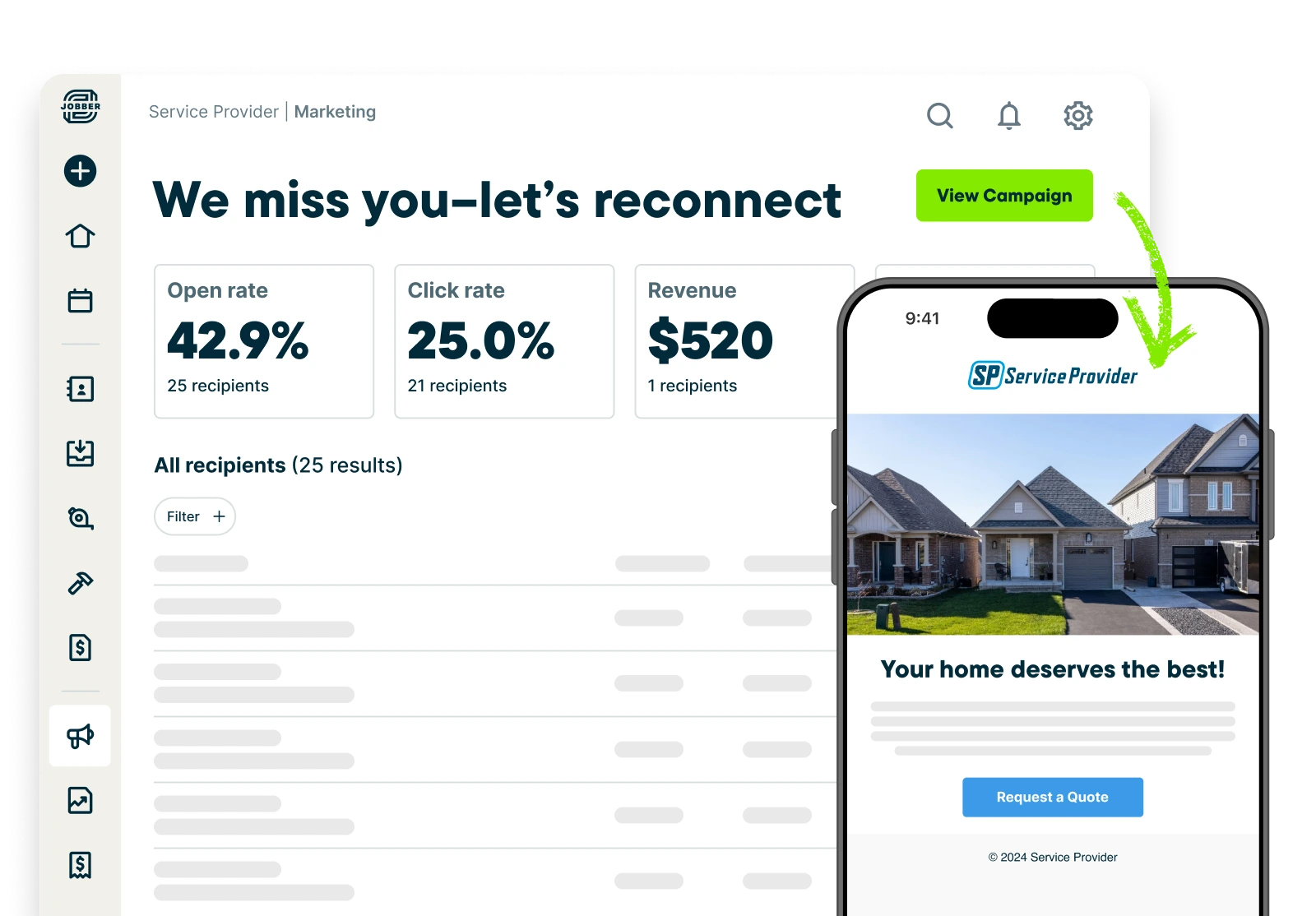
Our first campaign turned into $25,000 worth of revenue in just 1 week.
We’ve now sent four or five campaigns, and each time we do, we see a big jump in revenue.

Some plumbing businesses also offer VIP service memberships that include benefits like priority booking or waived emergency fees. These programs encourage customer loyalty and help smooth out cash flow during seasonal fluctuations.
Using software to run your business
Manual systems are fine when you’re just starting a plumbing business, but they don’t work forever. Plumbing management software brings all these processes together so your business can scale.
Instead of switching between multiple tools and manual processes, office staff and technicians can manage scheduling, job tracking, communication, and billing in a single platform.
When you’re evaluating plumbing company management software, look for tools that reduce manual coordination and administrative work. Here are a few features to keep an eye out for:
- Scheduling and dispatching tools that help office staff assign jobs, adjust schedules, and view technician availability in real time
- Mobile access for technicians so field staff can view job details, update job status, and communicate with the office from their phones
- Quoting and estimating tools that allow teams to create professional quotes and convert approved quotes into scheduled jobs
- Invoicing and payment processing tools that let you generate invoices immediately after a job, with the option for customers to pay invoices online
- Customer management features that store job history, contact information, and service notes in one place
- Automated customer communication to help you stay connected, such as appointment confirmations, reminders, and follow-up messages
- Reporting and performance dashboards that help owners track revenue, technician productivity, and overall business performance
Jobber combines these capabilities into one system, complete with scheduling, quoting, invoicing, customer communication, and reporting.
This helps your business reduce paperwork, avoid scheduling mistakes, and keep technicians focused on completing jobs instead of managing administrative tasks.
Common management mistakes to avoid
As the business owner, your management habits will affect your company’s success. Avoiding these common mistakes can help you keep your operations organized and profitable:
- Not tracking job profitability: Revenue alone doesn’t show whether your jobs are making money. Without job costing, it’s easy to stay busy while losing profit.
- Scheduling jobs from your phone: Managing schedules through text messages or personal calls is unmanageable once multiple technicians are involved.
- Hiring too quickly: Adding technicians before you build scheduling, estimating, and job tracking processes can create confusion and reduce productivity.
- Never adjusting pricing: Material costs, fuel, insurance, and wages increase over time. Failing to review pricing regularly can cut into your profit margins.
- Letting invoices sit before sending them: Delayed invoicing slows down cash flow and increases the chances that payments will be forgotten or delayed.
- Not standardizing processes: When technicians handle jobs differently, it becomes harder to maintain consistent service quality and to train new employees.
- Ignoring customer communication: Missing confirmations, reminders, or follow-ups can make the company appear disorganized and lead to lost business.
- Not tracking technician performance: Without data on earned revenue, callbacks, and completed jobs, it’s hard to identify training opportunities or operational problems.
Running a plumbing business requires strong systems and consistent management habits. By applying the strategies in this guide, you can improve operations, boost profitability, and grow your plumbing business.