Social Media for Roofing Contractors: How to Get More Local Leads

Key takeaways:
Social media can be a powerful tool for roofing contractors to attract local leads and build trust with homeowners.
- Showcase real work and build trust. Share before-and-after photos, project highlights, customer reviews, and crew introductions to prove your expertise and give homeowners confidence in your services.
- Focus on the right platform and consistent posting. Choose one or two social channels that fit your goals—like Facebook, Instagram, or Nextdoor—and maintain a steady, repeatable posting routine instead of spreading yourself too thin.
- Engage with your audience and answer questions. Offer educational content, respond quickly to questions and comments, and provide clear, actionable next steps in each post to turn followers into leads.
- Track results to improve your strategy. Monitor where your leads come from, measure booked jobs and close rates, and adjust your content to maximize real business results—not just likes or followers.
- Avoid common pitfalls. Use real project photos, customize your captions, don’t ignore comments, and always get permission before posting identifiable property information or reviews.
Want more tips and tools to grow your roofing business? Sign up for the Jobber Newsletter.
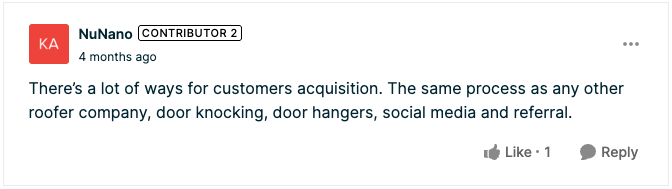
Effective social media for roofers shows their work, answers homeowner questions, and gives potential clients an easy way to reach out. When a Jobber Community member asked how roof rejuvenation companies can get more customers, social media was on the list.
Build a simple, effective strategy to get new roofing leads by choosing the right channels, creating repeatable posts, and tracking inquiries—not just chasing likes.
Getting started with social media for roofers:
-
Why social media matters for roofing contractors
-
Choose the right social media platforms for your roofing business
-
Build a roofing social media content plan
-
How to create roofing social media posts that get attention
-
A simple weekly posting schedule for roofers
-
Turn social media attention into roofing leads
-
Measure what’s working
-
Common social media mistakes roofing contractors should avoid
-
Start with a simple roofing social media system
Why social media matters for roofing contractors
A roof is a big investment. Homeowners need to trust that your company is legitimate, experienced, and responsive before committing to a purchase.
Social media is one of several roofing marketing ideas you can use to showcase previous jobs so roofing leads can see what you do, who you’ve worked with, and what other customers think of you.
You can build trust with content like storm-damage inspections, completed roof replacements, customer reviews, and answers to common questions. When leads can see you have an active, engaged online presence, they’re more likely to book a job.
What homeowners want to see before they call
Before booking a job with your residential or commercial roofing company, potential customers may check your social media profile for trust signals, such as:
- Proof of work, like before-and-after images of past jobs
- Photos of your crew on the job
- Clearly defined service areas
- Reviews from actual customers
- Educational content related to roofing, like maintenance tips
- An easy way to reach you, like a message button, email address, phone number, or “request a quote” button
What social media can and cannot do
Organic social media posts can build familiarity and trust over time, and paid ads can expand reach. That’s great for capturing interest and generating leads, but it won’t necessarily turn them into booked jobs.
You still need a clear offer, strong follow-up, and lead tracking in place. That way, leads are more likely to say yes, less likely to go cold, and easier to trace back to a specific social media post.
Choose the right social media platforms for your roofing business
Having one social media profile is usually enough for most roofers. Social media marketing for roofing companies works best when you focus on a single platform, like Facebook, Instagram, or Nextdoor. It makes it easier for you to post consistently and maintain your page.
The right social platforms for your business depend on what you want your profile to do. Start with one or two channels you can maintain consistently, such as:
Facebook for roofing contractors
Facebook is a good choice if you’re looking for visibility in your community. Homeowners already use it to ask neighbors for contractor recommendations, making it a natural fit for roofing companies.
You can use Facebook to:
- Create project albums to showcase your best work.
- Post customer reviews and recommendations on your page for leads to see.
- Join neighborhood groups to answer questions, offer promotions, and share advice.
- Share updates about your business, like new roofing services or openings in your schedule.
Roofing Facebook ads are also an option if you have a budget to work with.
Whether paid or organic, each post should be connected to an action, like how a customer can get in touch or request a quote. It’s also important to check messages regularly and respond quickly to avoid losing out on potential leads.
Instagram for roofing companies
Instagram for roofing companies works well if you want to use visuals like photos and videos to show homeowners what kind of work you do and who’s behind it.
Mix different content types to keep followers engaged, such as:
- Project photos of completed jobs, crew members, and common roof issues
- Short videos showing basic walkthroughs or how-tos, time-lapses, and team footage
- Homeowner tips in the form of photo or video posts that explain basic maintenance, storm damage education, or when to book an inspection
Nextdoor for roofers
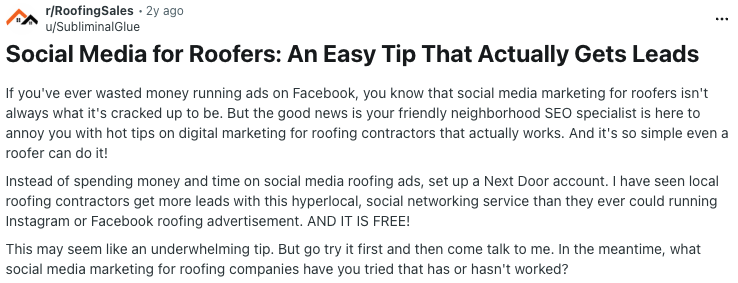
Nextdoor is built for neighborhoods, so it’s an ideal place to engage with homeowners in specific areas. A roofing sales professional on Reddit suggested using it to test neighborhood marketing content before spending money on Facebook or Instagram ads:
On Nextdoor, try engaging with community members by:
- Answering local questions
- Sharing seasonal maintenance tips or guidance
- Joining conversations where homeowners ask for recommendations
Stick to helpful advice over self-promotion to position yourself as someone who’s genuinely engaged in the community.
LinkedIn, TikTok, and other channels
Other channels to consider include LinkedIn, TikTok, and YouTube. But they only work if you have a specific goal in mind.
LinkedIn is worth it if you’re hiring, looking for commercial clients, or want to prioritize networking. For example, if you want to connect with local realtors, property managers, or home builders, or you want to post open positions.
TikTok and YouTube can be a fit for roofing video marketing if you want to focus on educational content, like how-tos.
Only add one of these platforms if it fits your goals and you know you can post there consistently, like if you’re repurposing video content for Instagram and YouTube.
Comparing social media platforms for roofing companies
If you still aren’t sure which platform to move forward with, use this chart to compare options.
| Platform | Best for | Content types | Local lead potential | Effort level | Recommended starting point |
|---|---|---|---|---|---|
| Local visibility, reviews, neighborhood groups | Project albums and short updates | High | Medium | Set up a Facebook business page with your service area, a quote request link, and some project albums | |
| Visual proof of your work | Photos and short videos | Medium | Medium to high | Create an account, post your best before-and-after images, and add a quote request link to your bio | |
| Nextdoor | Neighborhood conversations and recommendations | Text-based replies and local posts | High | Low to medium | Set up a business page and start answering local questions |
| Hiring and networking | Company updates and job postings | Lower for residential work, higher for commercial clients | Medium | Set up a company page and share business highlights or open roles |
Build a roofing social media content plan
You’re probably already doing the work homeowners like to see on social media, like inspecting roofs, finishing jobs, and offering helpful advice. All you need is a repeatable roofing social media marketing strategy for turning those tasks into social media content.
Tools like Jobber can help by turning your approved job details and photos into social media-ready posts while your expertise stays front and center.
Five content pillars for roofing contractors
Most roofing content falls into one of five content pillars: completed projects, homeowner education, storm and seasonal advice, customer proof, and the people behind the business.
Rotating through them keeps your page fresh and varied, helping keep followers engaged.
1. Completed project posts
Completed project posts show off the roofer work you’ve done. You can make content to highlight different aspects of jobs, like:
- Before-and-after images of roof replacements: Include anything that made the job stand out, like a challenging job site, a creative solution to a problem, or a visually impressive comparison.
- Close-ups of repairs: Share how you made a repair to a common problem or a tricky issue to show you’re versatile, experienced, and able to handle a variety of tasks.
2. Homeowner education
Homeowner education content covers commonly asked questions about inspections, repairs, roofing materials, maintenance, and storm damage.
For example, you could make posts:
- Explaining when to replace versus repair a roof, with three signs to look for.
- Walking potential customers through what happens during a roof inspection from start to finish.
3. Storm and seasonal advice
Storm and seasonal advice keeps your page relevant to what local homeowners are dealing with. Share updates that help them prepare for different weather, like:
- Storm prep checklists before weather that can cause roof damage
- Tips about what damage to look for after a major weather event
4. Customer proof
Customer proof, like reviews and customer testimonials, shows homeowners what you’re like to work with. It’s an effective way to build trust with leads and add variety to your social media profile.
If you ask customers for a review and they give you permission to share their review on your page, you can use it to:
- Caption a photo of a completed job or before-and-after comparison.
- Share a short summary of what they needed, what you did, and how the job turned out.
- Make sure to stick to actual project outcomes without overstating results.
5. The people behind the business
Having your crew members in social media posts means leads are familiar with them before they show up to do a job. It helps customers feel more comfortable and shows them real people are behind your business.
To include your crew in social media posts, try:
- Employee features: Introduce each team member with a photo, how long they’ve been roofing, and what they like about the work.
- Day-in-the-life content: Show what a day on the job looks like, from loading materials onto the truck to final cleanup.
Roofing social media post ideas that are easy to repeat
Once you have a few go-to formats, roofing social media posts get much easier to repeat. Rotate content ideas and types to keep your page fresh, relevant, and engaging, such as:
- Roofing before-and-after photos
- Inspection explainers
- Material comparisons
- Roof maintenance checklists
- Storm season prep checklists
- Answers to common customer questions
- Team introductions
- Customer reviews and appreciation
- Service-area-specific tips
How to turn one completed job into several posts
A single finished roofing job can fuel multiple days of social media content. A simple workflow for each job can make it easier to get the most out of each job:
- Take a photo before and after the job.
- Write a 1- or 2-line caption about the project.
- Ask the customer for a review to share.
- Update your Google Business Profile.
- Add an update to your website.
- Send the customer a thank-you note and introduce them to your referral program.
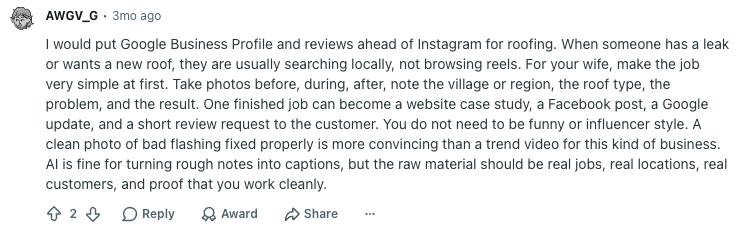
A marketer discussing roofing businesses on Reddit suggested repurposing one completed job into a website case study, Facebook post, Google update, and review request.
Job Showcase can handle several of these tasks. It turns completed jobs into content for your Facebook page, email marketing campaigns, Google Business Profile, and Jobber Website by:
- Drafting posts based on real photos and job details included in the account
- Recommending which past jobs are worth showcasing
- Letting you make changes and schedule the post for later
- Ensuring nothing is posted without your review and approval
Note that you’ll need a Jobber Website to post content on your website through Job Showcase.
How to create roofing social media posts that get attention
The most effective social media posts are useful and specific. Each one should:
- Include a strong hook that addresses a common problem, highlights a result, or answers a question. For example, “This roof was leaking for two winters. Here’s how we fixed it,” or “Not sure how to prep your roof for this weekend’s storm? Do these three things.”
- Show the work through a photo, video, or caption by taking photos before and after the work, creating a short walkthrough video, or describing the work you completed.
- Explain why the content matters to homeowners, like how getting a leak looked at early can save them money.
- Give a clear next step. Tell homeowners what to do next, whether it’s to call, email, or book a free quote.
Use real project photos and videos
When you’re shooting photo and video content, make sure to capture:
- Wide shots of the whole house or roof to show scale
- Close-up details like flashing, shingles, or damage
- Progress photos, like before, during, and after a job
- Final results, such as the finished roof from the street
- Short-form video walkthroughs about what you did on a specific job
Remember to always ask for a customer’s permission before sharing any identifiable property details on your social media profiles.
Answer homeowner questions before they call
Use your content to answer common homeowner questions to build trust and demonstrate your expertise, such as:
- Repairs vs replacement
- Storm damage
- Maintenance
- Materials
- Timelines
- Insurance
- What an inspection includes
Use captions that make the next step clear
Each post should provide local context and tell homeowners what to do with that information. Following a simple caption structure can help turn followers into leads:
- State where the job took place, like the city, town, or neighborhood.
- Explain what was wrong and what you did to fix it.
- Say what the homeowner got out of it.
- Finish with a simple next step.
For a post talking about a full roof replacement in Anaheim, that could look like this:
Just finished up a full roof replacement for a customer in Anaheim. The old shingles were cracked and letting water into the attic, so we tore off the old roof and installed new asphalt shingles. Now they’re covered for years of wet weather without having to worry about leaks! Wondering what shape your roof is in? Request a roof inspection at the link in our bio.
A simple weekly posting schedule for roofers
When it comes to social media for roofing companies, consistency matters more than volume. A small, steady routine is easier to follow than aiming to post every single day, so try to find a flow that fits into your busy schedule. For example, your week could include:
- Two feed posts: Publish one project post and one homeowner tip or FAQ.
- Several story updates: Share quick job site moments, like loading up a truck, crew shots, or weather reminders.
- One educational video: Post a short walkthrough of a job, tip, or roofing process.
- One local engagement block: Take 15–20 minutes to reply to comments and messages or to answer questions on Nextdoor or in Facebook communities.
A four-week example calendar
A month-long content calendar for social media posting could look like this:
| Week | Theme | Feed post 1 | Feed post 2 | Video | Local engagement |
|---|---|---|---|---|---|
| 1 | Proof of work | Before-and-after photos of a customer-approved project | Close-up of a roof repair detail | Walkthrough of a finished job | Reply to local roofing questions |
| 2 | Homeowner education | Repair or replace? Signs to look for | What happens during a roof inspection | Quick tip for spotting roof damage | Share advice in community groups |
| 3 | Seasonal roofing work or storm prep | Storm prep checklist for [city] | What to look for after high winds or hail | Gutter maintenance | Answer storm-related questions |
| 4 | Customer trust | Customer-approved review with a photo of the job | Crew member introduction | Day-on-the-job video | Thank recent customers and respond to any new reviews |
How to batch content without adding more admin
Batching content helps you stay consistent on social media without adding admin work to your plate. To save yourself time:
- Take pictures as you close out jobs.
- Save reusable prompts, like go-to post formats and caption starters.
- Schedule multiple posts in one sitting.
You can also use Jobber’s Marketing Suite to turn job information into approved social media content. That way, you can maintain a steady online presence without becoming a full-time marketer.
Turn social media attention into roofing leads
A post only matters if a customer can easily take the next step and the business can respond quickly. Make sure your contact information is accessible, up-to-date, and included in multiple places on your social media profiles, including in your bios, messages, and posts.
Offer customers multiple options for reaching out, such as request forms, phone calls, and direct messages. Follow up with each lead to prevent them from going cold.
Give every post one clear next step
A post gets potential leads interested, and a single call to action tells them what to do next. It gives followers a clear path to follow to book a job, saving them time and helping you to funnel leads in the right direction.
Every post needs to include a call to action, such as:
- Book a roof inspection
- Request a quote
- See our service area
Respond to comments and messages quickly
The faster you respond, the better. Homeowners often reach out to more than one roofing contractor at a time. If you’re the first to respond, you’re more likely to book the job.
As much as possible, try to respond to messages and comments on the same day, within a few hours. Here are a few examples of messages that require specific responses:
- If you can’t answer right away: Set up automatic replies on most platforms with a standard message like, “Thanks for reaching out! We’ll get back to you soon. If you have a roofing emergency, please call [phone number].”
- If they ask a specific question: Say a customer asks something like, “Is this normal for a 15-year-old roof?” Answer the question while gently connecting it back to your business. For example, you could say, “Some wear is normal, but it depends on the shingles. Happy to take a look! You can book an inspection with us at the link in our bio.”
- For more detailed public questions or conversations: Try to move them to a private channel, like direct messaging or email. You can say something like, “Send us a message, and we can set up a time to take a look,” or “Feel free to give us a call at [phone number] to discuss in more detail!”
Track leads by source
Tracking leads shows you where they’re coming from, helping to determine whether your social media efforts are making an impact. For each lead that comes in, track:
- The platform they came from
- Which campaign or post brought them in
- Which service they requested
- Their ZIP code
- Whether it resulted in a booked appointment
- If the appointment resulted in a closed job

If you’re just starting out, a spreadsheet may work fine. But as you get more leads, tracking their details can become a lot of work. Jobber keeps customer, job, and marketing information together so you can see which leads turn into jobs without tracking it by hand.
Measure what’s working
Digital marketing for roofers includes tracking the metrics that result in booked jobs and better customer quality, not just how many views a post gets or how many followers you have.
Metrics to watch
To know which content is performing the best, pay attention to:
- Qualified inquiries, calls, and quote requests
- Booked inspections
- Close rates
- Cost per lead (for paid social media campaigns)
- Revenue by source
Instead of focusing on individual posts, review metrics from a month or two at a time. Since leads may take a week or two to show up in your pipeline, that will give you a more accurate overview of whether your social media strategy is bringing in roofing leads.
Lead and booking metrics
These show you whether a customer’s first outreach results in booked work. Track each one by platform or campaign so you can see where the best leads come from. Watch metrics like:
- Qualified inquiries (e.g., messages and form submissions)
- Calls that come in after a post or campaign, and which ones lead to bookings
- Quote requests, and whether they turn into appointments
- Booked inspections
- Close rates
Revenue and efficiency metrics
These metrics show whether your social media marketing is paying for itself. Look at them over a 2- to 3-month period so a single slow week doesn’t skew results:
- Revenue by source: Add up the revenue from closed jobs for each platform or campaign.
- Cost per lead: For paid campaigns, divide the amount you spent on the campaign by the number of leads that came in.
What to change when a post gets attention but no leads
If your posts are getting attention but don’t seem to result in leads, try these tips:
- Write clearer calls to action and include them in each post.
- Provide more local roofing marketing context, like specific neighborhoods.
- Use better photos for proof of work posts.
- Respond faster to messages and comments.
- Offer a more direct booking or contact path, like a button on your profile or a link in your bio.
Start with a simple roofing social media system
Social media for roofers is easier than it may seem. All you need to do is choose a primary channel to focus on, publish proof of work, answer homeowner questions, repurpose completed jobs, and track booked work from roofing leads.
Jobber can help with connecting marketing activity to customer records like jobs, quotes, and follow-ups. With your approval, it turns your best roofing projects into content for your social media profile, keeping it active without adding hours to your work week.
Common social media mistakes roofing contractors should avoid
Common mistakes can negatively impact social media performance, so make sure to avoid: